
Where islands dream, and stories cross oceans.
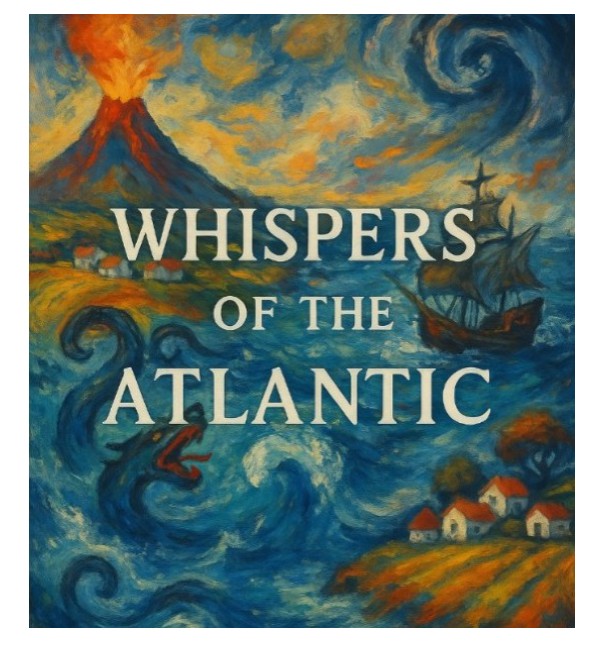
From the volcanic heart of the Atlantic, tales have risen through centuries—stories whispered around hearths, sung in work songs, carried on the wind across nine islands. Whispers of the Atlantic: Legends from the Azores and Madeira gathers these timeless narratives and brings them into English, offering readers a journey through the enchanted archipelago where myth and memory intertwine. Giants, saints, sailors, and dreamers live side by side with the sea, the volcano, and the flowers. These are not only legends of the past; they are living echoes of a people who have always dwelled between fire and water, exile and belonging, homeland and diaspora.
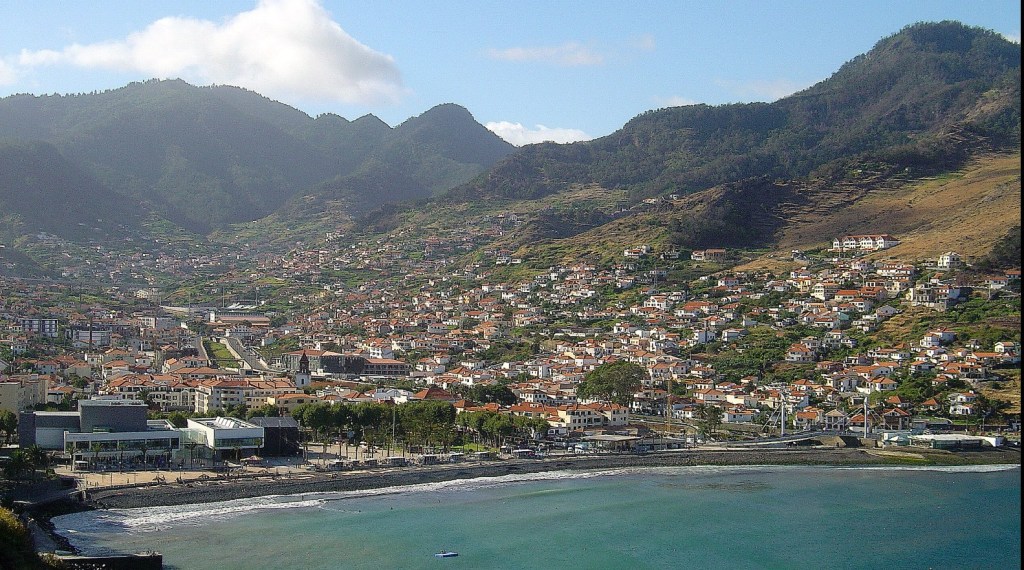
The legend of Machim belongs to that ancient territory where memory and sea mist meet. It is a story carried less by documents than by voices—passed from mouth to mouth, shore to shore—gathering salt, doubt, and longing as it travels. Though fragments have found their way into writing over the centuries, the legend remains, at heart, an oral inheritance: a tale of love, exile, and accidental discovery, bound to the naming of Machico and to the island that would later be called Madeira.
According to tradition, long before the Portuguese crown laid claim to the Atlantic islands, a young Englishman named Roberto Machim fled his homeland in pursuit of love. He loved Ana de Arfet, and she loved him in return—but her family had promised her to another, a nobleman chosen by lineage rather than desire. On the eve of her wedding, Machim and a small group of companions resolved to steal her away. Their plan was simple: cross the Channel, reach France—then at war with England—and disappear into another life.
The sea, however, had other designs.
No sooner had they left the English coast than a violent storm rose and erased their course. With no skilled pilot aboard and no stars to guide them, they drifted for days—perhaps weeks—at the mercy of wind and water. Hunger weakened them, fear hollowed them, and hope thinned. Then, on the horizon, they saw what seemed at first an illusion: a vast green stain rising from the ocean, dense and unfamiliar. Desperation overcame caution. They steered toward it.
Thus, the legend says, they reached Madeira.
Ana, already frail from the voyage, could go no farther. They landed in a small cove—today the bay of Machico—and rushed ashore without securing their vessel, intoxicated by the relief of solid ground and fresh water. As they explored the edge of this unknown land, another storm gathered. They took refuge beneath a colossal tree, so broad at its base that its roots formed a natural hollow large enough to shelter them all—a vegetal cathedral in the wilderness.
When the storm passed, the sea had taken their boat.
Ana died soon after, her body unable to recover from the crossing. Machim buried her near the tree and raised a great wooden cross beside her grave, marking love in a land that had no names. Grief consumed him utterly. Within days, he followed her into death, leaving behind only the cross, the story carved into it, and the silence of the forest.
Those who remained struggled to survive. Some perished. Others endured until a Moorish vessel passed by the island and took them captive, carrying them to North Africa to be sold into slavery. Before they were taken, the survivors are said to have carved the lovers’ story into the cross, fixing memory into wood. One of them would eventually be ransomed through Christian payments for captives. That survivor told the tale, and from him—or from rumor that followed his words—the name Machim crossed the seas.
Years later, so the legend continues, Portuguese sailors reached the island. In the hollow of the great tree they found the cross and its inscription. There they built the first chapel, naming the place Machico, in honor of the name carved by grief and love.
Whether the cross was truly found remains uncertain. No contemporary Portuguese records confirm it, and much of the account appears to derive from English maritime archives and later retellings. The legend gained particular currency during the mid-17th century, at a moment of political vulnerability for Portugal, following the restoration of independence in 1640. As alliances were forged and territories negotiated—including, famously, the marriage of Catarina de Bragança to Charles II of England—whispers circulated that even Madeira might be offered as part of a dowry. That, too, never came to pass.
Like all legends, the story of Machim resists proof. It survives instead as possibility—rooted in fear and love, storm and shelter, exile and naming. Whether true or not, it tells us something essential: that islands are often discovered not by conquest, but by loss; not by maps, but by longing; and that sometimes a place receives its name from those who never meant to arrive there at all.
Livramento, Marco (20 de maio de 2015). «Machim (lenda de)». Aprender Madeira. Consultado em 6 de setembro de 2016
 Filamentos (artes e letras)