
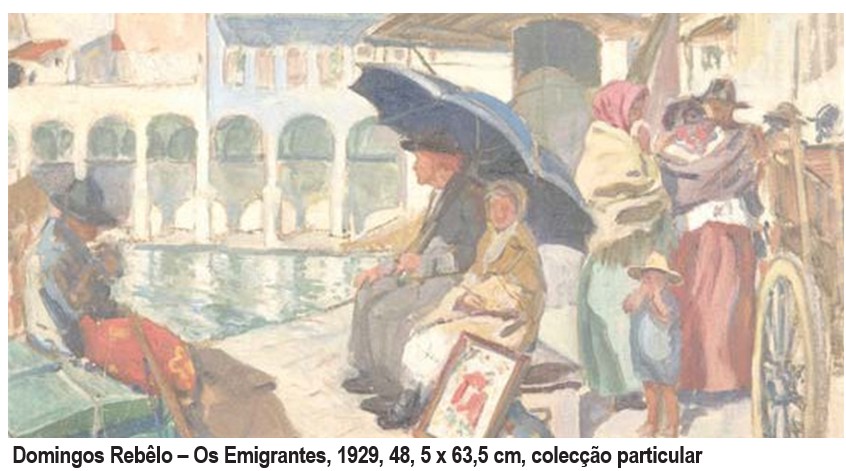
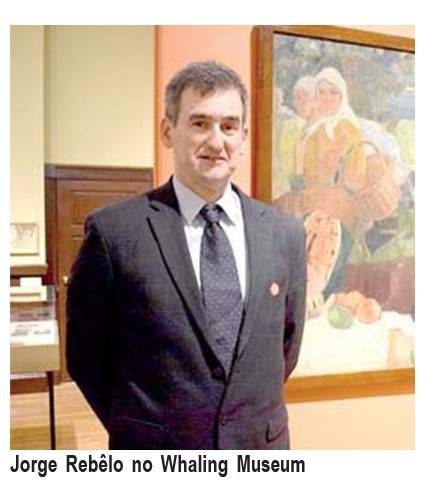
Grandson of painter Domingos Rebêlo and researcher dedicated to his life and work since 1987, Jorge Rebêlo presents the book “The Azorean Spirit – The Art of Domingos Rebêlo,” an enriched extension of the exhibition inaugurated at the New Bedford Whaling Museum. The work brings together more than a hundred pieces (many unpublished) and academic texts that delve into the universal dimension of the Azorean artist, whose production continues to reveal a legacy in constant discovery.
Atlântico Expresso – What motivated you to turn the exhibition “The Azorean Spirit” into a book?
Jorge Rebêlo (Researcher and promoter of the life and work of painter Domingos Rebêlo) – The book “The Azorean Spirit – The Art of Domingos Rebêlo” was presented at the opening of the exhibition of the same name, and accompanies it, remaining as a memory of the show.
How does this book complement or deepen the exhibition presented at the New Bedford Whaling Museum?
This book presents a collection of 54 pieces from the exhibition’s various thematic sections, along with 49 additional pieces by the painter Domingos Rebêlo, which, due to limited exhibition space and logistical constraints, could not be included.
The six texts by academics in the United States, the Azores, and mainland Portugal deepen the interpretationsthe Azorean artist’s work allows. In addition to the chronology of the painter’s life, an inventory of the more than 60 institutions that represent the artist completes a panoramic view of Domingos Rebêlo’s career.
How would you describe the process of research, selection, and contextualization of the 71 works included in the exhibition and now reflected in the book?
The process of preparing for this exhibition was lengthy, taking about seven years, and the selection of works contained in the book was based on the research work I have been engaged in since 1987.
As the grandson of Domingos Rebêlo, how did you balance your family ties with the historical and curatorial rigor required for the project?
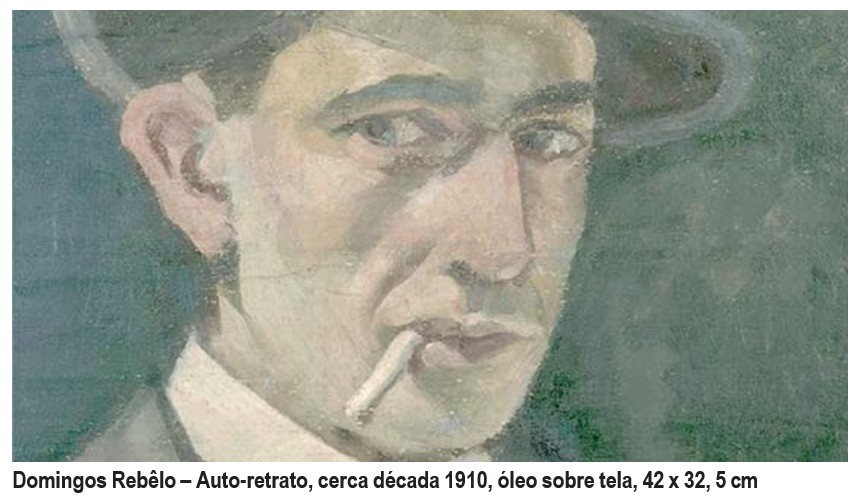
The sentimental factor of being Domingos Rebêlo’s grandson underpins the research method I use. Just as the painter was extremely rigorous in his approach to the technical aspects of his art, I, too, am exhaustively involved in discovering all the clues to comprehend and understand an artistic career spanning more than 60 years. Cross-referencing documentary data with the creative pieces is like detective work, putting together pieces that fit into a gigantic puzzle that will be the more than 5,000 works that I estimate Domingos Rebêlo has produced, which are scattered around the world. Wherever there are Azorean emigrants, there are works by the Azorean artist with them.
What discoveries or rediscoveries emerged during the development of the book and the exhibition?
The entire process of putting together the exhibition and the book was a revelation of many hidden or yet to be discovered details of Domingos Rebêlo’s art. It is a dynamic of constant discovery and amazement.

What do you consider most remarkable about the legacy artistic style of Domingos Rebêlo and the way he represents the “Azorean spirit”?
When he drew and painted in the Azores, mainland Portugal, France, Belgium, Italy, and Brazil, Domingos Rebêlo had the mastery to capture and express the people and atmosphere of the places he visited, using a modern pictorial treatment that was the result of his training in Paris.
What distinguishes him from other artists is his Azorean roots, the sensitivity of the place where he was born and which marked him deeply, like lava. It is this visceral and enigmatic Azorean spirit that lies at the heart of his work and can only be glimpsed by feeling and immersing oneself in his art.
What impact would you like this book to have on the preservation and dissemination of Azorean art, especially among the younger generations?
I think this book is a wake-up call to the rescue of an artist who deserves to be known and has a legacy that is not only regional or national but universal. And for that reason, there is still much to be done.
Interview by journalist José Henrique Andrade for Atlântico Expresso, Natalino Viveiros, director.
 Filamentos (artes e letras)