
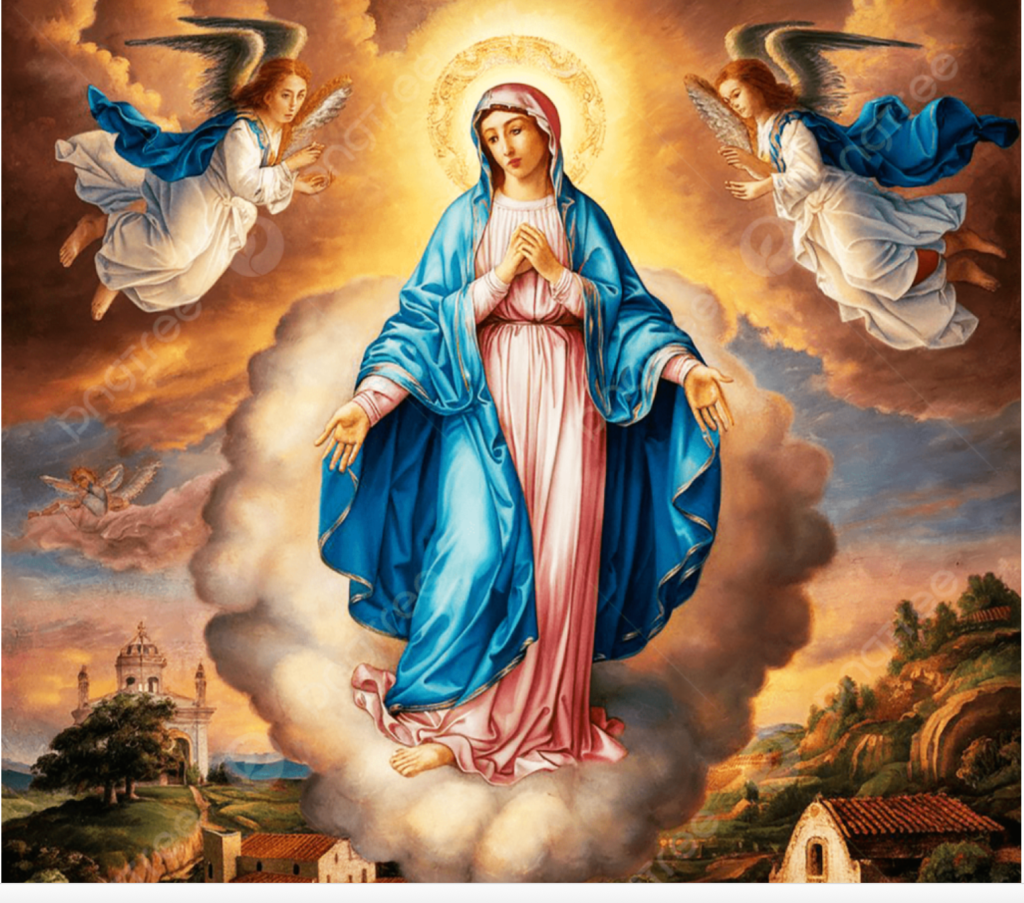
December 8, the Feast of the Immaculate Conception, occupies a quiet but enduring radiance in the Portuguese calendar. More than a holy day, it is a tender convergence of faith, memory, and national self-understanding. The celebration honors Mary who was conceived without sin, but in Portugal, for centuries, the day has carried another resonance just as intimate: for many generations, it was also celebrated as Mother’s Day. On this date, families honored not only the heavenly mother but the earthly ones—women who bore the fragile architecture of households, of villages, of entire genealogies. The Imaculada became a mirror in which the Portuguese saw reflected both the divine feminine and the everyday sanctity of their own mães.
This double meaning—sacred and domestic—speaks deeply to the Portuguese imagination, where the maternal figure often symbolizes protection, sacrifice, and quiet endurance. It is fitting, then, that in 1646, King João IV consecrated Portugal to the Immaculate Conception, making her the nation’s patroness. Her mantle became the country’s own: a shelter through wars, storms, decline, renewal, and the countless departures that shaped the Portuguese soul.
For many families, December 8 marks the true opening of the Christmas season. Nativity scenes are arranged with deliberate tenderness; candles appear in village chapels; the air fills with the soft, ancestral ritual of preparing for winter. And even those who no longer practice the faith feel the gravitational pull of tradition—the quiet call to remember where they come from.

Yet the holiday’s meaning has grown, not diminished, in modern Portugal. The country of today is irrevocably multicultural, woven from African rhythms, Brazilian warmth, Asian memory, Eastern European resilience, and from the languages and faiths of newcomers who now help carry Portugal forward. This is not a new identity but a deepening of an old one. Portugal has always been a crossroads: Roman, Visigothic, Jewish, Arab, Mediterranean, Atlantic. It is a nation shaped by encounters, borrowings, translations, by the constant tide of those arriving and those departing.
And Portugal is, above all, a country of emigrants. For centuries, its people carried hopes across oceans—shaping communities from New England to California, from Venezuela to Bermuda, from Luxembourg to Canada. The diaspora became an extension of the nation’s heart, a dispersed but enduring chorus.
In this light, December 8 could become more than a remembrance of the past. It could be a new kind of civic ritual, a day that celebrates the Portugal that expands across continents and the Portugal that welcomes new citizens within its shores.
On this day devoted to the Imaculada—symbol of refuge, tenderness, and possibility—Portugal might choose to honor: its mothers and grandmothers; its immigrants and its emigrants; its newcomers and its wanderers; its plural, growing, evolving self.
It could be a day to reaffirm that Portugal’s identity is not a fortress but a harbor—one that must learn to welcome as generously as it once departed, one that must see in every new arrival another thread in the national tapestry. Likewise, it can be a day for the diaspora to feel remembered, included, woven back into the national story.
In celebrating the Immaculate Conception, Portugal might celebrate not purity, but renewal. This renewal comes from embracing diversity, from honoring mothers who built the past and migrants who create the future, from recognizing itself as a country shaped equally by those who stayed and those who left.
December 8, then, becomes more than a holy day. It becomes an invitation: to tenderness, to belonging, to a broader, more generous vision of what Portugal has been
and what it is called to become.
A day when the nation, ancient yet ever-changing, might finally see itself in full—as a constellation of cultures, journeys, and returning lights that no winter can extinguish.
 Filamentos (artes e letras)