
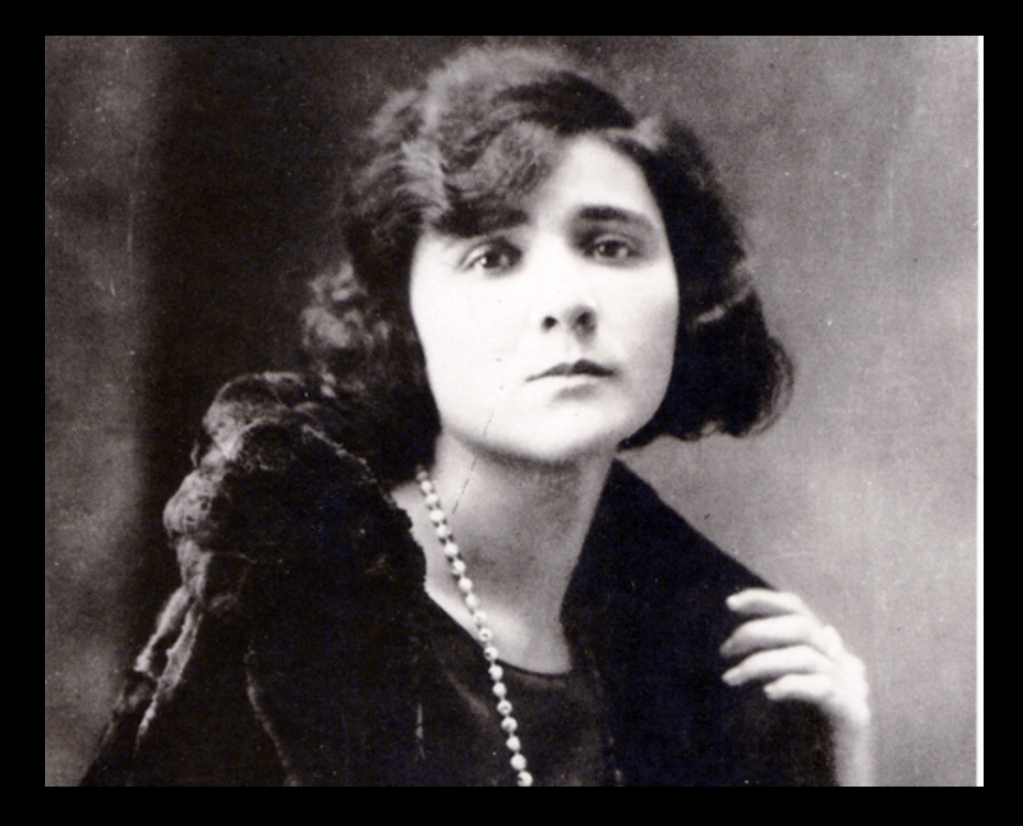
Like one of her own sonnets—where desire rises as “a flame caught in the veil of dawn” and the soul confesses itself “burning to a frantic rhythm”—the name Florbela Espanca enters our century with the brilliance of a restless star, impossible to contain. Born on December 7, 1894, she carried into the world a luminous inquietude, a fever of being that soon exceeded the narrow boundaries imposed upon women of her time. In the heart of a conservative Portugal, she lifted her voice to declare that “to be a poet is to be higher,” and she lived, fiercely, according to that calling.
Florbela did not merely innovate; she transfigured. In a society that demanded silence and modesty, she claimed her own femininity as a field of revelation and rebellion. She sang love with the boldness of one who knows that love is an absolute act, almost sacred; she spoke desire with the clarity of someone who refuses erasure; she wrote suffering with the lucidity of one who understands it as living material of creation. Through poetry, she asserted a woman’s right to fullness—to passion, joy, sorrow, the body, and interior freedom.
Within the architecture of her sonnets—classical in form yet incendiary in spirit—Florbela released an entirely new music. Perfect meter coexists with emotional tempest; delicate phrasing shelters storms. In her hands, the sonnet ceased to be a refuge and became a lyrical insurrection. Her originality lives in this encounter: the embrace of ancient rigor with modern vertigo.
Yet Florbela was more than an aesthetic force—she was an existential courage. She paid the price of living with “a soul in flame,” of asserting herself in a world that expected women to be discreet, obedient, invisible. She transformed wounds into symbols, absences into clarity, longing into a steady fire. The suffering she endured did not diminish her; it amplified her. And this amplification of the feminine experience—so rare in early twentieth-century Portugal—is what makes her work foundational.
Today, as we honor the day she was born, we recognize a poet who opened pathways for so many others. Florbela Espanca taught us that language is a terrain of freedom, and that poetry, when it dares to touch what is forbidden, becomes an instrument of emancipation. Her voice endures not because it confessed, but because it confronted. Even now, it speaks to women and readers of every age, reminding us that the human heart—when truly heard—knows no chains.
Florbela remains a flame that does not dim, a light that continues to burn “to a frantic rhythm” within the Portuguese language.
Heathland in Bloom
(after Florbela Espanca’s Charneca em Flor)
Something rises in my chest—
a trembling made of wounded things,
a fierce, enchanted ache.
Even here,
beneath the scorched heather,
roses insist on being born.
I wipe the salt from my eyes
as if erasing a horizon.
I hunger—wide-winged, unbound—
for something unnamed
that stirs inside me.
I hear the voiceless ones
lean close
and whisper their secret syllables,
touching my being
like a hand I never saw coming.
And in this fever that rushes through me,
I tear away the shroud,
the coarse habit of restraint,
and shed the woman of longing
I once believed myself to be.
Now—
with eyes burning in the rapture of desire,
with a mouth tasting
of sunlight,
of fruit,
of honey—
I become the wild heath itself,
opening,
unyielding,
bursting into bloom.
 Filamentos (artes e letras)