
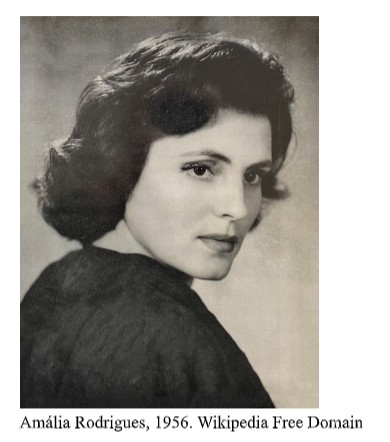
A Bilingual Tribute to the Poetry of Alfred Lewis (1902–1977)
Uma Homenagem Bilingue à Poesia de Alfred Lewis (1902–1977)
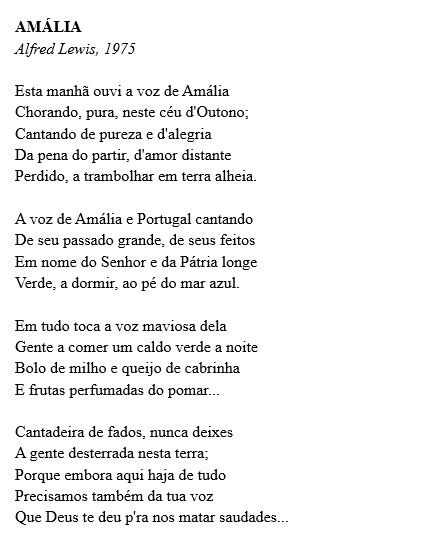
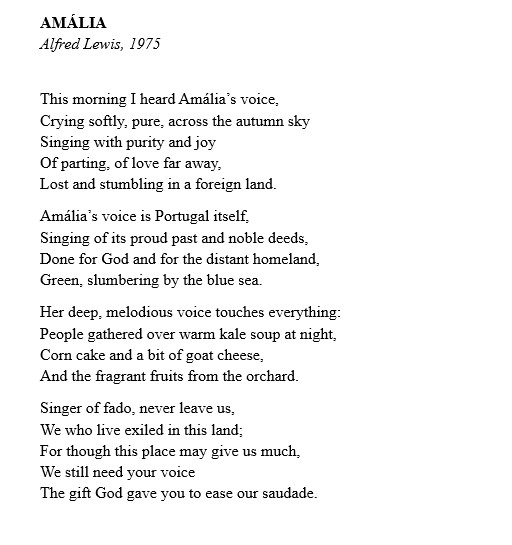
Translated by poet RoseAngelina Baptista
Nota do Tradutor:
Em poesia, falar de uma celebridade é uma das tarefas mais difíceis de suceder .
Mas Lewis, sem intenção de soberba, o fez de maneira sutil e escorreita.
Amália Rodrigues (1922-1999), a Rainha do Fado, é um fenômeno que povoa o coletivo do mundo luso, raro de se ver na história da música, para mim se equipara a Lata Mangeshkar, conhecida por epítetos como o Rouxinol da Índia, Rainha da Melodia, e A Voz do Milênio.
Lewis traz a grandeza de Amália ao leitor de modo inefável, num espaço quotidiano de uma casa, talvez de sua memória.
A cena poética transcorre numa manhã de outono em 1975, em sua residência em Los Banos.
Talvez, pelo rádio ou na vitrola, tenha ouvido Amália cantando. O poeta tem um arrebate em virtude da comunhão do idioma nativo, da história marítima de Portugal, e da sofreguidão da ausência do amor que Amália e Lewis conheceram em situações diferentes. Essa identidade, sentimento de pertença, traz ao poeta alegria vital para seu exílio. Ele diz com sabedoria sobre a voz fadista que “tudo toca”, incluindo a mesa de refeição com seus pratos favoritos da infância. E assim tocando tudo, Amália faz o poeta sofrer menos.
Apesar de Amália ter visitado, em suas turnês internacionais, os EUA em 1952 e 1966, Lewis não pode vê-la, e em 1977 quando a diva se apresentara na Califórnia, San José, Lewis havia falecido há 5 meses.
* * *
Nota de apreciação sobre Amália Rodrigues por ocasião da celebração do Dia Mundial do Fado em 27 de Novembro.
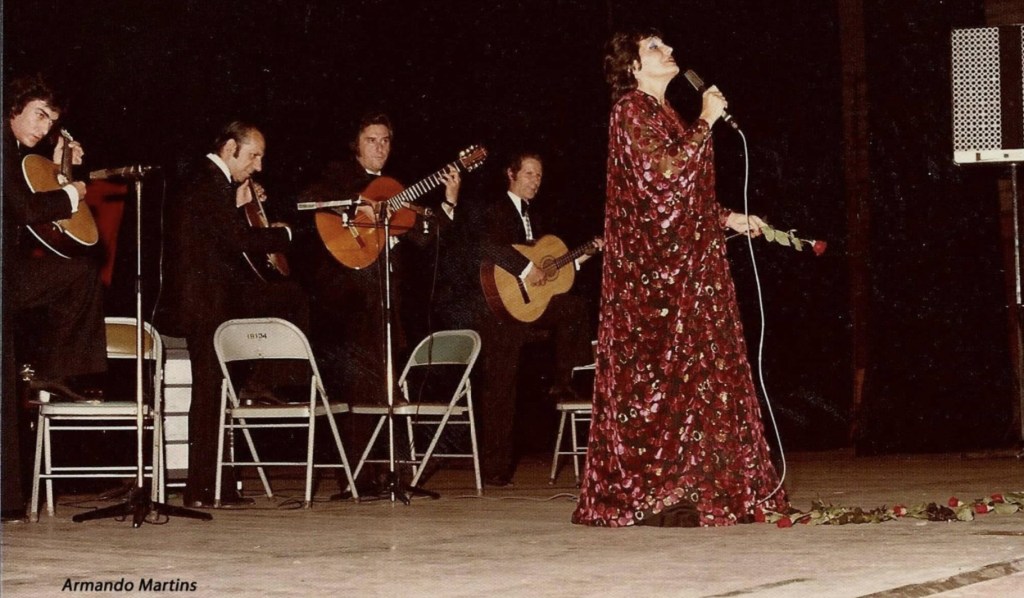
Mulher de traços belos, caráter transparente, porte sólido, com grande equilíbrio, voz com nuances de trinados mouros. Para mim, sua voz poderosa e presença enigmática provêm de suas lutas inquisitivas interiores sobre a impermanência das coisas e da falta de controle que temos sobre o destino humano. Impermanência e descontrole da pulsão da vida transformam o coração humano numa eterna mancha de insatisfação, e raros são os seres que transpassam essa mancha, sendo capazes de enfrentar perdas de todas as sortes sem se quebrar; sendo capazes de viver além de seus sentimentos individuais e interesses egoísticos.
A voz e toda sua magnífica improvisação criativa advêm ao meu ver do autoconhecimento de seu palco interior luminoso de lúcido, do qual Amália, apesar de dizer-se externamente insegura, nunca perdeu o insight de seu poder criativo.
Por isso tinha grande escrutínio para fazer escolhas de líricas que casassem com seu gênio artístico, de espontânea expressão e domínio das qualidades do som humano com radical apelo universal.
Sua voz reflete as emoções mais emblemáticas do mundo Luso: separação, perda, saudade.
Outro aspecto a salientar de Amália Rodrigues, sobre sua vida literária: foi poetisa e antes de falecer, em 1999 teve a primeira edição de seu livro de poesias “Versos” pela editora Cotovia, que o reeditou em 2016 e 2020 no centenário de aniversário de Amália. Destaco os belos poemas onde sentimos inquietação, angústia e solidão da voz poética: “Estranha Forma de Vida”, “O Meu Primeiro Amor”, “Trago Fado nos Sentidos”, “Grito”, “Lágrima”, “Quando se Gosta de Alguém”, etc.
E para concluir, recentemente, celebrando os 40 anos da FLAD, tivemos um concerto em tributo ao legado de Amália no Carnegie Hall em Nova Iorque no espetáculo “Amália in America – Beyond Fado”
Translator’s Note
In poetry, writing about a celebrity is one of the most difficult tasks to accomplish successfully. Yet Lewis, without any hint of arrogance, managed to do so with subtlety and elegance.
Amália Rodrigues (1922–1999), the Queen of Fado, is a phenomenon that inhabits the collective imagination of the Lusophone world — a rarity in the history of music. To me, she is comparable to Lata Mangeshkar, known by epithets such as the Nightingale of India, the Queen of Melody, and the Voice of the Millennium.
Lewis brings Amália’s greatness to the reader in an ineffable way, situating her in the everyday intimacy of a home, perhaps one held in memory. The poetic scene unfolds on an autumn morning in 1975, in his residence in Los Baños. Perhaps, through the radio or on the record player, he heard Amália singing. The poet is overtaken by emotion through the communion of his native language, Portugal’s maritime history, and the aching longing born of love’s absence — a longing experienced differently by Amália and by Lewis. This sense of identity, this feeling of belonging, gives the poet a vital joy in his exile. He says with wisdom of the fadista’s voice that it “touches everything,” including the dining table with the dishes of his childhood. And in touching everything, Amália makes the poet suffer a little less.
Although Amália visited the United States during her international tours in 1952 and 1966, Lewis never had the chance to see her. And in 1977, when the diva performed in California, in San José, Lewis had already passed away five months earlier.
Appreciation Note on Amália Rodrigues on the occasion of World Fado Day, November 27

A woman of beautiful features, transparent character, solid bearing, and great composure, with a voice that carried nuances of Moorish trills. To me, her powerful voice and enigmatic presence arose from her own inner, inquisitive struggles with the impermanence of things and the lack of control we have over human destiny. Impermanence and the uncontrollable pulse of life transform the human heart into an eternal stain of dissatisfaction, and only rarely do individuals transcend that stain, becoming capable of facing losses of every kind without breaking, capable of living beyond their personal feelings and self-interested desires.
Her voice, and all her magnificent creative improvisation, springs — in my view — from the self-knowledge of a luminous inner stage, lucid and unwavering, from which Amália, despite professing outward insecurity, never lost the insight of her creative power. For this reason, she had great discernment in choosing lyrics that matched her artistic genius, with its spontaneous expression and mastery of the qualities of the human voice, imbued with a radical universal appeal.
Her voice reflects the most emblematic emotions of the Lusophone world: separation, loss, saudade.
Another aspect of Amália Rodrigues worth highlighting is her literary life: she was a poet, and before she passed away in 1999, the first edition of her poetry book Versos was published by Cotovia, which reissued it in 2016 and again in 2020 on the centenary of her birth. I particularly emphasize the beautiful poems in which we feel the unease, anguish, and solitude of the poetic voice: Estranha Forma de Vida, O Meu Primeiro Amor, Trago Fado nos Sentidos, Grito, Lágrima, Quando se Gosta de Alguém, and others.
To conclude, in the recent celebration of FLAD’s 40th anniversary, we were treated to a concert paying tribute to Amália’s legacy at Carnegie Hall in New York, in the performance Amália in America — Beyond Fado.
 Filamentos (artes e letras)