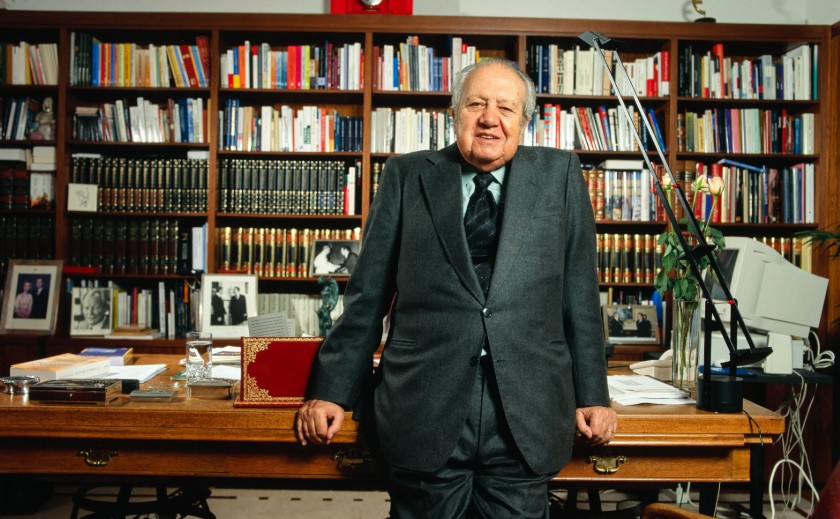
Mário Alberto Nobre Lopes Soares was born on 7 December 1924 into a Portugal already marked by the turbulence of political dreams and authoritarian shadows. The son of João Lopes Soares, a republican minister who suffered under the dictatorship that began after the 1926 military coup, he grew up in a household where civic courage and dissent were woven into everyday life. This early exposure to principle and persecution formed a young man for whom politics would never be simply the acquisition of power but the ethical defense of human dignity. His studies in history and philosophy prepared him for the intellectual breadth that later distinguished him: rooted in Enlightenment rationalism, democratic socialism, and a wide humanist tradition, he matured into an intellectual who understood that ideas shape nations, and that freedom demands sustained vigilance.
The long night of Portugal’s dictatorship shaped him as deeply as his intellectual apprenticeship. Soares spent decades resisting the Estado Novo, the authoritarian regime of António de Oliveira Salazar and later Marcelo Caetano. He was arrested repeatedly and imprisoned in the notorious cells of Caxias, Peniche, and Aljube; he was exiled to São Tomé and forced into political exiles in Paris. None of this subdued him. Instead, exile deepened his understanding of Europe, sharpened his capacity to build international alliances, and strengthened his belief that Portugal’s liberation could not be merely a reaction to oppression but had to be the construction of a democratic alternative capable of uniting—rather than dividing—the Portuguese people. In those years abroad, Soares refined a political identity that rejected authoritarian extremes on both the left and the right, insisting on a plural, open, and humane political order instead.
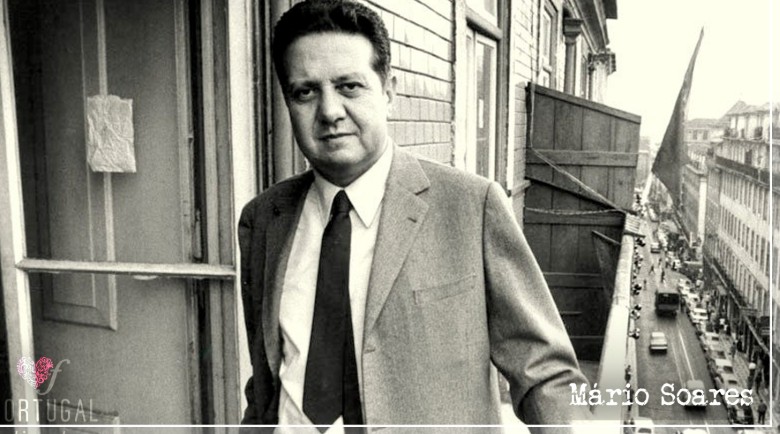
When the Carnation Revolution erupted on 25 April 1974, ending forty-eight years of dictatorship, Soares returned to Lisbon to welcome those who assumed the aura of myth. Tens of thousands greeted him at Santa Apolónia station as if democracy itself had stepped off the train. His role in the fragile early years of the revolution proved decisive. Portugal was navigating a landscape of ideological polarization, economic instability, global pressure, and the immense challenge of decolonization. As Foreign Minister, he confronted that most urgent of historical tasks: negotiating the independence of Angola, Mozambique, Cape Verde, Guinea-Bissau, and São Tomé and Príncipe. This process was fraught with emotional, political, and geopolitical complexities, yet Soares approached it with the combination of resolve, negotiation skill, and international credibility that became his signature. At home, he fought tirelessly to keep the revolution on a democratic course, resisting both reactionary retrenchment and authoritarian temptations from the far left. He helped shepherd the democratic Constitution of 1976 into being, ensuring that the young republic was built upon rights, elections, freedoms, and a parliamentary structure capable of weathering crisis.
His two periods as Prime Minister—from 1976 to 1978 and again from 1983 to 1985—coincided with some of the most critical phases of democratic consolidation. Soares understood that democracy is not measured by the absence of conflict but by the capacity of institutions to endure and respond. He faced economic crises, ideological tensions, and the residual fractures of revolution, governing with a commitment to constitutional order and a belief in consensus-building. Yet it was on the international stage that he achieved what is often considered his greatest legacy: guiding Portugal into the European Economic Community. For Soares, Europe was not merely an economic partnership but a civilizational choice. He believed that anchoring Portugal within the European project would ensure democratic stability, open pathways to modernization, and bind the nation to a community of democratic values after decades of isolation. His diplomatic persistence culminated in Portugal’s accession to the EEC in 1985, a moment that transformed the nation’s trajectory and remains one of the defining achievements of Portuguese post-revolutionary history.

As President of the Republic from 1986 to 1996, Soares became the moral center of the Portuguese political system. His presidency earned him the affectionate moniker “Presidente do Afeto,” for he traveled the country with an attentiveness and warmth that helped reconcile a society still learning to trust itself after decades of repression. He acted as a guardian of constitutionalism, intervening when necessary to protect democratic norms and cultivating a civic culture in which debate, openness, and participation were not only tolerated but encouraged. Under his watch, Portugal strengthened its international role, deepened its European identity, and matured into a confident democracy increasingly aware of its responsibilities in the world.
Yet Soares was never merely a statesman. He remained, throughout his life, a thinker and writer, publishing memoirs, essays, speeches, and reflections that reveal both the coherence of his political philosophy and his lifelong intellectual curiosity. He embraced democratic socialism not as an ideology but as an ethical orientation concerned with justice, dialogue, and human dignity. Long after leaving formal office, he remained active in public life, opposing the Iraq War, defending human rights, and intervening in debates where he believed freedom or justice was at stake. His oft-quoted assertion—“A liberdade é sempre, sempre, o meu partido”—captures both the constancy and the passion that defined his public engagement.
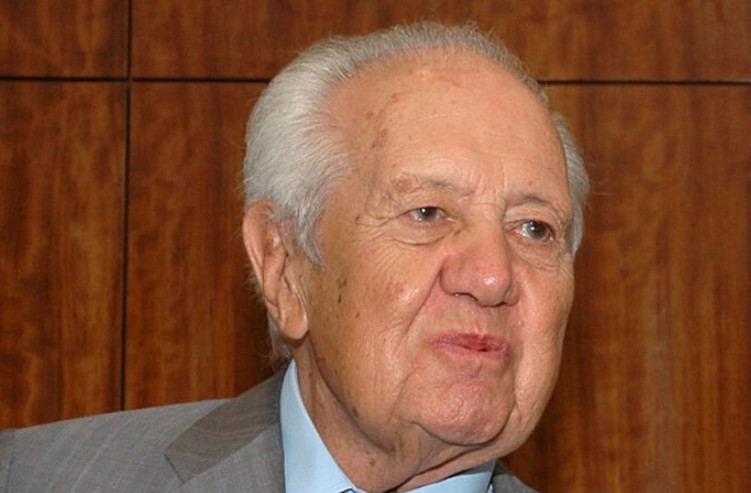
When Mário Soares died in 2017, Portugal entered a period of national mourning that reflected not only affection but profound gratitude. His life embodies the arc through which modern Portugal passed: from authoritarian darkness to democratic light, from isolation to European belonging, from fear to civic confidence. On the 101st anniversary of his birth, his legacy continues to resonate. He helped overthrow a dictatorship, built the foundations of the Second Republic, led Portugal into Europe, defended pluralism with unwavering conviction, and offered the country an example of democratic decency rarely matched.
Today, at a time when democracies around the world face renewed pressures from extremism, disinformation, and the seductions of authoritarian simplicity, the lessons of Mário Soares feel not like recollections of a distant past but like urgent reminders addressed to the present. He believed that democracy is a daily labor, that Europe is a space of shared destiny, and that freedom must be defended not only with institutions but with courage, generosity, and intellect. Portugal as we know it—open, democratic, European, and engaged with the world—still carries the imprint of his vision.
Mário Soares remains, unmistakably, one of the great democrats of the twentieth century: an architect of liberty, a builder of bridges, a restless defender of human dignity, and the steady voice of a nation learning to breathe freely after half a century of silence.
 Filamentos (artes e letras)