
What were the most significant milestones in the Institute’s history over the past 83 years? And how did they shape the cultural identity of Terceira?
The most significant milestones achieved by the Institute were defined, at each moment, according to the priorities established and the resources available.
In its early years, the Institute devoted itself almost exclusively to two major areas of knowledge, focusing its activities on historical and genealogical research and ethnographic studies. At the same time, it developed initiatives that led to the creation of the archive, library, and museum in Angra, which are now fully operational. In 1985, the Institute’s statutes and internal regulations were reformulated in order to adapt it to the new autonomous reality – which had done away with the old districts – while preserving the essence of the association and its character, both private and supplementary to cultural action, based on the status of local, regional, and national reality, and on the voluntary work of its members. In this regard, greater importance was given to the protection of heritage, with a focus on the area classified after the 1980 earthquake, which was the main promoter with UNESCO for the integration of Angra as a World Heritage City. Another area that attracted great interest was the promotion of studies on the geopolitical and geostrategic situation of the Azores, the holding of congresses, colloquiums, seminars, conferences, and courses that promote cultural and strategic education among the Armed Forces and the Azorean community. As a consequence of all these objectives, it was essential to encourage and support scientific research in the various fields in which the Historical Institute intends to act as a center for reflection and thought, as well as in the publication of the research work that has been produced.

What initiatives can bring new generations closer to local history?
The history we defend is not a commemoration of the past, but a way of interpreting the present. Studying the past is therefore fundamental to understanding the society in which we live. That is why teaching and learning history in general and local history in the 21st century poses great challenges, given the evolution of new technologies, which are extremely attractive to young people and challenging for teachers. We have been driven by the idea of contributing, among ourselves, to a certain way of seeing the Institute, which, in a current and forward-looking vision, means following the same objectives set out 83 years ago by the founders and friends of this Association, meeting the needs of those who today seek the same kind of loyalty and consistency in the activities promoted. The main thrust of the activities carried out and to be carried out has followed a set of axes that we have been developing in recent years:
– Bringing the Institute closer to individual and local, regional, and international partners. This idea led to the first International Colloquium “Gungunhana – Importance and Relevance,” which took place between October 31 and November 2, 2024, in Terceira. This event brought together experts, researchers, and institutional representatives from various fields and countries to discuss the historical and contemporary relevance of Gungunhana, a central figure in the Gaza Empire in Mozambique. The sessions took place at the Manuel Coelho Baptista de Lima Military History Center, but the opening session was held at the Angra do Heroísmo City Hall.
– Promote the production of knowledge, which was developed through, for example, the implementation of the project on the Agualva mill stream, in close collaboration with the Parish Council, with the support of the Regional Directorate for Culture and the Praia da Vitória City Council. This resulted in the publication of the monograph: “Memories of the Mills of the Agualva River – an interpretive journey.”
– From 2023 to 2025, the Institute has organized debate sessions under the title Tertúlia de Investigadores (Researchers’ Gathering). In addition to the importance and liveliness of the sessions on a wide range of topics in the areas of history, science, and other related topics, it has allowed for intense collaboration with the University of the Azores and TERINOV on Terceira Island.
– Another area in which the Institute has been investing is that of editions and publications. For its viability, the decisive and fundamental support of the Angra do Heroísmo City Council must be highlighted. The personal and institutional commitment, with emphasis on its former president, Prof. Álamo Meneses, has been decisive.
What has been the Institute’s strategy for preserving, digitizing, and making its archives and collections accessible?
This issue is of great importance. The Institute’s strategy has been, on the one hand, to disseminate its work through the existing channels of the Regional Directorate for Culture, in collaboration with the University of the Azores, on platforms such as ANGRAESFERA, the Angra do Heroísmo City Council, and the Institute’s website.
How has the Institute collaborated with schools, universities, and other regional and international cultural entities in recent initiatives?
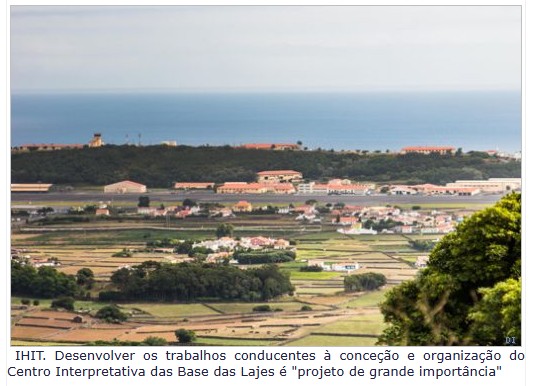
The strategy defined by the Institute has been based, on the one hand, on the dissemination of the knowledge produced and edited, in the annual publication of the Bulletin, where members and other researchers can publish their work resulting from the research carried out. On the other hand, it has continued with initiatives that promote the involvement of researchers in terms of training, debate, results, and their application. Developing the work leading to the design and organization of the Lajes Base Interpretation Center is another project of great importance and scope. Following the publication of the books, they have been presented to the public in the Noble Hall of the Angra do Heroísmo City Council. We also want to explore the possibility of IHIT having a regular space in the local press (Diário Insular), where it can exhibit and disseminate its ideas and report on all its events and activities.
What are the financial and organizational priorities and challenges for IHIT?
We intend to maintain the idea of the need to move towards financial self-sufficiency, with the intervention of researchers with public and private entities: promoting institutional relationships with the departments of the Regional Government with competences in the areas of culture, heritage, science, and technology, in order to develop projects that coincide with the statutory purposes of the Historical Institute of Terceira Island. We also intend to renew the protocols with the Municipal Councils of Angra do Heroísmo and Praia da Vitória, benefiting from financial compensation.
What specific objectives has the Institute set for the cycle: “Rethinking the autonomy of the future”? Will conclusions be produced?
The debates already held on the theme “Rethinking the Autonomy of the Future” began in April and continued in July, September, and November 2025 and will continue in 2026. The conclusion of this cycle of debates aims to discuss the future and viability of the autonomy of the Azores, greatly inspired by the thinking of Álvaro Monjardino. It will culminate in a celebration of 50 years, with a day of special significance in light of half a century of political and constitutional autonomy, and a tribute to Dr. Álvaro Monjardino, who was the first President of the Azorean Parliament and President of this Institute, with the beginning of the publication of his Complete Works.
In Diário Insular, José Lourenço-director
 Filamentos (artes e letras)