
ROGÉRIO SOUSA, PRESIDENT OF THE AZOREAN CULTURAL INSTITUTE
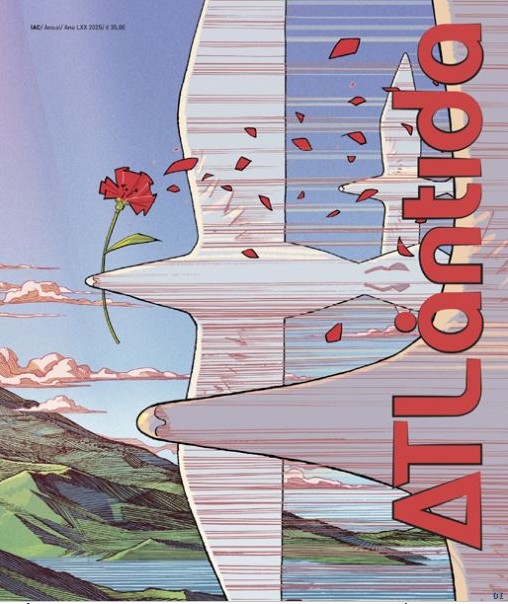
The 70th edition of the Azorean Cultural Institute’s magazine “Atlântida” was recently launched, with Freedom as its theme, to commemorate the 50th anniversary of April 25. What are the main highlights of this edition and how does it mark this milestone in Portuguese democracy?
We believe that this edition has several highlights, not only in terms of graphics but also in terms of literature and themes. First of all, we would like to highlight the beautiful cover illustration by Portuguese artist Jorge Coelho, which is a striking graphic representation of this edition’s theme.
As for the thematic dossier, this edition features contributions from Carlos Guilherme Riley, Álvaro Laborinho Lúcio, Nuno Ornelas Martins, Joel Neto, Ermelindo Peixoto, and Maria das Mercês Pacheco. We believe that this issue offers a critical reflection on the challenges of freedom and democracy in our contemporary world, half a century after the conquest of freedom in Portugal. The “Supplement – Voices of Freedom” features contributions from Luiz Fagundes Duarte, Maria do Amparo Pereira, Maria da Conceição Abreu and Paula Contenças, Vasco Pereira da Costa, Manuel Tomás Costa, and Moisés Rocha Mendes. We invite readers to think about the future with responsibility and commitment, as they read the impressions and creations that freedom has allowed us to experience. In the “Studies” section, we present articles by Avelino de Freitas de Meneses, Victor Rui Dores, Paulo Matos, and Mário Cabral, with contributions from Alexandre Borges, João Cogumbreiro, Carla Devesa Rodrigues, and José Luís Neto. In the photo essay section, we display the work of Rita Carmo and Rui Soares. In the “Figures” section, we have articles by Jácome de Bruges Bettencourt, Jaime Ferreira Regalado, Joana de Freitas Fernandes, and a tribute to Manuel Bráulio da Costa Fontes, organized by Francisco Cota Fagundes. At the end of this edition, in the “Creation” section, there are poems by Stuart Blazer and Maria Luísa Soares. We believe that this 70th edition reaffirms the role of Atlântida magazine as a space for cultural dialogue and resistance, at a time when the values that built the 25th of April continue to be fundamental.

Have we taken freedom for granted over the last five decades? Is it important today to remember its importance and warn of its fragility?
Freedom, with or without a capital letter, can only be expressed in its fullness, without adversatives or conditions. It is important to celebrate its importance as an absolute concept, and it is urgent that we do so. There is the freedom to think without constraints; the freedom to express without conditions; the freedom to create without limits; to produce, to consider, and to build worlds based on research, science, development, and the pursuit of excellence, of constant improvement that underlies the work that we, too, try to present with this edition of Atlântida. Nowadays, there are those who confuse freedom of expression with incitement to hatred and continue to believe that free thought should have boundaries. The truth is that this is not the case, and we must educate ourselves as a community to accept others in their entirety and not tolerate what is harmful to us. We think that the issue, perhaps, was not so much taking it for granted, but feeling that it may have taken us a few years to understand that freedom, in general, is always in danger and needs to be (re)defined on an ongoing basis. It is not a good or a given (acquired or conquered), but rather a state of existence that, from its very first affirmation, needs to be defended through constant combat against darkness, authoritarianism, and ignorance. As such, we believe that freedom has never been taken for granted, as we still struggle today to achieve it in its fullness and across our entire society.
How important is this magazine of the Azorean Institute of Culture?
Atlântida has been around for as many years as the Azorean Institute of Culture itself, and is therefore as natural to the institute’s existence as the act of publishing it. The uninterrupted publication of this magazine is, in itself, an act of resistance and commitment to the objectives and aims of the institute that publishes it. It has been working for 70 years to promote Azorean culture and enhance the Portuguese language. Based in the Azores, but not confined to them, we believe that this edition of Atlântida reaffirms our commitment to freedom of thought, to the freedom and autonomy to be, to create, to innovate, and to live as Azoreans. Throughout its existence, Atlântida magazine has always been presented as a multidimensional meeting place for thought, art, and identity, serving as a stage for the expression of multiple voices and disciplines, promoting dialogue between tradition and contemporaneity.
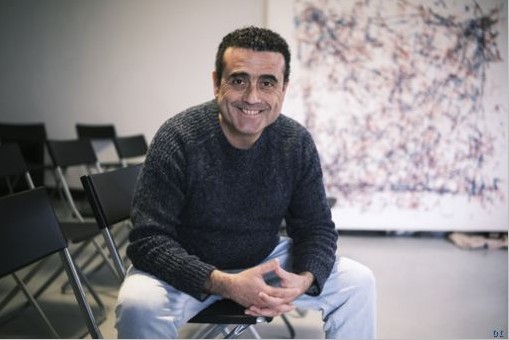
One of the featured texts in this edition is signed by Álvaro Laborinho Lúcio, who recently passed away. What was Laborinho Lúcio’s relationship with the Azorean Institute of Culture? What does his latest collaboration with the IAC represent?
Álvaro Laborinho Lúcio is a Portuguese personality who had a unique and very special relationship with the Azores and also with the Azorean Institute of Culture. It can be said that Laborinho Lúcio is a name that will forever remain in the history of Azorean autonomy precisely because he was the exception in the performance of the (now) Representative of the Republic, (at the time) Minister of the Republic for the Azores. A collaborator of the Azorean Institute of Culture, his predisposition to contribute to the construction of a more just, equitable, and supportive Azores was well known. We are talking about a person whose sense of humanity and solidarity, coupled with unparalleled lucidity and sharp prose, which greatly accentuated his thinking and intervention, always drove him to civic action, informed debate, and the dream of change. For the Azorean Institute of Culture, it is a great privilege to be able to count on his excellent reflection on the concept of “freedom” in the thinking and writing of Vergílio Ferreira.
The themes for the next issues have already been chosen. What will they be and why?
We believe that the next themes are natural and interrelated. In 2026, the theme of the magazine will be “Autonomy,” to mark the 50th anniversary of our autonomous regime, considering our political and administrative status, as well as what the concept of “autonomy” means to us, the Azoreans, in the 21st century, after 50 years of national democracy and European integration, which has impacted us all sooner or later. For 2027, the magazine will focus on the construction of the concept of “Azorean Identity” (Azoreanity, if you will), on the occasion of the celebration of the 600th anniversary of the discovery and beginning of the settlement of the Azores, which, for the Azorean Institute of Culture, are equivalent to six centuries on the right side of the history of Portugal and the world. In 2028, we plan to address precisely the (re)definition of Azorean identity in the context of the contemporary postmodernity in which we live, globalized and digital. In other words, we are talking about “Açorianidade Remix”: the Azores have the particularity of, in a space of about fifty years, defining themselves as ‘Azoreans’ and then (re)inventing that same idea of “Azoreans,” using the tools of digital globalization of the world in which we live. In half a century, Zeca Medeiros, who defined the Azorean whaler character of the 1980s, is the same José Medeiros who collaborates with Pedro Lucas in “Experimentar na m’incomoda” in the 21st century, in an industrial nod to Carlos Medeiros’ traditional recording entitled “O Cantar na m’incomoda” at the end of the 20th century. The example cited serves only to reinforce a point in the field of music. There are many examples in multiple arts, and the Azores should precisely celebrate this dynamic identity that is so particular to the feeling of this archipelago between two continental shores, surrounded by the immense Atlantic that not only unites but also divides and transforms. In half a century, the Azores had the autonomous need to define themselves as a single but archipelagic region, with a past spanning six centuries of existence on volcanic islets, only to then open up to the modernity of international globalization and digitization and meta-references. It is this dynamic that we must celebrate.
In Diário Insular-José Lourenço, director
Translated to English as a community outreach program from the Portuguese Beyond Borders Institute (PBBI) and the Modern and Classical Languages and Literatures Department (MCLL) as part of Bruma Publication at California State University, Fresno, PBBI thanks the Luso-American Education Foundation for their support.
 Filamentos (artes e letras)