
ON THE WAY TO THE 50TH ANNIVERSARY OF AUTONOMY (1)
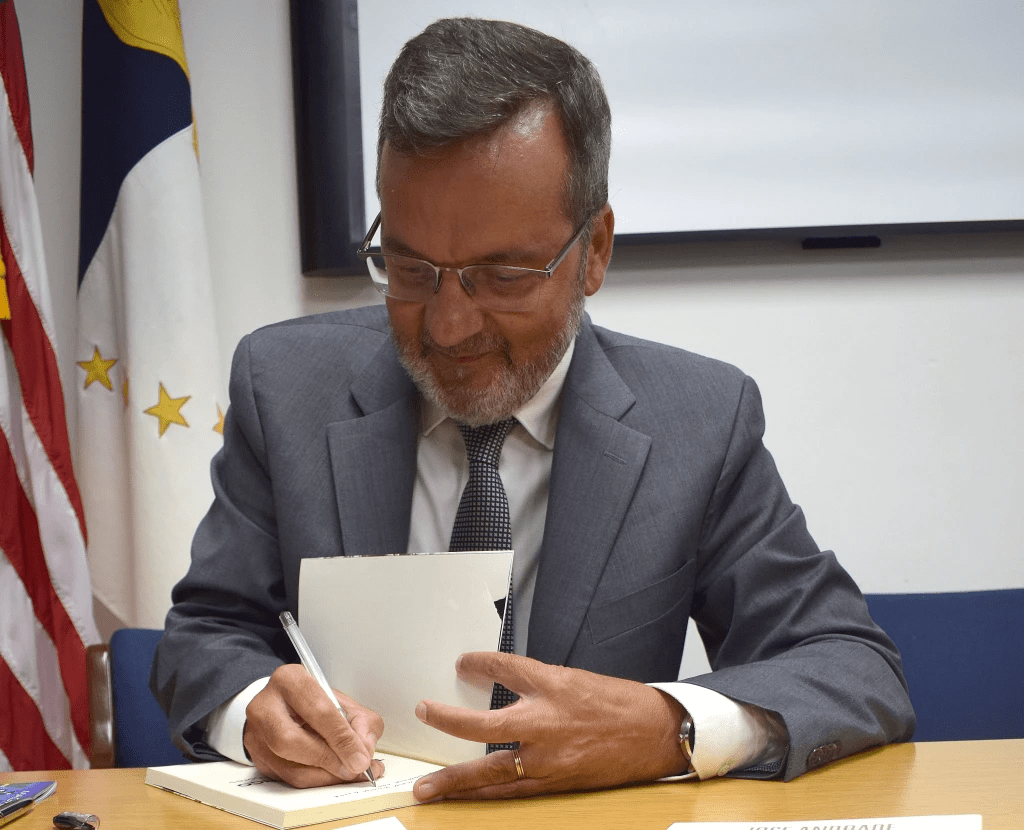
At the LusoPresse newspaper conference held in March in Montreal, I was asked to give a preview of the 50th anniversary of the autonomy of the Azores and Madeira, which will be celebrated in 2026.
First, I recalled the three decisive years in the democratic prehistory of the autonomous regime in the Azores, in 1974, 75, and 76. Then, I will present an electoral assessment of half a century of political autonomy, from 1976 to 2025, comparing the Azores with Madeira. So let’s take a trip back in time, here too.
April 25, 1974, was a normal Thursday in the three autonomous districts of the Azores archipelago.
In the morning, in Ponta Delgada, the Correio dos Açores protested against the neglect of the adjacent islands, and the Açores reported on the dictatorship of the metropolis; in Angra do Heroísmo, the Diário Insular reported on the government of Marcelo Caetano, and in Horta, O Telégrafo dreamed of a tax-free port.
But in the afternoon, Diário dos Açores announced a “Military Movement on the Mainland,” A União questioned whether there had been a “Coup d’état in Lisbon?” and Correio da Horta reported “a subversion whose main characteristics are still unknown.”
Thus, the Carnation Revolution reached the Azorean daily press, and Portuguese democracy reached the future Autonomous Region of the Azores.
The first days saw the military occupation of the district delegations of the General Security Directorate, the National Popular Action, the Portuguese Legion, and the Portuguese Youth, as well as the dismissal of the civil governors of Ponta Delgada, Angra, and Horta.
The following days saw the formation of new national political parties, such as the Democratic Movement, the Popular Democratic Party, and the Portuguese Socialist Party.
Between the popular demonstrations of May 1 and October 5, the Lajes Base hosts the Portuguese-American summit between Presidents Spínola and Nixon, accompanied by Minister Sá Carneiro, and the three district capitals host the socialist rallies of Mário Soares and Salgado Zenha.
In the summer, the new governors of Ponta Delgada (Borges Coutinho), Angra do Heroísmo (Oldemiro Figueiredo), and Horta (Sá Vaz) were sworn in. In the fall, Mota Amaral put forward the “Bases of the Political-Administrative Statute of the Autonomous Region of the Azores.” In winter, MAPA became the Movement for the Self-Determination of the Azorean People.
The Azores thus experienced the spring of democracy. Until the “hot summer” of 1975 arrived.
“Lisbon, listen: The Azores are fighting!” – This slogan echoed across all nine islands of the three autonomous districts of the Azores archipelago throughout the post-revolutionary year.
According to the seven daily newspapers of the district capitals of Ponta Delgada, Angra do Heroísmo, and Horta, from January to December there were about forty popular demonstrations in the streets of the Azores – fourteen in São Miguel, five in Terceira, Faial, and Pico, two in Santa Maria, Graciosa, and São Jorge, one in Flores, and another in Corvo – naturally with different dimensions and distinct political motivations: some against national governance or in favor of regional administration, others anti-communist or anti-separatist, and still others for labor or corporate reasons.
The most representative and consequential popular demonstration invaded the city of Ponta Delgada on June 6, leading to the immediate resignation of Civil Governor Borges Coutinho and may have contributed to forcing or accelerating the concrete resolution of pending issues between Lisbon and the Azores. But in the meantime, 35 individuals allegedly involved in its unauthorized organization were arrested in São Miguel and questioned in Terceira.
Earlier, on April 25, the three districts elected five PPD deputies (Mota Amaral, Américo Viveiros, José Manuel Bettencourt, Ruben Raposo, and Germano Domingos) and one PS deputy (Jaime Gama) to defend Azorean interests in the Constituent Assembly.
Then, on August 26, the Azores Administrative and Regional Development Board took office, chaired by military governor Altino de Magalhães and consisting of six members from the autonomous districts of Ponta Delgada (Jácome Correia and Henrique de Aguiar), Angra do Heroísmo (Borges de Carvalho, later replaced by Álvaro Monjardino, and Leonildo Vargas), and Horta (Pacheco de Almeida and Martins Goulart).
The political autonomy of the Azores and Madeira began to take shape.
José Andrade is the Regional Director of Communities of the Autonomous Region of the Azores
Translated by Diniz Borges
Excerpt from the conference “Azores (and Madeira): 50 years of Political Autonomy” presented on March 29, 2025, in Montreal, Canada.
 Filamentos (artes e letras)