
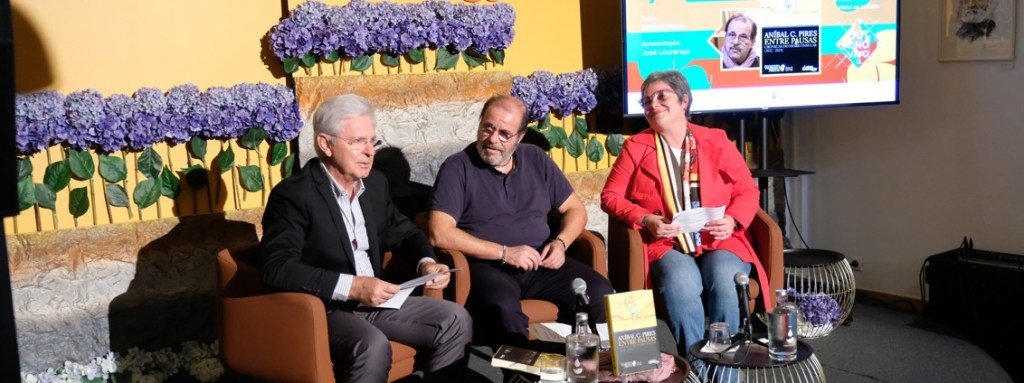
At Praia da Vitória, when the light is softer and the breeze brings the salty scent of the Atlantic, it is time for books, voices, and encounters. It is time for autumn to blossom, it is time for spring in autumn, it is time for “Outono Vivo” (Living Autumn).
Throughout its twenty editions, this festival of culture and books has been much more than a book fair, as it is sometimes referred to, but it is also that. “Outono Vivo” is a celebration of enduring culture, a festival of words that unite and nourish, a luminous pause in the fragmented rhythm of everyday life. Those who enter the building that houses the Youth and Arts Academy on the island of Terceira feel the murmur of a possible and desirable country: curious readers, children with wonder in their eyes, authors available to chat, teachers, readers eager for news, booksellers, publishers, and volunteers who, together, embody a miracle of continuity and renewal with each passing year.
At a time when so many cultural initiatives are dwindling or disappearing, seeing “Outono Vivo” reach its 20th edition is a cause for celebration and recognition. It is a celebration of a coherent cultural policy and of the importance of this event in the context of Terceira Island, the Azores, and the country. It is also a celebration, recognition, and appreciation of a community that believes that culture and cultural enjoyment are inseparable from any development project worthy of the name.
While “Outono Vivo” alone cannot solve the demographic, social, and economic problems of the city and municipality of Praia da Vitória, and this is (and will remain) an undeniable truth, the holding of this cultural event certainly contributes to finding ways and building solutions so that Praia da Vitória can revitalize its social and economic fabric.
I was once again at “Outono Vivo” and heard expressions such as: “I’m leaving with a desire to stay”; and I would say that this confession, while not everything, is a lot. This sharing carries feelings of belonging, longing, and emotion, which speaks to the great and profound significance of this cultural event and the feeling that permeates many visitors from other islands and from mainland Portugal. And I would also say that culture is, and always has been, a form of resistance against the inevitable, but also a way of sharing and building bridges to other futures.
The Praia da Vitória book fair is probably the third largest in the country, after Lisbon and Porto. I mention this because in the Azores, it has immense symbolic weight. It shows that, even far from the big cities, it is possible to create a space for meeting and sharing that puts culture at the center of local public life and on the country’s cultural agenda.
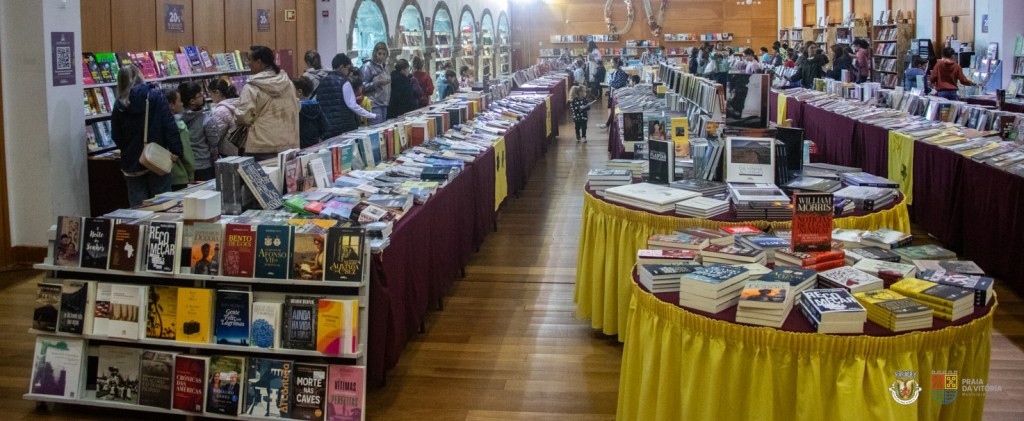
“Outono Vivo” is, therefore, a political gesture in the best sense of the word. In a world increasingly dominated by the logic of fast consumption and entertainment with no other purpose than to distract, bringing together hundreds, or even thousands, of people around books is to affirm that culture is a common good, not a luxury. It is to ascertain that reading continues to be an act of freedom and resistance, perhaps even the quietest, most profound, and consistent. As José Marti (19th century) said: “being educated is the only way to be free.” And I would say that knowledge and education are essential for the exercise of individual and collective freedom. Education and knowledge, free thought from prejudice and dependence, transforming us into citizens capable of making autonomous decisions and with a deep understanding of the reality that surrounds us.
The Praia da Vitória City Council, the local government workers, the Praia Cultural Cooperative, the organizations, and the personalities involved in organizing this event therefore deserve fair public recognition for maintaining, over two decades, a serious and persistent commitment to culture. Because they understand that investing in culture, in memory, and in the creation of spaces where different cultural initiatives come together to attract and engage citizens with diverse tastes and interests is what most dignifies a community.
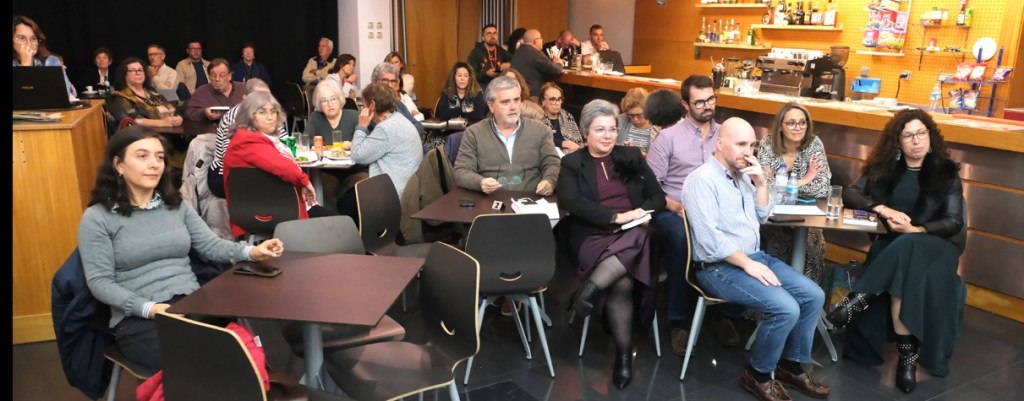
But also because they do so with openness, inviting authors from different literary backgrounds, promoting dialogue between generations, and giving space to local voices, schools, associations, and anonymous readers who make this festival a shared home.
Those who participate in Outono Vivo know that here, books regain their body and breath. Words cease to be products and become bridges. Culture ceases to be an adornment and returns to being a substance and a form of resistance.
And, between conversations, readings, and launches, what is revealed is another geography: that of a city that recognizes itself as part of a cultural archipelago, small in size but immense in the conception, production, promotion, and enjoyment of cultural goods.
Perhaps the most beautiful thing about “Outono Vivo” is its silent dimension: that of sowing. Sowing a love of reading in children who discover their first book there. Sowing respect for the word in conversations that bring authors and readers together. Sowing a sense of community at a time when everything seems to be fragmenting.
The future of culture does not depend solely on mega-productions, nor on centralized institutions that want to dominate everything, but on gestures like this: continuous, rooted, patient. The future of culture depends on the ability to innovate and keep the flame alive in each edition, even when times are not favorable.
“Outono Vivo” is like a seedbed in the autumn. And every year it is born and renewed, proving that it is possible to create and maintain a place for sharing and culture in a peripheral territory, and reminding us that the periphery is also a point of view, perhaps a place from which to better see the world, even if:
(…) the sky and the sea/in a concert of silences/blend together on the horizon/there is no line/only a promise of infinity (…);
Or perhaps because of this, because of the promise of infinity, that the polycentric world can be better glimpsed and understood from the peripheries.
At a time when media noise threatens reflection and the immediate suffocates the essential, “Outono Vivo” gives us back our voice and a glimmer of hope for a different and better world.
And with it, that discreet form of hope that consists in knowing that a book, just one, can be the instrument and support for a full and liberated life.
Perhaps this is what “Outono Vivo” teaches us, year after year: that spring can happen in any season, as long as there are those who plant. That rebirth comes not only from nature but from the will of communities that persist in creating, thinking, acting, and sharing.
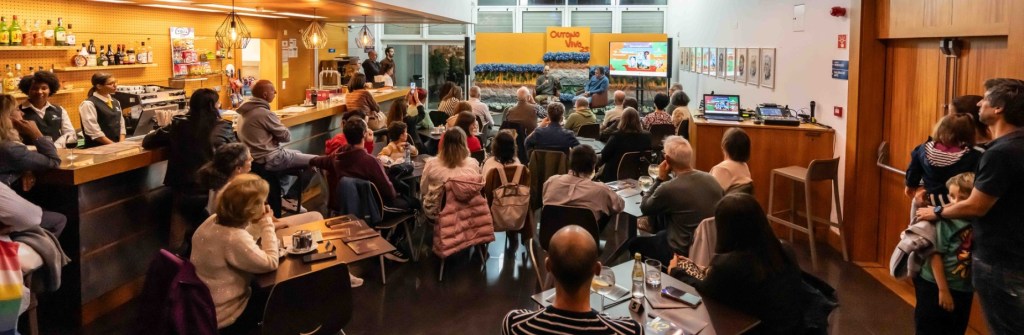
In Praia da Vitória, culture has deep roots and blooms at the right time, the time of encounter and sharing. What is built here is more than a cultural event: it is a pedagogy of hope, an exercise in citizenship and belonging. Because culture, when lived collectively, is the most luminous form of freedom. No less important is the warm welcome the organization extends to its guests. For some, this may be of little importance, but for me, a man of affection, it is also one of the virtues of this cultural event.
Everything is reborn in spring, even if it happens in autumn. And perhaps that is why, when the doors of “Outono Vivo” close, what remains is that discreet, persistent murmur of spring, reminding us that no autumn is definitive as long as there are books, readers, and the indomitable will to make things happen.
Translated by Diniz Borges (to see the article in Portuguese visit the blog below)
 Filamentos (artes e letras)