
There is something primordial about opening a book as if one were opening a distant harbor: pages that carry salt and wind, that bear the memory of islands and of men, women, and children who left them—this is how literature sustains identity across distance. For those who live in the vastness of California’s Central Valley or along the slopes of New England, Azorean writing becomes a living bridge between the sea that was left behind and the land that became home. Even for the third or fourth generations of Azorean descendants in the United States, the voice that rises from the islands—and has become a collective voice—brings back the echo of stones, the traces of whales, and the texture of black rock untouched by time. Literature, more than a mirror, becomes a compass: it does not merely reflect who we are, but points us toward the continuity of belonging, even when oceans intervene.
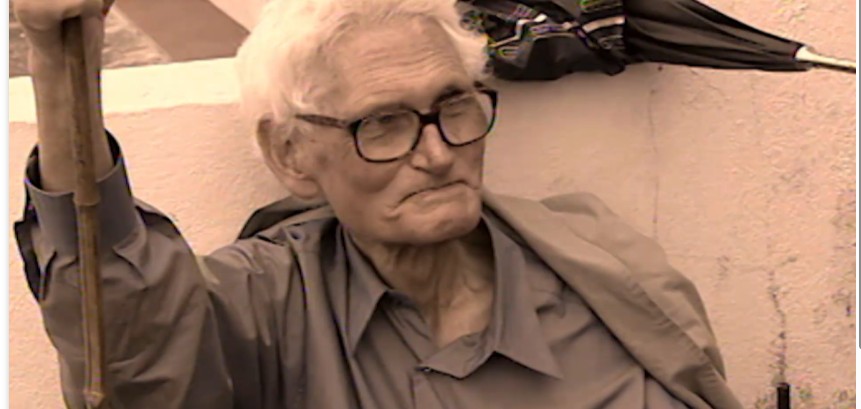
The work of José Dias de Melo (better known as Dias de Melo (1925–2008), stands as one of the most luminous expressions of that belonging. He wrote as if he were standing on a Pico cliff, wind in his coat, watching boats push into rough water while a steamer’s horn—emigration, always—groaned from beyond the channel. He was a schoolteacher and a whaleman, a collector of voices and a maker of books; but above all, he was the island’s memory speaking in the first-person plural. Across more than five decades, he built a literature of sea and soil, exile and endurance, tuned to the cadence of Azorean speech and to the ethics of solidarity.
Born in Calheta de Nesquim, on Pico Island, on April 8, 1925, Dias de Melo came of age between whale lookouts and basalt fields. He studied in Horta, where he helped found the Associação Cultural Académica in 1944, and settled in Ponta Delgada in 1949, teaching primary and preparatory school in São Miguel, Almada, and later back in Lajes do Pico. He died in Ponta Delgada on September 24, 2008, honored for a lifetime of writing that placed the archipelago’s working people at the center of its story.
From the start, his pages were peopled by farmers, fishermen, and baleeiros—men whose oars and harpoons pushed the islands into the global economy while their families learned the grammar of absence. After his first book of poems, Toadas do Mar e da Terra (1954), he turned decisively to narrative with Mar Rubro (1958), moving with remarkable fluency toward a narrative voice shaped by orality—one that braided testimony with fiction to form a social chronicle of Pico. He wrote of the sea not as a backdrop but as a moral condition, of work not as punishment but as a crucible of dignity.
Dias de Melo’s ethics and aesthetics stand close to Portuguese neo-realism—the literary current that insisted on truth and social conscience, on seeing the poor not as background but as protagonists of history. As Urbano Bettencourt notes in the Enciclopédia Açoriana, the “principal nucleus” of his work is “the life experience of the Azorean, particularly the Pico whaler,” rendered in some of his most “dramatic and poignant” pages.
His kinship with John Steinbeck is explicit. Dias de Melo admired him deeply, visited his landscapes, and wrote the travel chronicle “O Santuário de Steinbeck,” later collected in Das Velas de Lona às Asas de Alumínio (From Canvas Sails to Aluminum Wings). The Imprensa Nacional observed that he “fits within neorealism, approaching authors like Steinbeck… and his visit to Steinbeck’s home gave rise to ‘The Sanctuary of Steinbeck.’” Indeed, Dias de Melo’s prose mirrors Steinbeck’s moral tenderness and his capacity to render human struggle with poetic restraint. The kinship is one of empathy and tone—a shared belief that compassion is the only honest form of realism.
Readers also hear in Dias de Melo’s voice the sea-worn humanism of Jack London, the rough grace of crews, the testing weather of work, the conviction that dignity is an action, not an inheritance. If Steinbeck taught him the sociology of tenderness, London lent him the taste of salt, the idea that courage is forged where humans meet the indifference of nature. His prose, like London’s, smells of whale oil and sweat, but it also glows with the quiet light of endurance.
To read Pedras Negras (Dark Stones, 1964; English translation 1988) is to step into a basalt-toned morality play where labor’s hope and limits are named without rhetoric or relief. The novel follows Francisco Marroco and João Peixe-Rei, “defeated heroes” whose lives resound with the precarious rhythm of Pico’s mid-century life, when chronic poverty and the call of emigration hollowed out families and futures. These men are caught between land and sea, between belonging and exile, between resignation and revolt. As one critic wrote, Dark Stones is “the literary transfiguration of an entire insular world in a determined time, a world threatened both by the contingencies of the present and by the memory of the past.”
The “dark stones” of the title are at once the basalt of Pico Island and the bones of the men who endure cold, hunger, and nostalgia. The protagonist declares, “It will not be the soil of Pico that gnaws my bones,” before secretly boarding a ship bound for America. In that gesture—half rebellion, half resignation—Dias de Melo condenses the existential drama of the Azorean experience. As the American publisher observed, the novel “brings to life his countrymen’s daily struggles with poverty and oppression while rendering the tragic poetry of survival.” Dark Stones stands as a cornerstone of Azorean narrative, a work that, like Steinbeck’s The Grapes of Wrath, makes private suffering an emblem of collective endurance.
Through Dark Stones, Dias de Melo forged a language of compassion rooted in the soil of Pico but audible across oceans. He does not sentimentalize poverty; he dignifies it by turning it into a story, by giving form and cadence to lives too often forgotten. His sentences move like waves—long, rhythmic, full of breath—carrying within them the syntax of speech, the music of fishermen, the pauses of emigrants writing letters home.
In Das Velas de Lona às Asas de Alumínio (From Canvas Sails to Aluminum Wings, 1990), Dias de Melo transforms travel into reflection. The book retraces his journeys from Pico to California, from the old whaling ports of Horta and New Bedford to the airports of a modern, restless world. It is not tourism but testimony, meditation on movement, memory, and change. The very title marks the Azores’ evolution from sail to jet, from survival by sea to survival by flight.
In his luminous essay on this work, Vamberto Freitas, writing in Filamentos, observes that Dias de Melo “sails between memory and modernity, between the canvas that once carried hope and the aluminum that now carries exile.” Freitas continues: “Das Velas de Lona às Asas de Alumínio is not merely a travel book—it is a moral and emotional geography of the Azorean people, a testament to how flight and voyage become metaphors of identity and destiny.” Dias de Melo’s journey through airports and harbors becomes a pilgrimage toward understanding: how progress can both liberate and estrange, how every airplane is a kind of whaleboat of the sky, carrying the same longing to escape and the same fear of loss.
Dias de Melo knew that the history of Azorean whaling was not a romantic souvenir but a social condition. Skill was learned in open boats; risk was measured in bodies; profit was unevenly shared. His chronicles fix in ink the names of tools and lookout hills, the shouted orders of harpooneers, and the creak of oars cutting into the Atlantic—rendering the human texture of a vanished world. The New Bedford Whaling Museum, which preserves several of his books, recognizes what his literature achieved: a repository of technique and feeling, a documentation of labor’s poetry.
Yet Dias de Melo never succumbed to nostalgia. His prose is not a museum but a living testimony. He writes to bear witness, to transform injustice into conscience. He insists that freedom is both local and universal: it begins with wages, education, and the right to choose, but it extends to the metaphysical—the right to imagine another life. As Bettencourt notes, even when his narratives move to urban settings, we encounter “a narrator committed to the fate of the weakest and the victims of the social machinery.”
No Azorean writer of the twentieth century mapped emigration’s double-binding – the need to leave and the need to remain – more patiently than Dias de Melo. His characters live between Lajes do Pico and the Central Valley dairies of California, between Horta’s docks and New Bedford’s churches, carrying addresses like relics. Critics marking his centennial in 2025 have underscored how Pedras Negras and his later works register the passage from clandestine ship-jumps to legal migrations, and how that transformation reorganized family time, gendered labor, and the islands’ imagination of the future.
That is why his pages continue to resonate among the diaspora: they teach a grammar of belonging sturdy enough to hold distance. A reader in Tulare or Fall River hears, in his sentences, a Portuguese that remembers the body’s work—salt, hay, tendon—and discovers in that remembrance an argument for common dignity. For the emigrant, reading Dias de Melo is not nostalgia; it is homecoming through words.
Technically, Dias de Melo’s great invention is breath. His sentences move like a whaling crew pulling in unison, each clause an oar. Urbano Bettencourt praised this “oral fluency”—the way individual testimonies interlace into a complex historical and social fabric, and the way the narrative voice absorbs the island’s music. His prose is rugged yet lyrical, built from basalt and wind. And there was gentleness in the man himself. As the Imprensa Nacional recalls, he was “easily recognized by his pipe and the accent he never lost,” once saying of Pico, “uma terra mais bonita não há em parte nenhuma”. There is no land anywhere more beautiful.
Dias de Melo’s literature is a lantern for social justice and freedom precisely because it refuses abstraction. Freedom, in his work, is not a slogan but bread and time—the security of staying or the means to go. Justice is not an idea but a neighbor’s door that opens when your boat returns late. He wrote those truths with care enough to last, and because he did, Pico stands taller in the cartography of world literature. Across miles, the diaspora still hears the whistle from the cliff that says, come home when you can, carry the island when you can’t.
In both Dark Stones and From Canvas Sails to Aluminum Wings, Dias de Melo’s language remains faithful to the oral pulse of the islands — to the fishermen’s cadence, to the emigrant’s silence, and to the widow’s prayer. His prose is alive with the elemental: basalt and sea, wind and hunger, hope and patience. Behind every character lies the collective condition of a people who worked the hardest borders — the borders between land and sea, between staying and leaving, between poverty and dignity.
Like Steinbeck, whom he called “a brother in compassion,” Dias de Melo believed that literature’s task was not to glorify suffering but to make it visible, to lend it moral form and enduring sound. His writing stands as a conscience of the Atlantic, reminding us that literature is not a luxury of peace but a necessity for survival.
And so, in this centenary year of his birth, Dias de Melo calls to us once more — across the long silence of oceans, across generations of readers who may never have seen the shadow of Pico but who carry its blood in their veins. His voice asks that we listen not as spectators but as heirs to faith in the human spirit. To rediscover his writing is to rediscover our own story: the story of islands that dreamed beyond their shores, of emigrants who built new worlds without abandoning the old.
In Dias de Melo’s work, the Azores are not merely a geography left behind but a consciousness that travels—a spiritual archipelago of longing, labor, and love. His prose teaches us that exile, when turned into art, becomes memory illuminated by hope.
May this year, and every year that will follow it, be not only remembrance but return — a return to the moral clarity, the deep compassion, and the luminous prose and poetry Dias de Melo. His voice, like the island’s wind, still carries across the waters: a call to justice, to empathy, and to the endless horizon where literature keeps the soul of the Azores alive.
Diniz Borges (PBBI, Fresno State)

 Filamentos (artes e letras)