
Celso Ramos and the Azorean Connection
The mountain tradition of se achegue (“come closer”) was the customary way to welcome guests in the highlands of Lages. The wood stove stood at the heart of the home, surrounded by the aroma of fresh coffee and curd bread. I’ve always imagined that the home of Governor Celso Ramos and Mrs. Edith, on São Jorge Street, must have carried this same atmosphere—warm, open, and filled with conversation. Everyone seemed to feel at home there, gathered for yet another friendly exchange.
I remember my father, Joaquim, a merchant in Tubarão and a member of the PSD, and my father-in-law, Ismael, a cattle rancher, mayor, and political leader of São Joaquim, saying: “With Seu Celso, a promise is a promise.” Indeed, he was a man of integrity, determination, and vision—always willing to reconcile differences for the good of the state. Those days now belong to another era, yet I still recognize that same cordiality, generosity, and innovative spirit in the new generation of Celso Ramos’s grandchildren and great-grandchildren.
On December 18, we celebrate 125 years since the birth of Celso Ramos, the governor who became a milestone in Santa Catarina’s economic and social development—one who turned the page on backwardness and guided the state into the future. Through the implementation of the Government Goals Plan (PLAMEG), he ushered in a new era of modernization and progress.
In the 1950s, he founded FIESC (the Federation of Industries of the State of Santa Catarina), serving as its first president and being reelected for three consecutive terms. It was during this period that the Vidal Ramos Foundation was created, maintaining both the School of Social Work and the School of Education. His visionary mind missed nothing: he developed, founded, implemented, and multiplied initiatives that would allow Santa Catarina to flourish—advancing its road infrastructure, promoting small and medium-sized industries, supporting rural workers, encouraging fruit growing in temperate climates, strengthening the financial system with the creation of BESC (the state bank), and founding UDESC, the state university.
There is a reason for all this…
On the occasion of the 275th anniversary of the Azorean presence in Santa Catarina, I want to highlight the Azorean thread woven into the Ramos family’s DNA—an inheritance revealed through conversations with brothers Celso and Carlos Henrique Ramos Fonseca and documented in Coxilha Rica: Genealogia da Família Ramos (2002), by Celso Ramos Filho. The author conducted an exhaustive search through documents, letters, newspapers, and photographs, assembling an enviable collection of family memories preserved since the family’s origins on Terceira Island, in the Azores.
The indelible link in this vast lineage begins with one of the many “Azorean couples” who crossed the Atlantic during the great diaspora of the eighteenth century.
Matheus José Coelho and Maria Antónia de Jesus responded to the Overseas Council’s decree of August 31, 1746, which encouraged Azorean families to emigrate to Brazil, lured by the promise of land and the dream of a better life. They arrived in Santa Catarina between 1750 and 1775, settling in the parish of São Miguel da Terra Firme (now Biguaçu), where other Azorean settlers had already established themselves. In São Miguel, their children were born: Ricardo José (1776), Laureano José (1777), and Adolfo José (1779).
The Ramos lineage began with the second son, Laureano José, born on Palm Sunday, March 18, 1777. Matheus José Coelho, a New Christian, changed his son’s patronymic from Coelho to Ramos and adopted the new surname for his other children as well. Thus began the Ramos family—Laureano José representing the second generation. From Matheus Coelho of Terceira to the present day, nine generations and thousands of descendants trace their roots to this beginning.
Laureano, a carpenter by trade, first moved to São Francisco do Sul and later to Vila Santo Antônio da Lapa (in Paraná), where he married Maria Gertrudes de Moura, a native of the parish of Nossa Senhora do Pilar (now Antonina). In 1807, he moved to Santo Antônio da Patrulha, a parish founded by Azoreans on the northern coast of Rio Grande do Sul. In 1812, the family finally settled in the fields of Lages, on the Guarda-mor farm in Coxilha Rica. There they built a genuine economic empire founded on extensive agricultural holdings and distinguished by cattle breeding and trade, fruit production, and traditional crafts such as watermills, textile weaving in wool and cotton, pottery, and carpentry.
Laureano José Ramos, besides being a prosperous and influential farmer, also held significant political and social leadership in Vila Nossa Senhora dos Prazeres de Lajes (now the city of Lages). His great-grandson, Celso Ramos Filho, wrote: “Laureano was the patriarch of the prestigious Ramos family, which has always had a decisive influence on the politics of Santa Catarina” (p. 53). Indeed, the Ramos family governed Santa Catarina for more than a third of the twentieth century, notably through Vidal de Oliveira Ramos Jr. and his sons Nereu Ramos (who became President of Brazil), Celso Ramos, and grandson Aderbal Ramos da Silva.
The nine children of the patriarch, Laureano José, inherited a profound moral and ethical legacy—one that became a family hallmark. The extensive Ramos descendants are now spread across Santa Catarina (predominantly), Rio Grande do Sul, and Rio de Janeiro. From Terceira Island, where the adventurous couple Matheus Coelho and Maria Antónia de Jesus first set sail, to Santa Catarina Island, the Ramos family’s story stands as a remarkable chapter in the state’s political, economic, and cultural history.
Translated by Diniz Borges
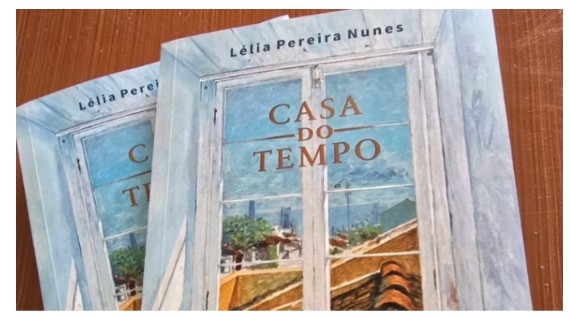
Filamentos is pleased to publish a chapter from Lélia Pereira Nunes’ new book, Casa do Tempo, every few weeks. We are delighted to publish these translations as part of our vision and mission: to be a voice for the Global Azorean Diaspora. Brazil has been an important part of the Azorean Diaspora for many centuries. It is time that we all know each other, regardless of where we live. We thank Lélia Pereira Nunes for the opportunity to translate her important work.

 Filamentos (artes e letras)