

1. Introduction
Power became a problem when we understood that it contradicts all social processes, thoughts, and relations among people. The simplest interaction between two people becomes a stage of battle where each one pretends to establish the “truth” about whatever is being in question.
“Power” —considered authority in the process of symbolic reality construction —is attributed by the group to certain people, who thus become legitimized in this function. Scientists, Priests, Shamans, the Law System, etc., depending on the type and development of the society, are considered the official producers or constructors of reality.
Despite this conventional understanding, a constant motion is caused by those left behind, resulting in private fights (most of the time hidden by the apparent calm of the surface) for the undertaking of a part of the residual power and/or recognition.
In both cases, however, the establishment of the “truth” is always dependent on a super-entity that gives the last word. This authority reinforces the moral rightness of a hierarchical system to which the common man can resort to “learn” how the order of things is established, how it must be done, and how everybody should behave. A society functioning under principles different from these is unforeseen and even unthinkable. The establishment of law and order in a society is thought to be inseparable from these figures of authority. Any other social system based on different logics is doomed to fail. The idea of a society based on total equality among members for the functions of establishing “truth” is thus considered a foolish and impossible project, without any perspective of survival. However, it is wished for as a distant utopia.
Considering this link between the philosophical and epistemological fields as our focus, we can say that the theme of power has remained a constant throughout human history, shaping the process of interpreting and constructing reality. The access to the truth has always been perceived as coming from either a “gift”, a “divine concession”, an “enlightenment”, or any other special means conferred by divine entities to the special care of these figures of authority. Never, in any case, and within any group, does it become the possession of the common man, or seen as an ordinary function.
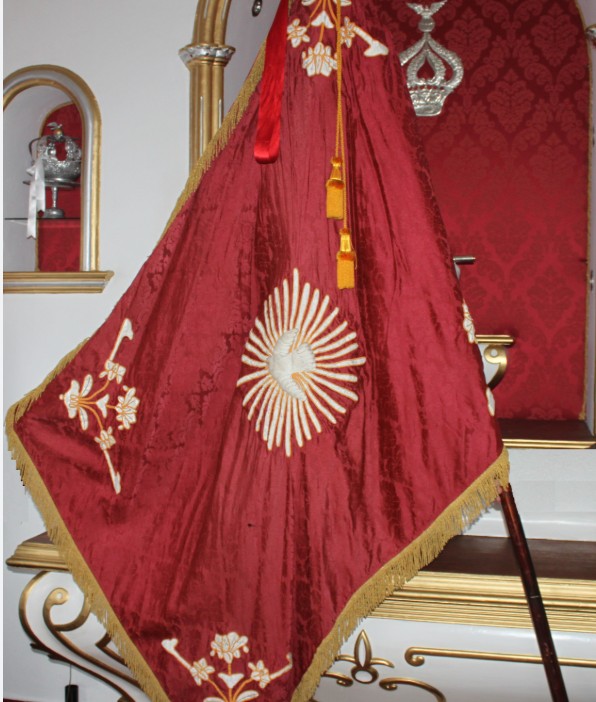
Given that this assertion is accepted as representing the status quo of social thought in this matter, I present information about an organization (or group of religious brotherhoods) that operates on different principles, primarily based on symmetrical interactions among its members. All definitions of the internal (organizational) reality, starting from the representation of the divinity, his perceived behaviors, values, and expectations about human acting, the performance of the cult, as well as other similar functions and situations, are produced and established by the common man in his role as a simple member of the brotherhood. This means that anyone wanting to do so can enter the organization, become a member, and, by serving as the cult’s “Imperador” (or the person in charge of the cult for a week), introduce any innovation they see as beneficial to better functioning.
Considering that this is a situation avoided by societies, fearing to loose control over the interpretations already produced and thus over the meaning and values attributed to them, a simple curiosity about the originality of this case lead to its classification as the object of study (in a doctorate program, at ISCTE, Lisbon, 1998) to give notice of such facts to the scientific community.
2. The Problem
Coming from a priori observation and understanding of the organization of the Holy Spirit (or the group of brotherhoods), a first focus of attention can be directed to:
- The visual absence of authorities or figures of power;
- Laws or norms are not being established superlatively.
Such a singular situation posed many theoretical problems for the research design. First, most of the theory already constructed is based on and oriented by different paradigms, especially the power paradigm, which distorts perceptions of the problems, affecting analysis and reducing accuracy during the investigation. In second place, most of the evidence from observing this organization’s functioning contradicts the existing theory. The raising of a controversial one can then become uncomfortable in academic environments, especially if it lacks grounding.
3. Theoretical Basis
The work of Claude Faucheux and Serge Moscovici (1967) was one of the few exceptions. Not only because of that, but also by the excellence of its quality, they were chosen as principal theorists of the study. Their work produced a theory that challenged the established explanations of symbolic reality, grounded in the influence that minorities exert on social thought in the process of reality construction. They proved that this process suffers influences not only “from the top down”, or from the authorities on the matter (especially the scientific ones), but also “from the bottom up”, or from the common man. Although unknown, this last source of influence proved so strong that, in most cases, it is the only one fighting organizational stagnation and forcing change or imposing a new order.
Despite the controversy that ensued, Faucheux and Moscovici were followed by many other scientists who confirmed this understanding of the flow of influence, which can be seen as a new capacity of the common man. One of the most interesting speculations is the link drawn by Ilya Prigogine (1985) between physics and sociology, which suggests the possibility that man is one more example of autonomous organization found everywhere in the universe, from a star to a mosquito, in an ever more complex state.
Nonetheless, the weight that tradition imposes upon the thinking process was too strong to be overcome merely by theory. This must be why the conventional image of authority retained its prominence in social processes. This was probably helped by the fallacy of the comparisons between animal and human societies, which helps to perpetuate this way of thinking despite the knowledge that human societies are based on the construction of a symbolic reality in the production of which all members of the group should participate to have some sense, due to the conceptual nature of this production. Seen through this perspective, we find an explanation for minority influence, as described by Moscovici in his studies.
Based on these understandings and on studies conducted some years later by Serge Moscovici (1976), a general research program on the organization of the Holy Spirit was proposed to clarify aspects beyond the laboratory and to test the existing theory—in this case, Moscovici’s results. The importance of minorities’ influence on the social construction of reality could yield a different understanding of social processes and bring new capacities to democracy, thereby becoming a focus of interest within the study.

4. Empirical Data
Due to the absence of authority figures, the research strategy, in the first step, focused on studying social thought within the organization and its external environment. It was specifically interested in the relation to the sacred, knowing that all religious societies reserve access to those functions only for initiated people. The construction of reality (giving meaning to situations and objects) in the absence of these authorities and their power could be rejected by the larger group (the organizational external environment or the entire Island population).
The investigation began with the construction of questionnaires designed to clarify these aspects. The application of factorial analysis to the answers brought out what can be considered its internal logic.
1 – The first study was done through an inquiry of the population, comprising 25 villages of the Island (25 questionnaires per village, for a total of 625). It considered the distribution by sex, age, social class, and geography. The variations among these variables furnished information about the distribution of the opinions and thus, the different social interpretations of reality (the cult and the divinity) within this geographical space. The inquiries’ content approached the concept of delegation of power within the context of the legitimacy conferred on the common man, as reflected in the cult’s religious, ideological, and administrative functions. The results indicated that not only the members (a population of approximately 30,000 – 50% of the island’s population), but also the population external to the organization, accepted (without differences on the answers) this situation in the following factorial mean values (1=no, 5=yes):
factor 1 : religious delegation = 3,20
factor 4 : ideological delegation = 4,21
factor 5 : administrative delegation = 4,12
With this understanding confirmed across the entire island, the other studies followed subsequent objectives.
2 – A second study, or field research, aimed to get access to the actual concept of the divinity (former catholic Holy Spirit), with the first purpose of investigating any existing deviance from its roots, which would mean an autonomous production free from catholic church control. In second place, it was also important to know about the nature of this relationship (established with this sacred dimension) when performed solely by the common man.
The strategy previewed the collection of “stories”, or miracles of the Holy Spirit (as many as possible), which are very abundant in the tradition of the cult, coming from the understanding that the metaphysical nature of the stories would become manifested through the application of factor analysis techniques to the material obtained.
It was possible to gather 330 stories. Using this material, the techniques of content analysis were first applied, enabling the identification of the cult’s dominant terms. A list of these terms was presented to a group of catholic priests and seminarists (11). The results indicated a high percentage of new terms in the content, with the one classified as orthodox (Catholic) accounting for only 1/3 of the total, and fewer than 1/2 of the references; 46% of the references mentioned new or innovative entities. Autonomy from the influence of the Catholic Church on the organization’s ideological production was thus confirmed, indicating that the organization was functioning at this level without any recognized authority over its ideological production.
It was then necessary to understand the logic behind the new ideology. A new content analysis operation was performed for the identification of the occurrence of the dominant terms within the stories’ text, and the application of factor analysis to this material presented a structure of 4 factors explaining 42.25% of the found variation in the following values:
factor 1 : personal control over survival factors – 14.3%
factor 2 : social control over survival factors – 10.97%
factor 3 : submission (to God’s will) – 8.59%
factor 4 : punishment (for infractions) – 8.40%
From this information, it was evident that the perceived change (compared to the Catholic tradition) enabled people to control personal and environmental constraints better. The interpretation of this sense was due to the distribution of weight through the factorial structure in a decreasing scale, where factor 4 shows the least possible form of control (the infractor may still reverse his situation, by accomplishing some form of the cult).
The relationship with the sacred is revealed to be oriented to the acquisition and maintenance of a sense of mastery over the environment. This is different from the Catholic attitude, which, compared with this one, seems more conformist and fatalistic.
The ideology produced in such circumstances (without leaders or ideological mentors), resulting solely from the symmetrical interaction and communication among members (who, in these circumstances, are minorities, in Moscovici’s sense of the term), could be considered as presenting an internal logic, which has a more pragmatic characteristic than the former (Catholic/Orthodox) model.
3 – The third study had different objectives. Knowing that a group of singers (cantadores) was regularly hired to perform their arts during the rituals, a project of research based on their understanding of the situation was drawn with the intention of getting to know their opinions about the evaluation of the Imperadores’ (the people auto-proposed for the performance of the cult) action, and the perceived reactions of the public. This was based on the hypothesis that the organization could be using them as what Hodge and Anthony call “boundary spanning units” to gather information about the external environment —the population target for the organizational action.
Content analysis of interviews revealed that, indeed, the public’s opinion (both internal and external environments) shapes part of Imperadores’ actions regarding the rituals.
Among all, this interaction of influences acting upon the production of organizational social reality proved effective in guiding the organizational action toward a logical, yet somewhat unexpected, consensual outcome.
4 – Finally, another empirical research project was done to examine the possible influence of the statutes and administrative committees of the brotherhoods. The 62 brotherhoods’ committees were contacted to complete the questionnaires (only 57 agreed to participate, for a total of 138).
A latent conflict seems to exist in the interface of the two logic systems: the bureaucratic vs. the democratic. Factorial analysis of the questionnaires’ responses revealed significant disagreement within this population. However, the Imperador’s autonomy was confirmed, while information about the influence of other brotherhoods was denied. Apparently, reality construction happens inside each brotherhood, in a vacuum of power or authority to define the “right from wrong”, more evident within the brotherhood’s committee, where each member, although autonomous, has to follow hierarchies from the bureaucratic system.
In part, all this situation can be explained by the conflict between the two logics, because reality definitions are not being established by any authority, or even by statutory forms (where only the obligation towards some of the functions is referred), and are facing a different thought system: the bureaucratic one, coming from the statutes.

In Conclusion
Although touching only the surface of such a complex and original system, the four empirical research projects were able to identify important information about this singular way of acting. It was possible to emphasize the fact that the concept of democracy, resulting from the analysis of the Holy Spirit’s praxis, differs from the concept of representative democracy in use, not only in the way both are performed, but more deeply, in their nature. Two of the many differences found deserve a special remark:
The first refers to what is now accepted as a scientific position: the fact that reality construction is a social function in which the participation of all social members is not only vital but also perfectly functional, as was observed in this organization in its 500 years of age. Taking this into consideration and comparing it with the model of representative democracy used by most societies, it seems that the latter is distorting the process, especially because the “truth” becomes an individualized production by just a few persons. In addition, power relations between people inhibit the natural expression of each other’s interpretation of reality, impoverishing the whole process. There is also the implicit notion that representative democracy could be distorting this “natural law”: the one that says reality construction is a social process, which this model, in essence, infers. As a result, and as a conclusion, we should invest more clearly in participative models now that the ghost of chaotic consequences may have vanished.
The second important discrepancy between the two models of democracy refers to what is considered (in common sense) as necessary for the normal functioning of a society and for the acceptance of its norms: the consensus. Through the empirical research, it was possible to verify that what is considered a “principle” within the social context is completely disregarded in the brotherhoods of the Holy Spirit. The prevailing attitude here defends differences as the norm, in opposition to consensus. The “truth” emerging from this process is a mix of many “views,” but it is consistent and has its own logic.
The quality of tolerance perceived in this attitude provides information about the contradictions in the democratic process in use, while suggesting ways to address its problems.
Despite differences in dimensions between the two democratic processes, we should focus only on the principles that inform the conduct and interactions of the members (which should be common to both cases). Through this analysis, we can observe that when people act under the notion of political democracy, they tend to respond to the representation of power, common to an authoritarian model. The role their delegates play in parliament is obliterated by the atavistic image of power, still present in the design of this relationship. On the other hand, when they act under the perspective of what we can call “the brotherhoods’ democracy”, each one’s attitude of responsibility is constant.
Although knowing that this attitude is a result of the lack of authority figures, which seems to produce the consequent involvement of everybody in equal circumstances, we can observe that the results of such a situation (the lack of authority for a period of more than 500 years) are a stable, although dynamic, social organization.
Ascertaining this fact as a conclusion, we may suggest that further research should be programmed based on this new paradigm of the feasibility of a total democracy, because we know now that the absence of authority does not necessarily result in chaos, and that a structure based on a logic different from the one of power is possible. Thus, future studies would provide information, among other aspects, on the dimensions necessary for the functioning of such systems.
But one principle should be fundamental to any new study in this area: social symbolic reality should always be understood as the product of the entire group affected. And this is so because man, as a social being incapable of living apart from the group, his conceptual and intellectual production only makes sense when it results from the interchange of ideas among the group, in such a way that an idea should be understood as both a collective product and an individual one, without primacy to any side.
This seems to be the way it functions in the brotherhoods of the Holy Spirit, which can be considered living utopias or gigantic laboratories of this new order, where no one has authority to establish the “truth” —a “truth” or reality. By establishing this fact, it is possible to extend Moscovici’s results by stating that minorities (in the sense of “common man”) not only can introduce change in the social order but can also produce and maintain their own order or social structure.
Bibliography
Faucheux, C. and Moscovici, S. (1960). ‘Etudes sur la créativité des groupes II: Tâche, structure de communications et réussite, Bulletin du Centre d’Études et de Recherches Psychotechniques, 9, pp.11-22.
Hofstede, G. (1995). Cultures and Organizations: Software of the Mind, McGraw-Hill Publishing Comp., U.K.
Hodge, B. and Anthony, W. (1984). Organization Theory, Library of Congress Cataloging, U.S. America.
Marques-Teixeira, J. (1998), “Tendência formativa e tendência actualizante, reflexões à luz das teorias do caos e da complexidade”, In Psicologia, Revista da Associação Portuguesa de Psicologia, Vol.XI, nº2/3, Cosmos, Lisboa. pp.89-100.
Martin, J. and Meyerson, D. (1988). ‘Organizational culture and the denial, channelling, and aknowledgement of ambiguity’, in Pondy, Boland, & Thomas (Eds.), Managing Ambiguity and Change. New York: John Wiley.
Moscovici, S. (1976 / 1991). Psychologye des Minorités Actives, 1ªedição, 1976, Academic Press, Londres, 2ª e 3ª edições, Presses Universitaires de France.
Prigogine, L. and Stengers, I. (1985) Order out of chaos. Man’s new dialogue with nature. Londres, Flamingo.
Trice, H.M., e Beyer, J.M. (1993). The Cultures of Work Organizations, Prentice-Hall, Inc., Englewood Cliffs, New Jersey.
The Obsolescence of the Power Paradigm Within the Brotherhoods of the Holy Spirit – English version and synopsis of a Ph.D. thesis, by Antonieta Costa, Azores, 1998
 Filamentos (artes e letras)