
THE TRIANGLE OF THE AZORES, SAN CARLOS, AND JAGUARÃO
The book From the Azores to the Far Lands and No Man’s Land: migratory routes and networks of Azorean families in the origins of Espírito Santo do Serrito in Jaguarão, written by Dr. Letícia Vieira Braga da Rosa and published in 2025, is a hymn of praise to the prevailing affirmation of transatlantic Azorean identity in South America, considering the migratory triangle between the Azores islands, the Uruguayan city of San Carlos, and the Brazilian region of Jaguarão.
This work presents an in-depth and detailed, unparalleled, and unprecedented study of the Azorean families who settled in the region of Jaguarão—then consisting of the current municipalities of Jaguarão, Arroio Grande, Herval, Pedras Altas, and Pedro Osório, in the southeastern region of the state of Rio Grande do Sul—for its initial formation in 1789–1812, tracking their journey from their departure from the Azores islands, their Atlantic crossing, their arrival on the island of Santa Catarina, their transfer to the town of Rio Grande, their transport to San Carlos de Maldonado, and their return to Rio Grande de São Pedro.
It is a story as impressive as it is fascinating.
Azorean immigration to Southern Brazil began with the Edict of August 31, 1746, issued by D. João V, King of Portugal, determining the colonization of the “borderlands” with residents of the Azores Archipelago, who thus became known as “Casais do Número” (Number Couples).
The first groups settled in Santa Catarina, and some of the following groups, starting in 1750, were sent to the village of Rio Grande. In 1763, when the Spanish took over this village, about 90 Azorean families were taken to the Maldonado region, forming the new settlement of San Carlos. In 1777, with the signing of the Preliminary Treaty of Santo Ildefonso between Portugal and Spain, many of these families left San Carlos. They returned to Portuguese lands in Rio Grande de São Pedro, now on their own initiative, giving rise to the parish of Espírito Santo do Serrito in Jaguarão.
To better frame and substantiate the Azorean contribution to the formation of Jaguarão, this book, like the doctoral thesis on which it is based, is structured in four chapters. The first corresponds to the introduction and the second establishes the methodology used. The third presents the trajectory of Azorean families, from their departure from the Azores to their arrival in the Jaguarão region. The fourth chapter deals with social relations, kinship ties, and social mobility in their long journey from the Azores to Jaguarão.
Thus, having traced the route of these multiple displacements, the author identifies the Azorean families from San Carlos who made up the parish of Espírito Santo do Serrito in Jaguarão and, from the interdisciplinary perspective of Comprehensive Sociology and the micro-historical approach, selects, characterizes, and follows seven Casais do Número:
Manuel Pereira Leal and Isabel Rodrigues, from the island of Pico; Felipe Dutra Caldeira and Maria Silveira, from the island of Faial; Manuel da Rosa and Ana Pereira, from the island of Faial; Manuel Vieira Maciel and Luzia Pereira, from the island of Pico; Pedro Quadrado and Ângela de Sousa, from the island of São Jorge; Jerônimo de Sousa and Isabel Maria, in the island of São Jorge; Manuel Gomes de Araújo and Helena da Ressurreição, from the island of Santa Maria.
Thanks to these families, as well as others from all nine islands of the Azores, but especially from Pico, São Jorge, and Faial, the “Pueblo de San Carlos” became known as the “Pueblo de los islenos” in what is now the Republic of Uruguay, and the lands of “No Man’s Territory” gave rise to the region of Jaguarão, in the current state of Rio Grande do Sul.
On the Uruguayan side, the city of San Carlos, founded in 1763 by the Spaniard Pedro de Cevallos to prevent Portuguese advances on Uruguayan lands, now has 33,000 inhabitants in 1,650 square kilometers, as part of the Department of Maldonado.
On the Brazilian side, the city of Jaguarão, which dates back to 1802 as a military camp founded on the banks of the Jaguarão River by Lieutenant Colonel Manuel Marques de Sousa, currently has 26,000 inhabitants in 2,051 square kilometers, on the Brazilian border with Uruguay.
Azorean blood continues to flow in both cities of both countries.
_____
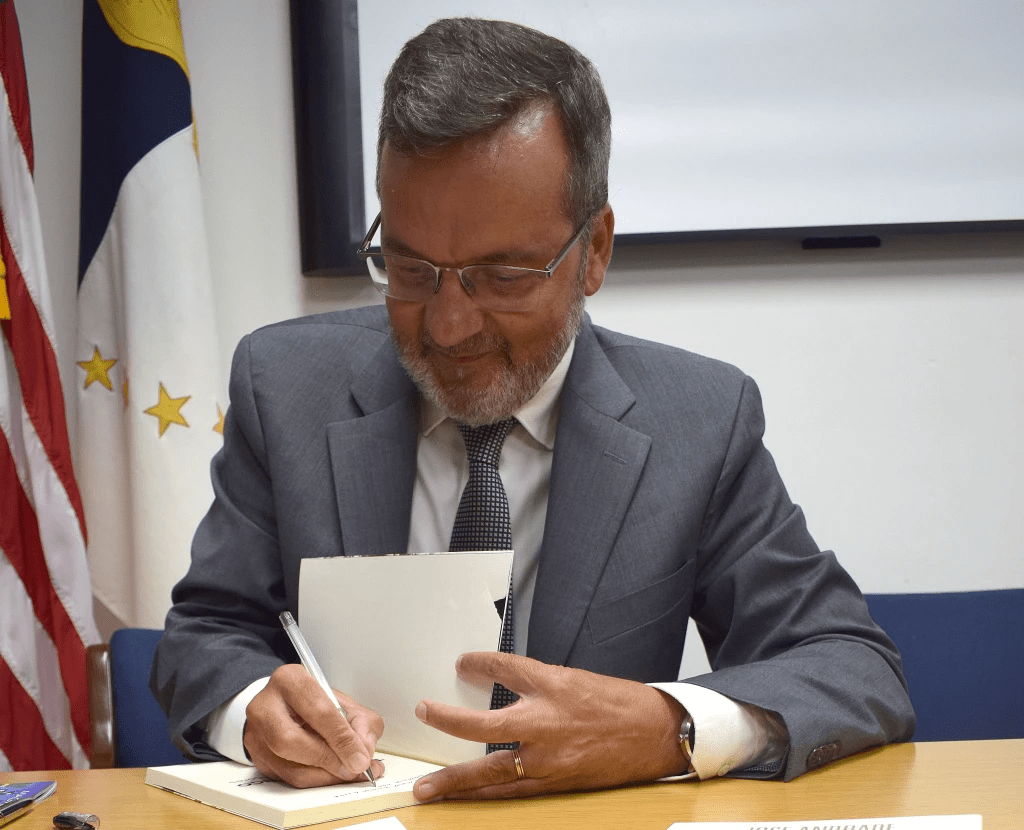
José Andrade is the current Regional Director of Communities of the Autonomous Region of the Azores.
Based on the preface to the book “From the Azores to the Lands of the Ends and No Man’s Land” by Letícia Vieira Braga da Rosa, which was launched in San Carlos (Uruguay) and Jaguarão (Brazil) in April 2025.
Translated by Diniz Borges, Modern and Classical Languages and Literatures Department – PBBI-Fresno State.
 Filamentos (artes e letras)