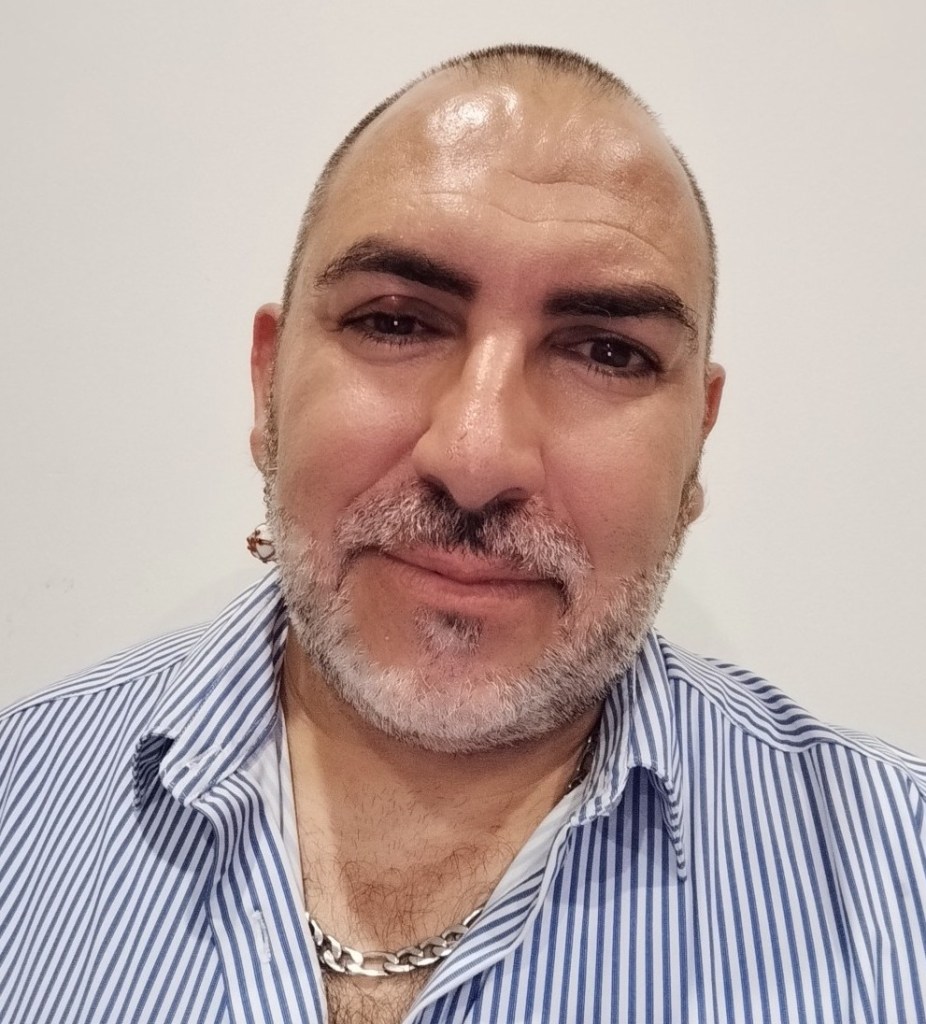
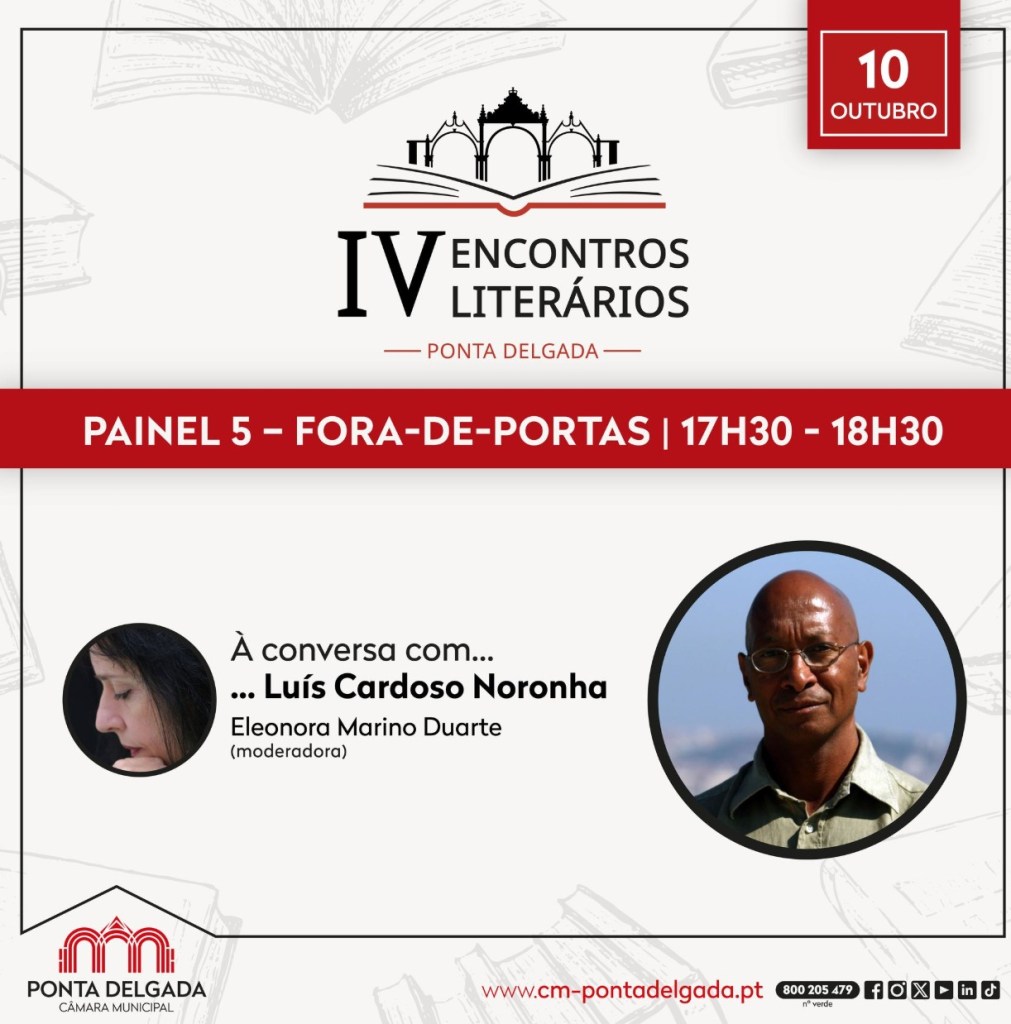
The IV Literary Days of Ponta Delgada return this year with a renewed program that promises to foster dialogue between authors, readers, and researchers on contemporary literature. As scientific coordinator of the event, writer and researcher Pedro Paulo Câmara shares with us the vision that guides this edition, emphasizing the importance of literature as a space for critical reflection, shared creation, and cultural encounter. In this interview, we discuss the program’s main highlights, the challenges of literary curation, and the Conference’s role in the cultural landscape of the Azores and the country.
Correio dos Açores: This is already the fourth edition of the Encontros Literários de Ponta Delgada. How has the event evolved from its inception to the present day?
Pedro Paulo Câmara: Over the course of these four editions, the Encontros Literários have established themselves as a space for critical reflection and lively dialogue between authors, readers, researchers, and even the public itself. Initially, the challenge was primarily to create a forum that would give visibility to literature in Ponta Delgada and the Azores. Over time, the event has expanded in scale and thematic diversity, gaining a national and international dimension, particularly in the current edition. Today, we can say that Encounters has consolidated itself as a space for sharing, where literature is not only celebrated but also questioned in its multifaceted connections with society.
This year’s program proposes a dialogue between literature and society, evoking the names of Camões, Pessoa, and Natália Correia. What was the thematic thread of this edition?
The thread was precisely this articulation between tradition and contemporaneity. By revisiting major figures such as Camões, Pessoa, and Natália Correia, we sought to demonstrate how their works remain relevant and fundamental to contemporary discussions of issues including identity, freedom, social criticism, and the relationship between the individual and the community. These authors are beacons that illuminate today’s debates, and this bridge between eras was what guided the program. In the case of the panel entirely dedicated to Camões, it is worth highlighting the recently established collaboration with the University of the Azores and the team of the Camões V Centenary mission structure.
The event takes place at the Natália Correia Center. What symbolism does this space have for a literary gathering of this caliber?
Holding the event at the Natália Correia Center is of enormous significance. Natália is a pivotal figure in Portuguese literature, particularly in the cultural identity of the Azores. This artistic space, in her homeland, carries the memory of a woman who never shied away from confronting her time. It is a place that inspires freedom of thought, irreverence, and passion for the arts, exactly the spirit we want the Literary Encounters to convey.

Camões occupies a central place in this edition. How relevant is his legacy to contemporary society?
Camões is not only the author of a foundational epic. He is, above all, a poet who knew how to capture the human condition in all its complexity. The universality of his work allows us to engage with issues of national identity, globalization, displacement, and belonging—themes that are very present today. Revisiting Camões today means rediscovering literature as a space for questioning the present, aware that there are other times: past and future.
The presence of renowned authors and scholars gives the event a plural dimension. How are the guests and panels curated?
Curation is often thought of in terms of striking a balance between different voices, including academics, writers, poets, and essayists. We seek to create tables and panels that are not just stages or individual exhibitions, but true dialogues, showcases of knowledge, and spaces for altruistic sharing. Therefore, we select guests who, in addition to their recognized merit, bring diverse, complementary, or even contrasting perspectives. This plurality is what guarantees the richness of the Encounters.
What role does Azorean identity play in this meeting?
Azorean identity is central, not only because of the choice of venue and the presence of authors from the region, but because we believe that Ponta Delgada and the Azores have their own voice to offer the literary world. There are several voices from Ponta Delgada and the Azores that extend beyond the archipelago and are of enormous quality. At the same time, we aim to integrate this voice into a broader network, building bridges with mainland Portugal, the diaspora, and other geographies. The local, here, is always thought of in dialogue with the universal.

There is a clear effort to combine different artistic languages, such as the word, music, and recitation. Why this multidisciplinary choice?
Literature has never existed in isolation. Music, theater, oral tradition, and even the visual arts are natural extensions of the word. By making space for different languages, we want not only to make the event more inclusive and accessible, but also to recover the performative and sensory dimension of literature. It is a question of restoring the word’s vocation as a collective encounter.
What do you think is the impact of these encounters on the cultural education of young audiences, who are also present, namely through the Antero de Quental Secondary School?
The involvement of young people is one of our top priorities. When students have the opportunity to listen to and talk with writers and researchers, literature ceases to be something distant, confined to school textbooks, and becomes a living experience. This direct contact helps to create more critical readers who are more sensitive and aware of the power of words. In addition to ESAQ, students from the Ponta Delgada Chamber of Commerce and Industry Professional School and MEP – Santa Casa da Misericórdia de Ponta Delgada Professional School are also participating in this edition. In previous editions, we have had other participants from public and private schools, and registration is still open.

Do you feel that the Literary Encounters are establishing themselves as a reference in the cultural landscape of the Azores? Are there ambitions for expansion or internationalization?
Yes, I feel that the Literary Encounters are already a reference, but we want to go further. Internationalization is a natural goal, not only because of the importance of the Azorean diaspora, but also because literature, in essence, is a territory without borders. The ambition is to continue growing sustainably, while maintaining a connection to the territory and projecting Ponta Delgada as a cultural hub in the Atlantic. In fact, the current edition features participants from various geographical areas.
Finally, what message would you like to leave for those who have not yet participated in this event? Why is it worth setting aside two days to immerse yourself in literature in Ponta Delgada?
I would say it is worth it because these are two days when literature becomes a celebration, reflection, and a shared experience. Participants encounter multiple voices, provocative ideas, and an atmosphere of true closeness between the public and the authors. It is a rare opportunity to experience literature intensely, in the heart of the Azores, in a space that honors the memory of Natália Correia. It is an invitation to broaden horizons and be surprised by the transformative power of words. The inaugural lecture, given by Onésimo Teotónio Almeida, entitled “Our literature and our society,” will be a clear example of this.
António Pedro Costa for Correio dos Açores-Natalino Viveiros, director.
We thank the Luso-American Education Foundation for their Support of PBBI-Fresno State.
Program of the literary event


 Filamentos (artes e letras)