

Brazil is more than a nation—it is a chorus of voices that sing across centuries and oceans. In California, where cultures mingle and diasporas shape new identities, reading Brazil means entering a world of irony and passion, of drought and abundance, of longing and joy. From the crystalline precision of João Cabral de Melo Neto to the daring intimacy of Hilda Hilst, from Machado de Assis’s wry ironies to Clarice Lispector’s blazing interiorities, Brazil reveals itself not in monuments but in words. These poets and novelists are guides across generations, their works bridge between yesterday’s struggles and today’s dreams, inviting Californians to see Brazil not as distant, but as alive, here and now. Here is a very brief and certainly not complete or exhaustive reading list.
1. Carlos Drummond de Andrade (1902–1987)
- Considered Brazil’s greatest modern poet.
- Themes: irony, existential reflection, politics, everyday life.
- In English: Travelling in the Family, Multitudinous Heart, Souvenir of the Ancient World.
2. João Cabral de Melo Neto (1920–1999)
- Known for precise, austere language and imagery of the Northeast (Sertão).
- Famous poem: Morte e Vida Severina (Death and Life of Severino).
- In English: Education by Stone, Serial and Before.
3. Cecília Meireles (1901–1964)
- Lyrical voice, universal themes of freedom, time, and longing.
- In English: Poems (translations by L.S. Klobus and others), selections in bilingual anthologies.
4. Vinícius de Moraes (1913–1980)
- Poet, playwright, diplomat, and lyricist (key figure in Bossa Nova).
- Blends poetry and song.
- In English: Anthology of Vinícius de Moraes (bilingual), scattered translations of his love poems and song lyrics.
5. Manuel Bandeira (1886–1968)
- Early modernist, known for simplicity and emotional depth.
- Famous poem: Vou-me embora pra Pasárgada (I’m Off to Pasárgada).
- In English: Selected translations appear in Twentieth-Century Latin American Poetry anthologies.
6. Ferreira Gullar (1930–2016)
- Major contemporary poet, politically engaged, central to the Poema Sujo (Dirty Poem).
- In English: Dirty Poem (translated by Leland Guyer).
7. Murilo Mendes (1901–1975)
- Surrealist and modernist, blending religion, politics, and imagination.
- English translations are rarer but appear in anthologies like Nothing the Sun Could Not Explain.
8. Hilda Hilst (1930–2004)
- Poet, novelist, playwright; intense, experimental, sensual voice.
- In English: Of Death. Minimal Odes (translated by Laura Cesarco Eglin & others), selections in The Obscene Madame D.
9. Adélia Prado (1935– )
- Known for blending domestic life, Catholic mysticism, and feminism.
- In English: The Alphabet in the Park (translated by Ellen Watson).
10. Ana Cristina Cesar (1952–1983)
- Associated with the “marginal poetry” movement.
- In English: Poetry in Spite of Itself: Selected Poems.
Anthologies for Wider Perspective
- Nothing the Sun Could Not Explain: 20 Contemporary Brazilian Poets (Sun & Moon Press, 1997).
- Twentieth-Century Latin American Poetry: A Bilingual Anthology, edited by Stephen Tapscott (University of Texas Press, 1996).
- Brazilian Poetry, edited by Charles Perrone (University Press of Florida, 1982).
- Luso-Brazilian Modernist Poetry: A Bilingual Anthology, edited by Charles A. Perrone (Garland Publishing, 1996)
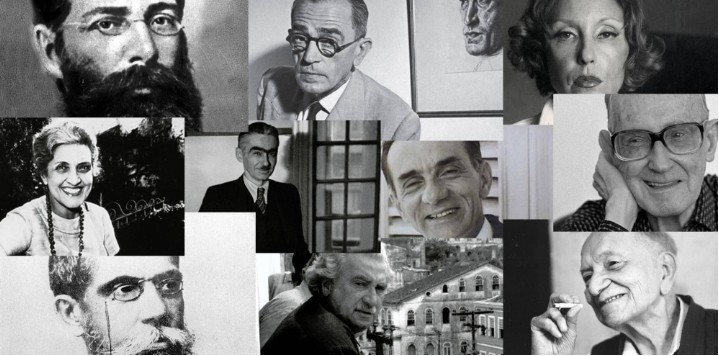
Brazilian Novelists
Machado de Assis (1839–1908)
- Widely considered Brazil’s greatest writer.
- Known for irony, psychological depth, and social critique.
- Key works in English:
- Dom Casmurro (Oxford World’s Classics; Penguin Classics editions).
- The Posthumous Memoirs of Brás Cubas (Epitaph of a Small Winner, Penguin Classics, tr. Flora Thomson-DeVeaux).
- Quincas Borba (Philosopher or Dog?).
José de Alencar (1829–1877)
- Father of the Brazilian novel, especially “Indianist” romances.
- Key work in English:
- Iracema (Oxford University Press, tr. Clifford E. Landers).
Jorge Amado (1912–2001)
- Brazil’s most internationally known novelist of the 20th century.
- Themes: Bahia’s culture, Afro-Brazilian traditions, social justice, sensuality.
- Key works in English:
- Gabriela, Clove and Cinnamon (Vintage International).
- Dona Flor and Her Two Husbands (Vintage International).
- The War of the Saints, Captains of the Sand.
Euclides da Cunha (1866–1909)
- Journalist, historian, and novelist; landmark chronicle blending literature and sociology.
- Key work:
- Rebellion in the Backlands (Os Sertões, University of Chicago Press, tr. Samuel Putnam).
Modernist & 20th-Century Voices
Clarice Lispector (1920–1977)
- Innovative, introspective, compared to Virginia Woolf and Kafka.
- Key works in English (New Directions Press, tr. Benjamin Moser & others):
- The Hour of the Star.
- Near to the Wild Heart.
- Água Viva.
- The Passion According to G.H.
Graciliano Ramos (1892–1953)
- Modernist novelist of the Brazilian Northeast.
- Themes: poverty, drought, resilience.
- Key works in English:
- Barren Lives (Vidas Secas, University of Texas Press, tr. Ralph Edward Dimmick).
- São Bernardo.
Rachel de Queiroz (1910–2003)
- First woman elected to the Brazilian Academy of Letters.
- Themes: drought, rural life, strong women.
- Key works in English:
- The Three Marias (University of Texas Press).
- The Fifteen.
Mário de Andrade (1893–1945)
- Leader of Brazilian modernism.
- Key work:
- Macunaíma: The Hero with No Character (translated by E.A. Goodland, later Gregory Rabassa).
Osman Lins (1924–1978)
- Experimental novelist.
- Key work:
- Avalovara (University of Texas Press, tr. Gregory Rabassa).
Contemporary Writers in English Translation
Milton Hatoum (1952– )
- Novelist of Amazon and family sagas.
- Key works in English:
- The Brothers (Bloomsbury).
- Ashes of the Amazon.
Chico Buarque (1944– )
- Novelist, playwright, and musician.
- Key works in English:
- Budapest (Grove Press).
- Spilt Milk.
Paulo Coelho (1947– )
- Brazil’s most translated contemporary writer.
- Key work:
- The Alchemist (HarperOne).
- While more spiritual than literary, he has a global influence.
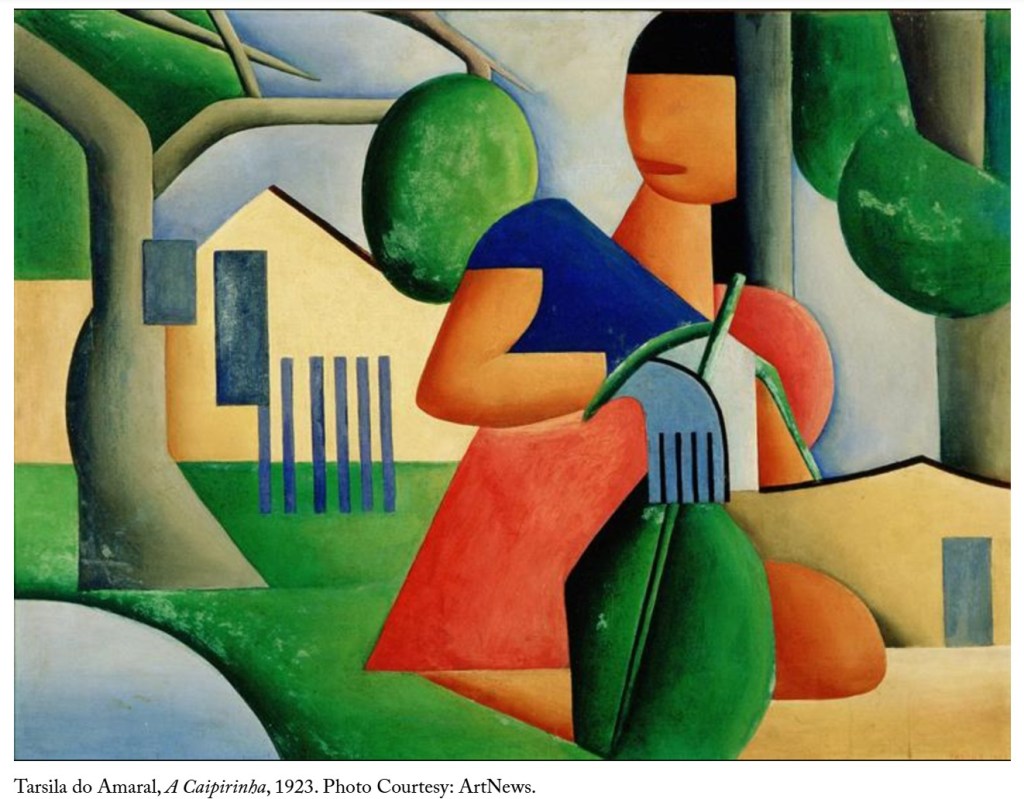
Brazil Lives in Words—Across Oceans, Across Generations.
Vision Statement
To weave a cultural bridge between Brazil and California by fostering encounters with Brazil’s literary voices—past and present—as a way to deepen cross-cultural understanding, enrich California’s multicultural fabric, and celebrate the Lusophone world as a living, evolving presence.
Mission Statement
Through readings, bilingual publications, festivals, and educational programs, The Living Brazil project will introduce Californians to the richness of Brazilian literature in English translation. By uniting poets and novelists across generations, and connecting with Lusophone communities—Portuguese, Cape Verdean, Angolan, and beyond—we aim to create a vibrant space where literature becomes a means of cultural dialogue, solidarity, and imagination.

Further reading and information
https://www.travel-brazil-selection.com/informations/brazilian-culture/literature/
https://www.bloomsbury.com/us/brazilian-literature-as-world-literature-9781501323270/
 Filamentos (artes e letras)