
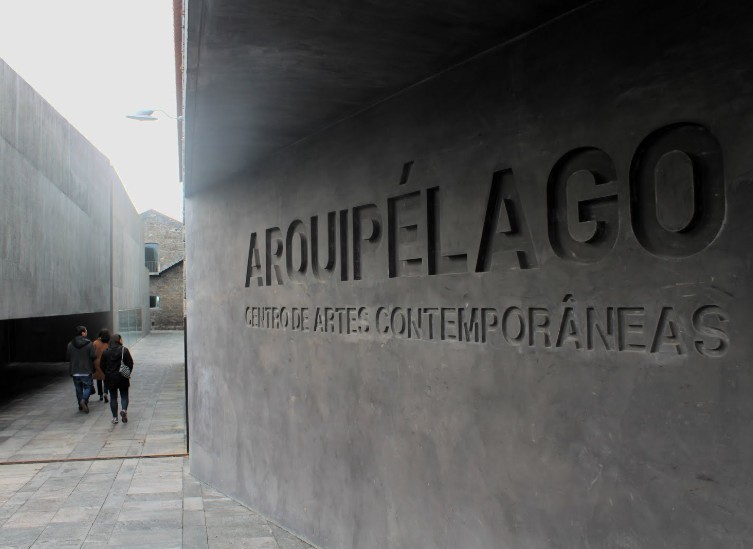
On September 13, 2025, at 4:00 p.m., at the Arquipélago Contemporary Arts Center, located in Ribeira Grande, São Miguel Island in the Azores, the exhibition “Lourdes Castro: There is Light in the Shadow” will open to the public. This exhibition, the first in a series dedicated to Lourdes Castro, will travel to various locations around the country, with its debut presentation in the Azores. Lourdes Castro: There is Light in the Shadow is curated by Márcia de Sousa and shares a common theme with the exhibition held at MUDAS.Between 2022 and 2023, the Madeira Museum of Contemporary Art presented “Like an Island on the Sea: Lourdes Castro,” an exhibition evoking the memory and career of this artist, which inspired the design of a national touring project consisting of a series of exhibitions and other initiatives based on her personal legacy. In this way, the partners in this initiative seek not only to create a memory of one of the most important artists born in Portugal in the 20th century, but also to reveal moments in her life and artistic career that are less known to the general public, based on a selection of documentary elements from the artist’s personal archive that have rarely been seen or, in some cases, are being presented to the public for the first time.
Without claiming to be an anthological project, this series of exhibitions is intended as a posthumous tribute, allowing public access to part of the artist’s personal legacy, courtesy of Lourdes Castro’s family. It will present a selection of works of art, personal objects, and documents, mostly from Lourdes Castro’s private collection, as well as those gathered through the collaboration of various national institutions and individuals who kindly accepted MUDAS’ invitation to participate in this initiative, to compose a cross-sectional reading of Lourdes Castro’s artistic career.

Among the institutions that will have works by Lourdes Castro from their collections featured in this project are the Serralves Foundation, the National Museum of Contemporary Art, the National Tile Museum, the Calouste Gulbenkian Foundation, the Caixa Geral de Depósitos Collection – CULTURGEST, the São Lourenço Palace Museum Center, the Guy Fino Tapestry Museum in Portalegre, Banco Santander, MAC-CCB, the Coimbra Contemporary Art Center, the Oliva Art Center, CTT-Correios de Portugal, the Association of Collections, the Berardo Foundation (Monte Palace Museum-Madeira), Galeria 111, and Galeria Ratton, among other institutions.
Regarding the unavoidable path of Lourdes Castro, it is worth noting that she was born in Madeira in 1930. She attended the Painting course at ESBAL, but dropped out in 1956. The following year, she left with René Bertholo, Costa Pinheiro, and other young Portuguese artists subsidized by the Gulbenkian Foundation for Germany (Munich), settling a few months later in Paris (1958), accompanied only by René Bertholo. Together, they founded the group and magazine KWY (1958-1963). At this stage of her aesthetic-formal language, abstract painting with informalist roots predominated, followed by a slow but progressive return to neo-figuration. Lourdes Castro’s career was based on abandoning more traditional media and disciplines, opting for interdisciplinary work that began with neo-Dadaist assemblages, contextualized by French “nouveau réalisme,” going through a process of subtle affirmation around the possible profile of objects and people outlined only by their shadows, an essential theme of reference from the 1960s onwards that would remain constant, continuing until the end of her life.
On sheets, Plexiglas, Rhodoids, linoleum, or cut fluorescent acrylic, Lourdes Castro amplified the two-dimensional dimension of the object or form represented, giving it a new thickness or visual three-dimensionality. In this way, she abandoned the fundamental question of representation. Through her artistic practice, the author paradoxically transformed the debate and subsequently the understanding that had existed until then about the objectification and, in extremis, the dematerialization of art.
Her work is represented in various museums and galleries around the world, including the Victoria and Albert Museum (London); Museum of Modern Art (Havana); Museum of Contemporary Art (Belgrade); National Museum in Warsaw (Poland); National Museum in Wrocław and Łódź (Poland); the Jesus Soto Museum of Modern Art in Bolívar (Venezuela); the Nouveau Musée National de Monaco; the Calouste Gulbenkian Foundation Modern Art Center (Lisbon); the Serralves Foundation (Porto), the Carlos Machado Museum (Azores); and MUDAS.Museum of Contemporary Art of Madeira, the Manuel de Brito Collection (Gallery 111), Lisbon, among others.
She has also received several awards, distinctions, and decorations, such as the Medal of the Regional Council Salon de Montrouge, Paris (1995); the EDP Grand Prize, Lisbon (2000); the CELPA/Vieira da Silva Award – Consecration (2004); she was awarded the Visual Arts Prize by the International Association of Art Critics (2004); the Tree of Life Award – Father Manuel Antunes (2015); the Medal of Cultural Merit from the Portuguese Ministry of Culture (2021) and was awarded the title of Commander of the Military Order of Sant’Iago da Espada by the President of the Republic Marcelo Rebelo de Sousa (2021). She passed away on January 8, 2022, at the age of 91, leaving an indelible legacy in the history of contemporary Portuguese art.
In Correio dos Açores-Natalino Viveros, director.
 Filamentos (artes e letras)