
AZORIAN MISSIONARIES IN EAST TIMOR
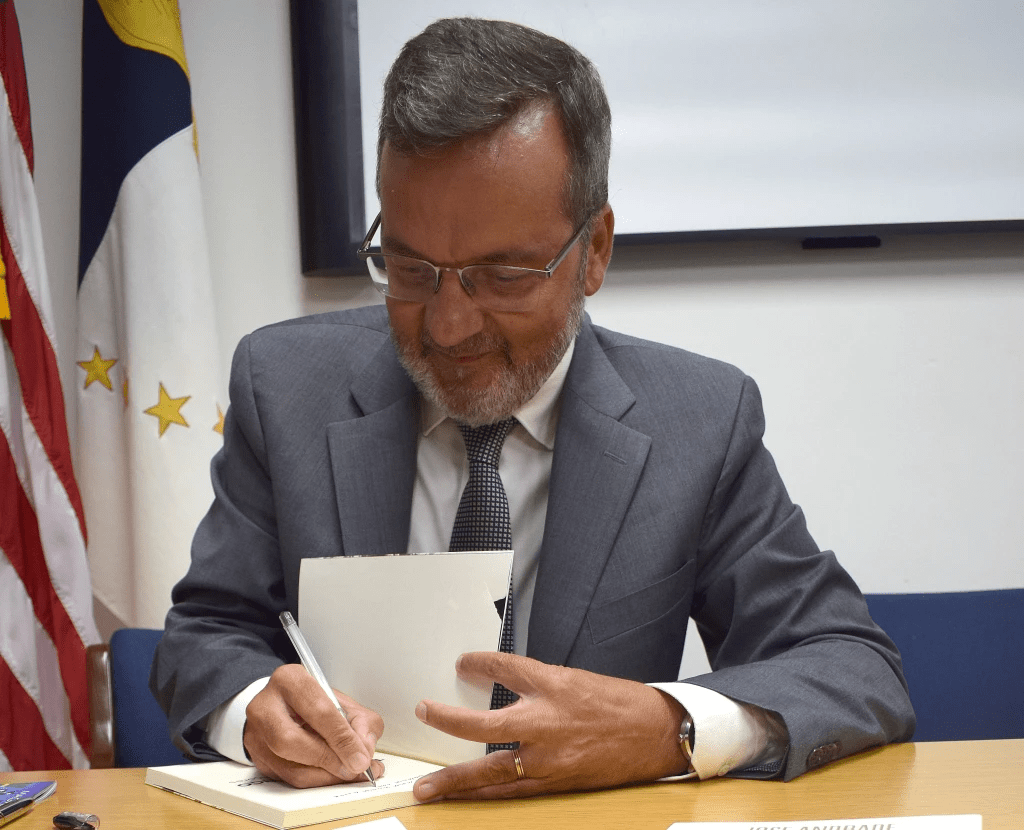
The book “Azorean Missionaries in East Timor,” written by Carlos Filipe Ximenes Belo, Bishop Emeritus of Dili, is a work that acknowledges and values the significant impact of the Azorean clergy on the distant mission to Timor.
Reconstructing 119 years of Azorean leadership in the Timorese mission, this book begins in 1875 with the appointment of Dom Manuel de Sousa Enes, from São Jorge, as Bishop of Macau and the Colony of Timor, and ends in 1994 with the death of the last Azorean priest in East Timor, Carlos da Rocha Pereira, from Terceira.
The first chapter highlights “The Influence of Azorean Missionaries in East Timor,” especially in the context of missionary work and the education of Timorese youth.
For example, the College of Santa Teresinha do Menino Jesus, in the administrative headquarters of Ossú, was founded by Father Manuel Silveira Luís from Faial. Xanana Gusmão, the first President of the Republic of East Timor, and D. Ximenes Belo himself studied here.
The second chapter praises “The Role of the Azorean Bishops,” highlighting the biographies of Cardinal Dom José da Costa Nunes from Pico, Bishops Dom João Paulino de Azevedo e Castro and Dom Jaime Garcia Goulart from Pico, and Bishop Dom Manuel Bernardo de Sousa Enes from São Jorge.
Dom Manuel Bernardo, a native of the village of Topo on the island of São Jorge, was the first Azorean to be appointed Bishop of Macau, by papal bull of 1874, which added “the part of the island called Timor, which is under the rule of the King of Portugal.” He remained there until 1883.
Eighteen years later, in 1901, Dom João Paulino, a native of Lajes do Pico, took over the governance of the Diocese of Macau for almost two decades, until 1918, reorganizing the Catholic missions in Portuguese Timor.
By this time, Father José da Costa Nunes, a native of the parish of Candelária in the municipality of Madalena do Pico, was already working as a missionary in Portuguese East Timor as Vicar General of the Diocese of Macau and Timor. He was appointed bishop in 1920 and governed the Diocese of Macau and the Catholic Missions of Timor until 1940. He founded the School for the Preparation of Teachers and Catechists of Timor, opened the School of Arts and Crafts in Dili, inaugurated the Mother Church of Dili and the Church of Ainaro, and defended and succeeded in having the Missions of Timor become a Diocese.
The third chapter is dedicated to the 14 Azorean priests who were missionaries in East Timor—five from Terceira, four from Pico, three from São Miguel, and one from Faial.
The first to arrive “on the other side of the world” was Father João Machado de Lima from Terceira in 1924. He was Vicar General of the Missions of Timor and Rector of the Seminary of São José.
In 1931, Father Norberto de Oliveira Barros from Terceira embarked for the Colony of Timor. He was the one who promoted the construction of the Church of Ainaro, but he would end up being shot by Japanese troops.
Three Azorean priests went to Timor in 1932: João Homem Machado from Pico; Januário Coelho da Silva from Terceira, who was Superior of the Baucau Mission and Director of the Nuno Álvares Pereira College during his 30 years of missionary work in Timor; and Ezequiel Enes Pascoal, a Brazilian and son of emigrants from Terceira, who created the Ossú Mission, founded the Seara magazine, directed the Ecclesiastical Bulletin of the Diocese of Dili, and published the book A alma timorense vista na sua fantasia (The Timorese soul seen in its fantasy).
In 1935, Father Manuel Silveira Luís from Faial arrived in Timor. He was the director of the School of Arts and Crafts in Dili, the founder of the Santa Teresinha do Menino Jesus College (for boys) and the Óscar Ruas College (for girls), and also the director of the Infante de Sagres College.
Two priests from Pico arrived in Timor in 1949 and 1953. The first, José Pereira da Silva Brum, directed the Suai Mission and was persecuted by Indonesian troops. The second, Isidoro da Silva Alves, directed the Soibada College and was Superior of the Ossú Mission.
The first priest from São Miguel to arrive in Timor, in 1956, was Father Leoneto Vieira do Rego, from Fenais da Luz. He was director of Seara magazine, Superior of the Soibada Mission, director of the Nuno Álvares Pereira College, and governor of the Diocese of Dili. With the invasion of Indonesian troops, he took refuge in the bush with his people, but managed to return to Portugal, where he died in 2002 in the city of Ponta Delgada.
Another priest from São Miguel, Reinaldo de Medeiros Cardoso, was born in Faial da Terra and served as a missionary in Timor from 1960 onwards.
From Terceira and Pico, priests Ivo Diniz da Rocha, João de Brito Martins Lourenço, and José Carlos Vieira Simplício also went to Timor in the 1960s; the latter wrote a book titled Daqui Houve Missionários até aos Confins do Mundo (From Here There Were Missionaries to the Ends of the Earth).
Finally, the future Monsignor Victor Manuel Rodrigues Vieira, a native of the parish of Arrifes, left for Timor in 1967, where he served as a missionary until the civil war of 1975.
Indeed, the work done by the Azoreans in Timor is a work that makes Azoreans proud. A work at the service of others that inspires us, touches us, and moves us.
José Andrade is the current Director of the Azorean Communities for the Government of the Azores.
Translated by Diniz Borges
We thank the Luso-American Education Foundation for its support.

 Filamentos (artes e letras)