
Collective memory should be, but is not, a neutral archive where facts and dates are stored. On the contrary, it is a permanent battlefield, where what is remembered and what is forgotten is the result of political, cultural, and economic choices. The past is not an immutable landscape. The past tense is continually rewritten based on the preferences of those in power and the dominant thinking that prevails in the common sense at each historical moment, and best serves their interests. That is why the dispute between memory and forgetting is never innocent and has now become a struggle that must be fought to prevent revisionism from distorting historical truth.
Knowing is an act of liberation that empowers citizens, making them less vulnerable to the shaping of public opinion and historical revisionism. On the other hand, it is essential to understand the interests and purposes of those who decide to rewrite history.
Eight decades after the morning of August 6, 1945, Hiroshima remains the greatest symbol of humanity’s self-destructive capacity. In a matter of seconds, an entire city was reduced to ashes, and tens of thousands of lives disappeared in a cloud of fire and silence. The outcome of the conflict was clear, but the US did not refrain from committing the barbarity that it repeated three days later on the city of Nagasaki.
However, the dominant narrative tends to frame these events as inevitable, almost natural, part of a historical outcome that would have saved lives by hastening the end of the war, and the mainstream rarely mentions who was responsible for the bombings. The official justification in the West is repeated like a mantra, stifling uncomfortable questions: Was it really necessary? What were the strategic and geopolitical calculations behind the decision? And why does the memory of Hiroshima and Nagasaki rarely intersect with the memory of the equally devastating and perhaps avoidable conventional bombings that destroyed cities such as Dresden or Tokyo?
By simplifying the event, the official memory erases political and moral responsibility. And this erasure is not irrelevant: without critical memory, humanity risks normalizing war, trivializing violence, and rewarding the perpetrators of this inhuman act.
European colonialism is also a territory of conflicting memories and a history that is not always well told, or rather, described through the eyes of the colonizers as a civilizing mission based on the supremacy of European peoples and achieved by force of arms, but which for the colonized peoples was an experience of exploitation, violence, racism, and epistemicide. This situation continued even after the processes of decolonization under the aegis and different faces of neocolonialism, from which not all colonized peoples have freed themselves. What is certain is that, in recent decades, the dominant trend continues to be one of selective forgetting and whitewashing.
In Portugal, for example, the empire is often reduced to episodes of exoticism and mild nostalgia for the African colonial imagination. There is little talk of slavery, massacres, or the colonial war that, until the April revolution, claimed the lives of thousands of young people on the battlefronts in Africa. The Lusophone narrative seeks to soften the harshest aspects of this history, and there are still those who try to justify Portuguese colonialism with the theories of so-called Luso-tropicalism.
Forgetting and adapting the facts, in this case, is also a way of perpetuating a one-sided version of history. Memory should not be a gallery of glories, but a space for accountability. To be clear, these words are not intended for the thousands and thousands of young Portuguese who were forced to fight in a war that was not theirs and in which many thousands were killed.
Other memories have been shaped by the present, but history does not lie. NATO, founded as a defensive military bloc in 1949, included the Portuguese dictatorship as one of its founding members, which can only be understood in light of the political objectives of this organization, which, as is well known, had as its main purpose to combat the expansion of Soviet influence and a supposed growing threat of Bolshevization of the world.
As such, after the implosion of the Soviet Union on December 26, 1991, and the earlier dissolution of the military bloc known as the Warsaw Pact in July of the same year, NATO ceased to make any sense as a military bloc.
NATO’s interventions in Yugoslavia in 1994 and 1999, in Afghanistan from 2001 to 2021, in Iraq in 2004, in Libya in 2011, among other episodes of indirect intervention, but all of them, took place after the dissolution of the Warsaw Pact and the implosion of the Soviet Union. Since the bombing of Yugoslavia, NATO has abandoned its status as a defensive military bloc and has become an offensive organization serving imperial interests.
What the mainstream media conveys to the collective memory is a narrative of defending freedom and democracy, but its objectives and, in particular, the real effects of NATO’s interventions have been devastating for the countries where this so-called defensive military organization has intervened militarily.
NATO’s official memory is shaped by the present: the external threat is emphasized, while the human cost of wars is hidden. And it is in this game of selective forgetting that the continuation of the alliance is legitimized, even when the results of its actions are, at the very least, debatable, as is its very existence.
In Portugal, the case of the Salazar dictatorship clearly shows how memory is vulnerable to the erosion of time and that the growing institutional representation of populist forces has been accelerating this process. In the space of a generation, the colonial war, censorship, political repression, imprisonment, torture, and murder of opponents, and the misery that forced hundreds of thousands to emigrate, have been obliterated. Today, it is not uncommon to hear people recall the fascist dictatorship as a time of order and tranquility and to spread the idea that the old days were better.
This whitewashing of history is not innocent; it distorts reality and, consequently, weakens democracy. When new generations are denied the right to information and education about the history of the dictatorship, memory is erased, and the way is opened for dangerous revisionism. Portugal oscillates dangerously between nostalgia for the empire and European integration, between the memory of the colonial war and the forgetting of its social consequences, between the popular celebration of April 25 and the risk of reducing it to a formal date, or replacing the founding date of Portuguese democracy with another 25th.
The dispute between memory and forgetting is not just a natural phenomenon of the passage of time: it is also a deliberate social construct. The powers that be have an interest in shaping collective memory. They rewrite history to legitimize the present, hide responsibilities, exalt victories, and reduce defeats to footnotes.
The instruments of this manipulation are clear. Education, when reduced to minimal and uncritical programs, becomes a vehicle for organized amnesia. The media, dominated by business logic and political agendas, selects what should be remembered and what should be erased, reducing complexity to simplistic narratives. And social media, with its speed and fragmentation, amplifies falsehoods and revisionism, transforming repeated lies into shared truths.
The danger lies not only in forgetting, but in replacing memory with convenient fiction. Whoever controls memory shapes the future. That is why remembering is not a nostalgic exercise: it is a political act. Defending critical memory is defending democracy against the slow erosion of revisionism, it is protecting the truth against the anesthesia of lies, and it is, above all, choosing not to surrender the future to those who feed on oblivion and historical revisionism.
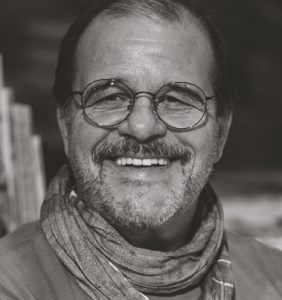
Aníbal C. Pires is a poet and writer who collaborates with several newspapers in the Azores and has published both poetry and essays.
 Filamentos (artes e letras)