
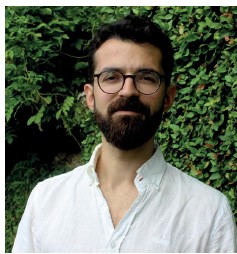
1 – How did the idea for your doctoral thesis come about, and what is its main subject?
I started working on my thesis in 2020 in the doctoral program in “History, Security, and Defense Studies” at ISCTE in Lisbon. My first idea was to do something about the Azores, perhaps because I was born and raised on Terceira Island and have always believed that we should write about a subject we are passionate about. The initial project was to understand the strategic value of the Azores in the geopolitical context from the end of the Cold War to the present day. The question seemed useful to me because, at least since the US downsizing of the Lajes Base announced in 2012, we have been living in doubt about that value.
I had planned a chapter on the historical context of the Azores, but as I wrote it, I realized that the history of the Azores was much more important than I had initially thought. My central question, which seeks to identify the main factors that determine the strategic relevance of the islands, would benefit from examining the entire history of the Azores and identifying recurring patterns. For example, there is the idea that technology is what gives or takes away the strategic importance of the Azores.
But when we look at six centuries of history, we see that the Azores are important when the main technology is sailing, for example, in the 16th century, with their resistance to Philippine rule. Centuries later, the steam engine surpassed sailing as a technology for naval mobility. The Azores lose a certain type of utility because the winds that put them at the center of Atlantic navigation no longer matter as much. But they gain another because ships depend on a network of coal depots in places like the Azores. The internal combustion engine eliminates this function, but then puts the Azores at the center of transatlantic aviation. I very much doubt that any technological revolution will ever make it irrelevant to have an archipelago here in the middle of the North Atlantic as a logistical support platform.
That is why I kept the object of study, which attempts to understand the “strategic geography” of the Azores, but I redid the methodology and structure of the thesis to make the most of the long history. The result, I hope, is that we will understand some essential continuities throughout the history of the Azores. And this can help us understand what roles the Azores can play in the present and in the future.

2 – Over the last few decades, how have the Azores taken advantage of and contributed to their geographical position? Could you give some concrete examples?
This is a very important question. Here in the Azores, we often talk about the strategic importance of the islands as if it were something automatically good for us, or even for the whole country. I don’t think that’s the case at all. Strategic value may result from our geography, but strategy is the domain of decision-making. In other words, we can use our geography well or badly. I think the general trend throughout history has been for Portugal not to understand that its foreign policy has to adapt to the Azores. Without investment in infrastructure and the right capabilities, the Azores could even become a vulnerability for Portugal, not least because at various points in history, Lisbon has felt that there is a risk of losing sovereignty over the islands because there are those who want to invest in them. The post-April 25 period is one such moment, when there were talks in the White House about turning the Azores into an “Atlantic Taiwan” if Portugal opted for communism. This pressure likely helped to secure regional autonomy, which gives the Azoreans and Madeirans considerable autonomy. Therefore, I think it makes sense to see autonomy itself as a benefit of strategic importance.
3 – During your research for your thesis, what facts or discoveries did you find most relevant or surprising?
One of the advantages of looking at six centuries, which I admit is a somewhat risky approach in a thesis, is that you are surprised at various points. Some periods of Azorean history are widely explored, such as the resistance to Philippine rule in the 16th century, the liberal struggles in the 19th century, and the First and Second World Wars in the 20th century. Even in these periods, I was surprised by the weight that the Azores often carry in the decision-making and military planning processes of major powers such as the US, the UK, and Germany. And even here, there are unresolved debates among historians that deserve more attention. For example, the importance of the Azores for intercontinental communications during World War I remains an under-explored topic.
Then there are other periods when the Azores played strategic roles. Still, these are not part of the history that is usually told, for example, during the War of 1812 between the United Kingdom and the US, and during the American Civil War. In these two 19th-century conflicts, what happened here had important consequences for the US, Portugal, and the Azores themselves. There is also a lot of interesting stuff that is not yet known to the general public about the Azores’ various roles in the Cold War.
But the most surprising thing was actually being able to detect recurring patterns over six hundred years. There are strategic roles that I identify in the thesis that reappear with completely different technologies and political contexts. I think this leads us to believe that there is something intrinsically important about the geography of these islands, even though it manifests itself in different ways over the centuries.

4 – In a global context where the strategic focus has shifted to the East, do you think that the Azores and the Atlantic maintain their geostrategic importance? Why?
Regions can be strategically interesting because they have their own resources or because they provide access to regions that have those resources. The importance of the Azores has almost always come from facilitating this access. In recent years, we thought that the rise of China and the resulting “Asian pivot” of US foreign policy would mean less interest in the Azores. But that is a static reading of the world. Decision-makers think, or should think, about the future. And everything indicates that in the future, the Atlantic will continue to be extremely important from a geopolitical point of view. Two factors to consider: first, it seems that the US is rethinking its global posture, interpreting its vital interests in a more limited way. If this happens, and if the US loses interest in Europe, where will the US security perimeter lie? Perhaps in the Azores, as it was, for example, in World War II. And won’t Europe need to have its own capabilities on its Atlantic border? Second, we have the Arctic. The ongoing thaw is opening up new routes and facilitating access to resources in the Arctic polar zone, which will mean an Atlantic that is essentially “open” to the North. Open to economic activity and, therefore, with new security issues and perhaps even conflict between states.
5 – In your view, what could be the strategic role of the Azores in the near future? And in what areas or aspects could this be achieved?
To avoid repeating what has happened several times in history (e.g., before World War I), Portugal mustn’t wait to see what relevance the Azores have for the major powers. Suppose we anticipate these roles and make the necessary investments before the issues arise. In that case, we will be in a better negotiating position, which will lead us to speak with a stronger voice on the international stage and be more likely to reap the benefits. I know that this is coming from an Azorean. Still, the years I have spent looking at this issue lead me to believe that the resilience and capabilities of Azorean society are one of the best long-term investments in Portuguese foreign policy that Lisbon can make.
If we know how to leverage new strategic sectors, such as space, we may even have a virtuous cycle here, in which the Santa Maria space cluster attracts investment, infrastructure, and talent to the Azores, contributing not only to the economy but also progressively increasing the usefulness of the Azores to the European Union in its agenda of “strategic autonomy” about space, an area where the EU depends on third-party infrastructure (e.g., satellites from American companies).
In addition, the Azores are once again important for strategic functions they already performed during the Cold War, such as logistical support for the projection of force between the two sides of the Atlantic (especially from the US to Europe, North Africa, and the Middle East) and maritime surveillance. In the space of a few weeks, we had two strong signs of how these functions still matter: the use of the Lajes Base by refueling aircraft during the US military operation that hit nuclear facilities in Iran in June, and the stopover of the nuclear-powered submarine USS Michigan on Terceira Island in July. This episode shows that the US is concerned about Russian submarine activity in the North Atlantic, which is linked to the return of geopolitical tension to the Arctic. The US has also announced work at Lajes to support the permanent operation of P-8 aircraft, which carry out maritime patrols.
6 – Would you like to add any comments or final thoughts that you consider relevant?
We will have to think carefully, as a country and as an autonomous region, about our position on this strategic issue, because we are no longer in the Cold War. The US is recalibrating its foreign policy, and so is the EU, with its agenda of “strategic autonomy,” which we do not yet know how far it will go. Uncertainty is a fundamental feature of strategy, but it seems clear to me that we will be in a much better position to face what lies ahead if we invest in the Azores’ geography and leverage it through our own means. The alternatives are to wait for others to do it or try to hide from history, which does not usually work well for small powers such as Portugal.
Tomé Ribeiro Gomes – Small Islands in Grand Strategy: The strategic geography of the Azores (1430-2022)
José Henrique Andrade is a journalist for the Correio dos Açores newspaper, and Natalino Viveiros is the director.
Translated to English as a community outreach program from the Portuguese Beyond Borders Institute (PBBI) and the Modern and Classical Languages and Literatures Department (MCLL) as part of Bruma Publications at California State University, Fresno, PBBI thanks the Luso-American Education Foundation for their support.

 Filamentos (artes e letras)