
Interview with Sara Miguel, vocalist for the group Mar&Ilha (Sea&Island)

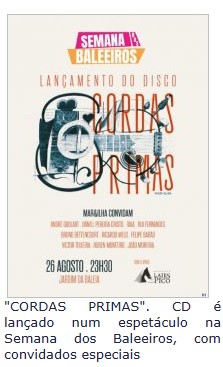
Mar&Ilha will release their second album on August 26 with a concert during Whale Week in Lajes Pico, featuring guests from all over the country. What will be special about this show?
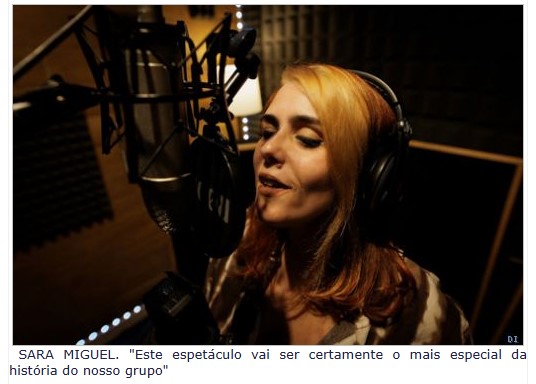
This show will certainly be the most special in the history of our group (which celebrates its sixth anniversary in 2025), not only because we are launching our second album at the biggest annual cultural event in our town, but also because we will be sharing the stage with 12 wonderful guests from all over the country! In addition to bringing together for the first time in concert in the Azores the seven Portuguese stringed instruments – the terra, campaniça, braguesa, beiroa, toeira, madeirense, and amarantina – we will also have on stage other instruments linked to traditional Portuguese music and the privilege of playing with special guests, the cream of the crop of each region in the exploration and evolution of each of these instruments: André Goulart, Daniel Pereira Cristo, RAIA, Ruben Monteiro, Felipe Barão, Rui Fernandes, Bruno Bettencourt, Ricardo Melo, Victor Teixeira, and other names that we will only reveal on stage! In addition to playing the songs from the album, we will also bring all these instruments together in a journey through the Azorean songbook, and there will be some surprises to celebrate some of the most special Azorean traditions. It will be a night to make (part of) history, and we hope to see you all on stage at the Jardim da Baleia in Lajes do Pico!
What is the concept behind this second album, “Cordas Primas”?
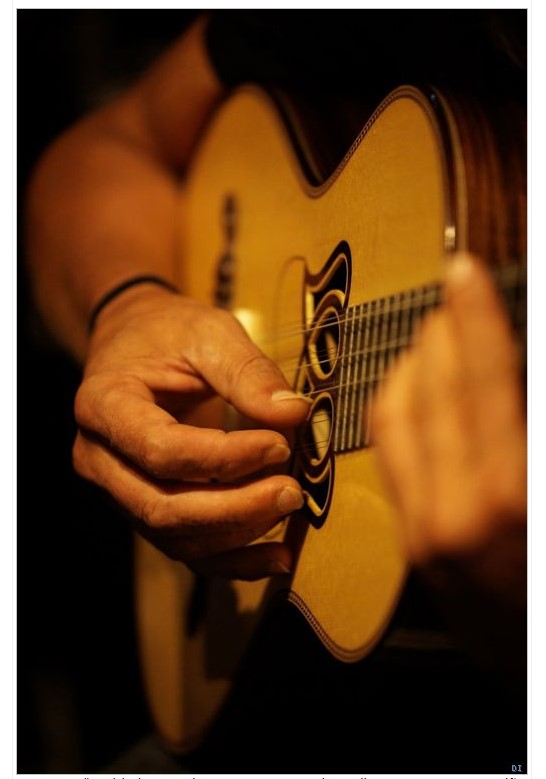
The concept for this work was to build bridges between the Azores, mainland Portugal, and Madeira through the meeting of instruments and playing traditions. Ultimately, it is a representation of the richness and diversity of Portuguese musical heritage and an affirmation of the potential for future paths it can follow. The formula we dreamed up was to bring together all the Portuguese wire-strung violas scattered throughout the country, including the islands. At a certain point, it also made sense to us to include the Brazilian viola caipira, representing the movements of expansion and diaspora that brought it to these shores. The aim was to demonstrate that, although scattered across different regions and apparently distant and distinct, these violas have much in common and can and should come together in spaces of sharing to affirm this unifying identity. According to studies in the field, these instruments descend from a single original instrument, the 18th-century vihuela or hand viola, which, over time, spread to various places and was modified in each of them by builders, playing techniques, repertoires, local symbolic elements, etc. Thus, several guitars were born with their own distinctive characteristics, especially in terms of appearance. Still, in terms of sound, they never ceased to reveal their common origins, which is why we think of them as ‘sister’ strings. As we developed the album, we felt the desire to include more string instruments linked to music with Portuguese roots, such as the cavaquinho, the accordion, the Portuguese guitar, and the mandolin, among others, and we ended up broadening the range to include a total of 16 different string instruments represented on this album! Thus, the ‘sister’ strings became ‘cousin’ strings to make room for the whole ‘family’, and the word ‘cousin’ also has a double meaning about the strings of our Viola da Terra (the traditional Azorean guitar), the first, fundamental, and essential instrument of the Azorean musical tradition. It is a unique concept, rich in its result, which comes full circle in a perfect blend of beauty and genius designed by the composers and guest musicians who contributed to this work!
In recent months, you have released three tracks online. How has the public reacted to this second work?
The public reaction has been very good! I think people are curious about this new work because it is quite different from the first and because it has been ‘marinating’ for over a year. In June 2024, when we began to explore the repertoire offered by our guest composers, we held an open rehearsal in the Whalers’ Museum Auditorium to gather audience feedback and incorporate it into our creative process. It was very interesting to see what worked best or worst based on the vibe and input from the audience, especially since many of them were already followers of our group and had an idea of what they would like to hear from us. The fact that we released three singles from the album online in advance, two of which were presented with very different music videos (one animated and the other a making-of video of the studio recordings), created even more curiosity, because people heard some of the guest string instruments on this album and felt the richness they add to the music and the basic instrumentation of our group. Even so, we know that our audience will only have the opportunity to appreciate the true richness of this album when they hear it in its entirety and, above all, when they see it performed live during Whalers’ Week. What we have managed to bring together on this album is not just 16 different string instruments and their players – they are methods and traditions of playing that represent various regions of Portugal, they are the imaginations of musicians who carry entire traditional repertoires in their fingers, they are stories of people and places that have been immortalized in music-memory, they are expectations and dreams that traditional and popular instruments will be carried into the future, taking with them the ancestral identity of a people. It is heritage made into a record, dreamed of by many hands and hearts united by generosity and a spirit of mission for art!
The tracks on this CD were written by 13 authors and played by 13 guest musicians from various parts of the country and abroad. Despite this fusion of different sounds and contributions, does the Azorean spirit stand out?
It was wonderful to see the album take shape little by little, over time, and, listening to the songs, to realize that there is, in fact, much more that unites us than separates us! What we confirmed in the first instance was that there is a mother house of Lusitanian identity that unites all the musicians; there are references, phrases, and symbols that are musically common and familiar to everyone, regardless of their origin. Then we also confirmed that there is an Azorean compositional imagination, because there are words, expressions, ideas, feelings, cadences, and motifs that are recurrent and abundant in the way the island authors compose, in the stories they tell, and in the subjects that ‘haunt’ them. What is beautiful and truly inspiring is to see that there are things that are unique and distinctive—an author who writes about the power of the volcano or a traditional trill on the campaniça guitar. There are others that are universal and that when they come together, instead of diverging, they converge and make even more sense together, because they exacerbate a sense of belonging that is that of Portuguese music. Of course, by inviting only composers connected to the islands, the recurring themes in the poems and the power of the local viola that is present throughout the album scream ‘Azores’… but the truth is that on this album our goal was not to assert one over the others, but rather to give space to the coming together of all the different elements and understand how similar they are. And, yes, most people who listen to the album (even those who are knowledgeable) may not be able to distinguish which viola plays on which track without checking the booklet… But they will feel the extremely personal approaches of each musician, they will feel the weight of tradition in the strings, and they will undoubtedly understand that Portuguese heritage is like a diamond—it has many facets, but it is one and solid.
Do you believe that this fusion of cultures, through different strings, can take “Mar&Ilha” beyond borders?
That is our hope, yes. In addition to being the goal of all Azorean musical groups that want to be professional and invest heavily in original creation, we believe that our project has the necessary merit to assert itself anywhere and carry with it the cultural and identity footprint of the Azores. The fact that we have ambassadors from all over the country representing their regional instruments on this album gives it added value and potential to circulate and be relevant in many of these places. We hope to be able to share it on stage with the musicians who co-created it many more times beyond this first one, which will be at the launch. We feel that the Azores need many good artists to take them out, to places where our culture has had no expression or space, and we want to be part of this movement of affirmation. This is what we work for. This is why we always think about the best way to honor and represent the enormous heritage and symbol that is the Viola da Terra. This is why we sweat and sacrifice ourselves in the Herculean task of producing art today, especially in an ultra-peripheral region. We want to give more viola to the world and more world to the guitar!
In diário Insular-José Loureço-director
 Filamentos (artes e letras)