
THE AZORES AT THE END OF BRAZIL
The historical relations between the Azores Archipelago, in the North Atlantic, and Rio Grande do Sul, at the end of Brazil, date back to the Azorean presence in the lands of Rio Grande do Sul from 1752 and were institutionalized with the constitutional creation of the Autonomous Region of the Azores in 1976.
Under the political guidance of its successive presidents – João Bosco Soares Mota Amaral (1976-1995), Alberto Romão Madruga da Costa (1995-1996), Carlos Manuel Martins do Vale César (1996-2012), Vasco Ilídio Alves Cordeiro (2012-2020) and José Manuel Cabral Dias Bolieiro (2020-2024) – the Government of the Azores has developed an official relationship with the Azorean and Azordescendant communities of America in general, Brazil in particular, and, in this case, the state of Rio Grande do Sul, through two different and consecutive organic units, the Office of Emigration and Support for the Azorean Communities and the Regional Directorate for Communities, with six leaders in almost half a century:
Duarte Manuel Bettencourt Mendes, director of the former Gabinete de Emigração e Apoio às Comunidades Açorianas, from 1976 to 1996;
Alzira Maria Serpa Silva, director of the same Office, from 1996 to 1998, and the first Regional Director for the Communities, from May 1998 to January 2009;
Rita Nazaré Soares Bettencourt Faria Machado Dias, Regional Director for the Communities, from January 2009 to September 2010;
Maria da Graça Borges Castanho, Regional Director for the Communities, from October 2010 to November 2012;
Paulo César Câmara Teves, Regional Director for Communities, from November 2012 to December 2020;
José Maria de Medeiros Andrade, Regional Director for Communities, from December 2020.
The mutual rapprochement between the Autonomous Region of the Azores and the State of Rio Grande do Sul takes place, on the one hand, in the academic sphere and, on the other, at institutional level.
In the academic sphere, essentially through participation in congresses.
First, with the Azorean Communities Congresses, promoted by the Azorean Government: the first in 1978, in the Azorean cities of Angra do Heroísmo, Horta and Ponta Delgada; the second in 1986, on the island of Terceira; the third in 1991, also on Terceira; the fourth in 1995, on the island of Faial.
Then there were the International Congresses of the Feasts of the Divine Holy Spirit: the first in 1999, in Florianópolis, promoted by the Center for Azorean Studies of the Federal University of Santa Catarina; the second in 2006, in Porto Alegre, organized by the Casa dos Açores do Estado do Rio Grande do Sul; but also the third in 2008, in Ponta Delgada, Azores; the fourth in 2010, in São José, California; the fifth in 2012, in Angra do Heroísmo, Azores; the sixth in 2014, in Winnipeg, Canada; and the seventh in 2016, in Alenquer, on the Portuguese mainland.
There is also, for example, the series of lectures “Azorean Roots in Brazil”, which took place in the Houses of the Azores of São Paulo, Rio Grande do Sul, Santa Catarina and Rio de Janeiro during 2003.
At the institutional level, especially through the installation of the Azorean Rooms and, above all, the creation of the House of the Azores of the State of Rio Grande do Sul.
First, in 1991, with the Azorean Rooms in Capão da Canoa, General Câmara, Gravataí, Mostardas and Osório; in 1992, with the Azorean Rooms in Rio Pardo, Santo Antônio da Patrulha, Taquari, Tramandaí, Triunfo, Viamão and Porto Alegre; in 2002, with the Azorean Rooms in Rio Grande, Piratini, Venâncio Aires, Ilha da Pintada and Balneário Pinhal; all promoted by the Portuguese Cultural Institute, equipped by the Government of the Azores and hosted by the respective town halls.
Then, in 2003, with the creation of the House of the Azores of the State of Rio Grande do Sul, a natural consequence of the “Friends of the Azores Association” of Gravataí (2000), successively chaired by Régis Albino Marques Gomes (2003-2015), Célia Silva Jachemet (2015-2018), Carla Marques Gomes (2018-2021) and Viviane Peixoto Hunter (since 2021), as the fifth to be established in Brazil: after Rio de Janeiro (1952), São Paulo (1980), Bahia (1980) and Santa Catarina (1999) and before Maranhão (2019) and Espírito Santo (2022).
There is also the municipal contribution of transatlantic rapprochement, namely with the potential official twinning of Azorean and Gaucho cities, which has already taken place between Porto Alegre/Ribeira Grande and Gramado/Angra do Heroísmo and has now been extended to Gravataí/Horta, among other ongoing processes.
_____
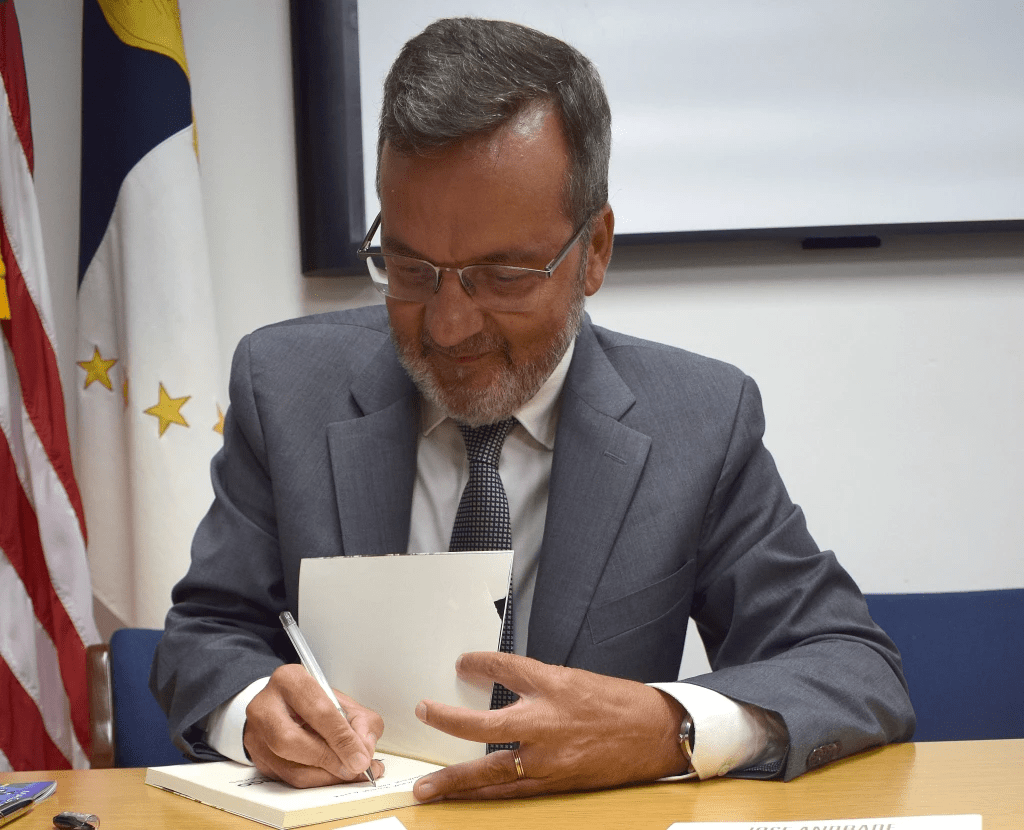
José Andrade is the Regional Director for Communities of the Government of the Autonomous Region of the Azores
This writing is based on the preface to the book “À Redescoberta das Raízes – Relações entre os Açores e a Diáspora (Rio Grande do Sul, 1976-2016)”, by Célia Silva Jachemet (2024)
Translation by Diniz Borges

 Filamentos (artes e letras)