NOW WE KNOW!
“To know is to live.” This was the motto for the launch of the “Viva Açores” project. Eleven months later, we can say that we have recovered the lost memory of the settlement that began in the distant 18th century with the arrival of the first Azorean couples in Santa Catarina in 1748. We dared to write a biography of the collective memory, engaging in dialogue with history, culture, literature, and art in their different expressions. A plural and multicultural dialogue with the society that lives on both sides of the Atlantic, over which we have built a two-way bridge, allowing knowledge to flow, wisdom to emanate, affection to emerge, and thoughts about the future to take shape. From the Azorean past came the historical rescue to understand our roots, which had been forgotten for more than two centuries. A history that, for a long time, was part of an insular imagination without even knowing where this place called the Azores was. An archipelago formed by nine volcanic islands, lands of lava, earthquakes, sea breezes, and sargassum. Islands anchored in the middle of the North Atlantic. Place of origin. Corner of the seas, a crossroads, a place of passage, of departure and of return. A safe haven for sailors in the age of discovery. A route for trade, people, and cultures.
However, our Azorean identity, framed by a long cultural process of assimilation and transformation, has survived, in new guises, along the entire coast of Santa Catarina and on the island of Santa Catarina, even after 275 years. The Azores are no longer just a reference in the family tree of thousands of families, but are now truly known, bringing the two Atlantic shores closer together and placing them face to face in a loving dialogue between mother and child, from baptism on the green earth to the discovery of their Azorean roots born in the land of lava and a great legacy built by generations of descendants of those pioneering settlers.
The historical and cultural imagery of the island world of the Azores (and even Madeira) has remained with us and still survives today, as the Madeiran historian Duarte Nuno Chaves (whom I paraphrase) has rightly pointed out, in ancestral practices based on the memories of their collective identity, constituting part of the intangible cultural heritage, one of the pillars of this centuries-old legacy of experiences and worldviews and the creativity of its people, from the broad historical perspective of how it all began to be disseminated and actually known until the 21st century arrived. The windows of social communication were thrown open, letting in the sunshine of a new era for relations between the Azores and Santa Catarina, and especially for Florianópolis, promoting cultural and scientific exchange, tourism, encouraging economic and technological ventures, in the eagerness to bring mutual benefits, strengthening the bonds of a maternal chain.
José Andrade, regional director of Communities, in a recent interview about his new book, Transatlântico, highlighted the importance of recognizing and valuing the dimension of the Azorean diaspora, the need to shorten distances, and foster bilateral cooperation. The key is to “gain awareness and embrace the pride of being a transatlantic archipelago, we are at the center of the world.” This is exactly what “Viva Açores, conhecer é viver!” has achieved in almost a year, telling this story in every possible way and in an unprecedented manner, involving hundreds of professionals, interviewees, artists and illustrators, writers, public managers, entrepreneurs, educators, and researchers, as well as the municipalities where the Azorean presence is strongly identified. Partners in a magnificent multimedia project conceived by the president of the ND Group, Marcello Corrêa Petrelli, and presented on March 28, 2022, at the Cruz e Sousa Palace. Finally, the greatest bridge of “Azoreanity” was unveiled, connecting the island of Santa Catarina (and the Santa Catarina coast) to the Azores—nine islands in the middle of the North Atlantic, shaped in a curve that resembles a large “S,” from Santa Maria in the east to Flores in the west.
Never in the history of relations between Santa Catarina and the Azores has a project of this magnitude and with such an immeasurable private investment been carried out with the unique purpose of bringing together and intertwining histories and realities. If I were given the task of writing a comprehensive report on the vast output of the “Viva Açores” project and its fantastic reach in Santa Catarina, as well as in the Azores (Portugal) and in the diaspora communities in the United States, Bermuda, and Canada, we would undoubtedly have a surprising quantitative result of excellent quality, which gives it greater significance and portrays its genuine and very successful scope. Let’s take a look: over eleven months, programs and short programs appeared on NDTV, books, booklets, school projects, newspaper publications with special sections, and reports on the website. NDTV produced a total of 43 pieces of content, including 25 reports and 18 specials, providing space for information through reports, inserts, teasers, and vignettes, as well as numerous live interviews and programs such as “Conexão ND” (on Record News SC).
The newspaper Notícias do Dia, with about 50,000 readers per print edition, produced exclusive reports signed by journalist Paulo Clóvis Schmitz. “Long live the Azores, to know is to live!” added partners along the way who embraced the guiding spirit of the project and contributed greatly to the success of the actions carried out, namely: Workshop on Tourism and Business between Santa Catarina and the Azores – aimed at stimulating the flow of tourism and creating business opportunities between cities in our state and municipal councils in the Azores. The event was attended by the mayor of the City of Velas, on the island of São Jorge, Dr. Luís Virgílio da Silveira, and the president of the Chamber of Commerce and Industry of Ponta Delgada, on the island of São Miguel, Prof. Dr. Mário Fortuna, in addition to leaders from Santa Catarina; Viva Açores comic books and booklets – two publications, with 10,000 copies each, Uma viagem fantástica aos Açores (A Fantastic Trip to the Azores) and Vamos Conhecer essa História? (Let’s Learn About This History?), aimed at children and young people, were distributed to elementary and high school students. They tell, in a playful way, the saga of the first Azorean couples and the cultural heritage they left to the people of Santa Catarina; Show Me magazine – 50,000 copies, with 17 pages of content on the Azorean heritage in Santa Catarina, a special article on the municipality of Velas, on the island of São Jorge, and the production, 500 years ago, of the famous cheese made by the people of São Jorge; It’s Teens Magazine – a publication by the ND Group focused on youth education, present in municipal schools in Santa Catarina.
In a special edition for Florianópolis, it portrayed the traditions, customs, and beliefs of the first Azoreans who arrived in the capital. The edition also highlighted cultural exchange between Colégio Catarinense (Florianópolis) and Colégio São Francisco Xavier (Ponta Delgada, São Miguel Island), both traditional schools and major educational references.
Finally, I must congratulate the documentary series “Uma Ponte sobre o Oceano” (A Bridge over the Ocean), presented in four episodes, written and directed by journalist Isabela Hoffmann, who, in addition to writing the narrative of two young protagonists (Joana and Mariana) in search of their origins, highlighted the coexistence of generations.
From the Azores, we have the participation of actor, composer, writer, playwright, and professor Victor Rui Dores in the role of the grandfather. From Santa Catarina, the presence of dean professor Nereu do Vale Pereira as the neighbor who knows everything and passes on his wisdom. The documentary series features beautiful photography and scenes of great sensitivity by Marcelo Feble, crowning the project “Viva Açores, conhecer é viver!” (Long live the Azores, to know is to live!). The 21st Meeting of Ternos de Reis and the live interview with the president of the Azores, José Manuel Bolieiro, marked the celebration of 275 years of Azorean presence in Santa Catarina in an indelible way. The religiosity brought across the Atlantic, which has its greatest devotion in the Holy Spirit, has become a unifying element of socialization and cultural identity, just as it is in the Azores. Everything that could be offered on all platforms of the ND Group so that the people of Santa Catarina on the “Cá” side and the Azoreans on the “Lá” side could learn about the history of this settlement, and what is still present after so many generations, was done.
Santa Catarina today has more than one million descendants of Azoreans scattered along the coast. It is worth highlighting the affirmative words of Marcello Corrêa Petrelli, president of the ND Communications Group: “I would say that today these people are much more aware and knowledgeable about what their ancestry represents and where their ancestors came from.” I would add that the Azoreans scattered across a geography of affection and memories are very proud of the “Viva Açores, conhecer é viver!” project, as it has given Azoreans around the world a history that they were previously unaware of. Now they know!
Lélia Pereira Nunes, Curator of the project “Viva Açores, conhecer é viver!” (2023)
Translated by Diniz Borges

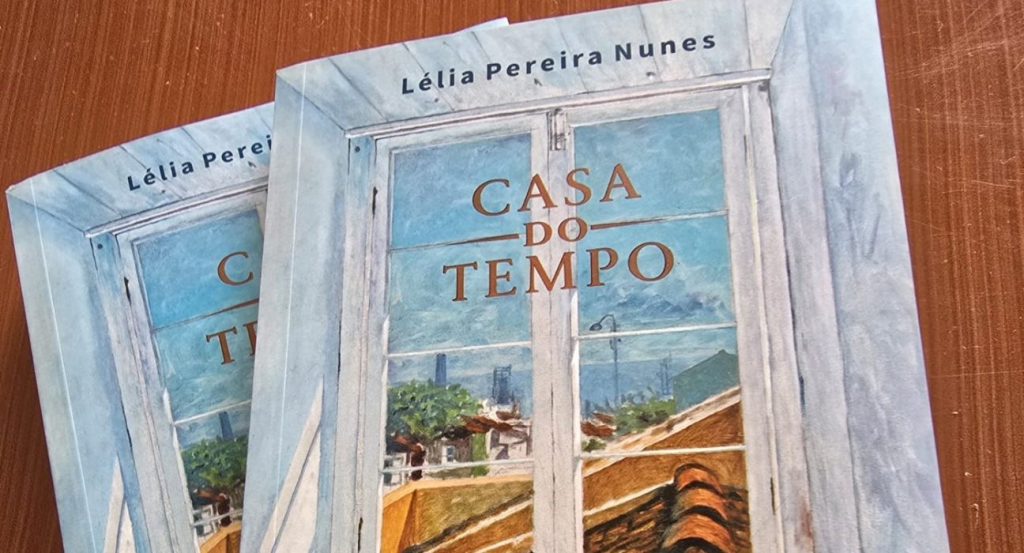
Filamentos is pleased to translate and publish every few weeks a chapter from Lélia Pereira Nunes’ new book, Casa do Tempo. We are delighted to publish these translations as part of our vision/mission statement: to be a voice for the Global Azorean Diaspora. Brazil has, for many centuries, been an important aspect of the Azorean Diaspora. It is time that we all know each other, regardless of where we live. We thank Lélia Pereira Nunes for the opportunity to translate her important work.
 Filamentos (artes e letras)