

A PIECE OF AMERICA IN THE AZORES
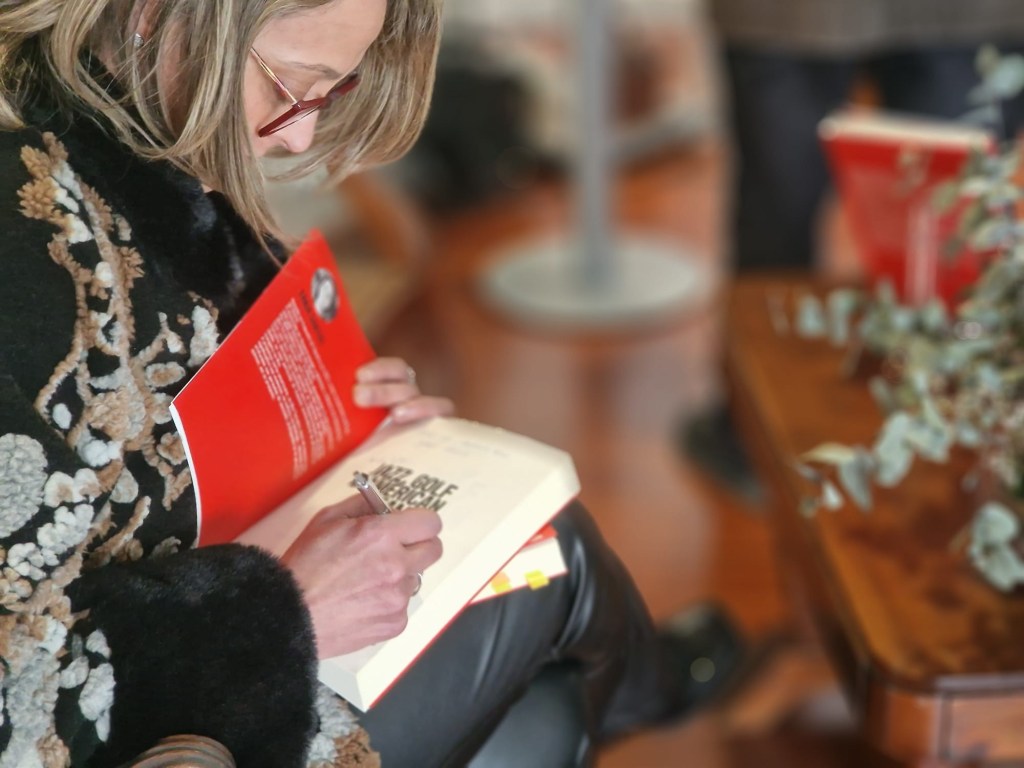
The book Jazz, Golf e American Dream, recently published in the Azores, is the result of the doctoral thesis by Terceira-born author Tânia Santos on the social impact of the American presence on Terceira Island during the Estado Novo period (1926-1974).
The exhaustive development of this topic leads us to the well-founded perception that there is a Terceira before and after the arrival of the Americans.
In fact, signs of modernity were evident on Terceira Island as a result of the impact that the American presence had on the local population, from the consumption of imported products, to women entering the labor market to work for Americans, to the types of relationships between foreign boys and Azorean girls, to the way people dressed and spoke, to the music that was listened to and played, and, ultimately, the way of life that some adopted in this important part of the Azores, under the influence of the American way of life.
The British arrived in the Azores in 1943 and remained here until 1946. Then came the Americans, who have maintained their presence to this day for almost 80 years.
The strategic North Atlantic airfield underwent successive improvements and expansions on the Lajes plain, sacrificing the old “breadbasket of the island,” with obvious consequences that are also analyzed here: the displacement of residents resulting from the demolition of homes and the expropriation of agricultural land.
In fact, the local workforce was employed in the improvement and expansion of the airfield, providing many local workers with access to well-paid jobs and a guaranteed salary.
Several commercial establishments, especially restaurants and similar businesses, opened their doors in the municipality of Praia da Vitória. Still, the purchasing power of foreigners exceeded that of the Portuguese, contributing to an increase in inflation.
While the British presence triggered a series of social and economic changes and introduced some cultural, material, and behavioral innovations, the arrival of the Americans marked a definitive turning point in the identity of the people of Terceira.
Gradually, greater prosperity and quality of life became apparent among the local population, especially among those who found well-paid jobs working for the US forces.
Being a “base worker” conferred social status, and golf was a gateway to other jobs for young Terceirense caddies.
The people of Terceira soon embraced Anglo-Saxon music, forming their own bands, often mixing locals and Americans in their performances.
On the other hand, the Americans were clearly keen to collaborate and maintain a relationship with the community, respecting local customs and traditions.
As a result of the fascination with the customs and quality of life of Americans and the desire to escape the endemic poverty that existed on Terceira during the Estado Novo period, the author continues, significant migratory strategies emerged.
This was the case with the adoption of Terceira children by American couples and marriages between young islanders and foreigners.
This was a large-scale phenomenon, with 182 children emigrating with American couples during the Estado Novo period, in addition to many others who left the island without any documents or formal adoption.
Although particularly prevalent in Terceira, children from other islands in the Azores were also adopted and taken away. Most of these children came from very poor families.
Concerning marriages between young people from Terceira and American military personnel, the author refers to 481 marriages that took place between 1946 and 1974.
Among the intrinsic reasons for these marriages, the intention to emigrate certainly stands out.
Marriage to an American would be a passport to the promised land, with the advantage of being extendable to the whole family.
A future call letter was much more viable in these cases than in cases of child adoption, since most of these children lost their ties to their biological families.
In short, we can say, in the words of the author herself, that “the American presence on Terceira Island had a very significant impact on the lives, culture, and society of the local population during the period under study, leaving deep marks on past generations and extending to subsequent generations, up to the present day.”
As can be seen here, this research represents an important contribution to the social and mental history of the Azores in the 20th century and, in particular, on the island of Terceira.
Therefore, it is worth reading Jazz, Golf, and the American Dream. Preferably while listening to Glenn Miller and drinking Coca-Cola.
_____
José Andrade is the Regional Director of Communities of the Autonomous Region of the Azores
This writing is based on the presentation of the book in Ponta Delgada on June 27, 2024
Translated by Diniz Borges
 Filamentos (artes e letras)