PAULA ANDRADE, MEMBER OF THE GOVERNING BODIES OF ALPENDRE

Alpendre is organizing the sixth edition of the festiVArte festival, featuring theater, dance, music, and performance on the islands of Terceira, São Jorge, and Pico. What are the main highlights of this edition?
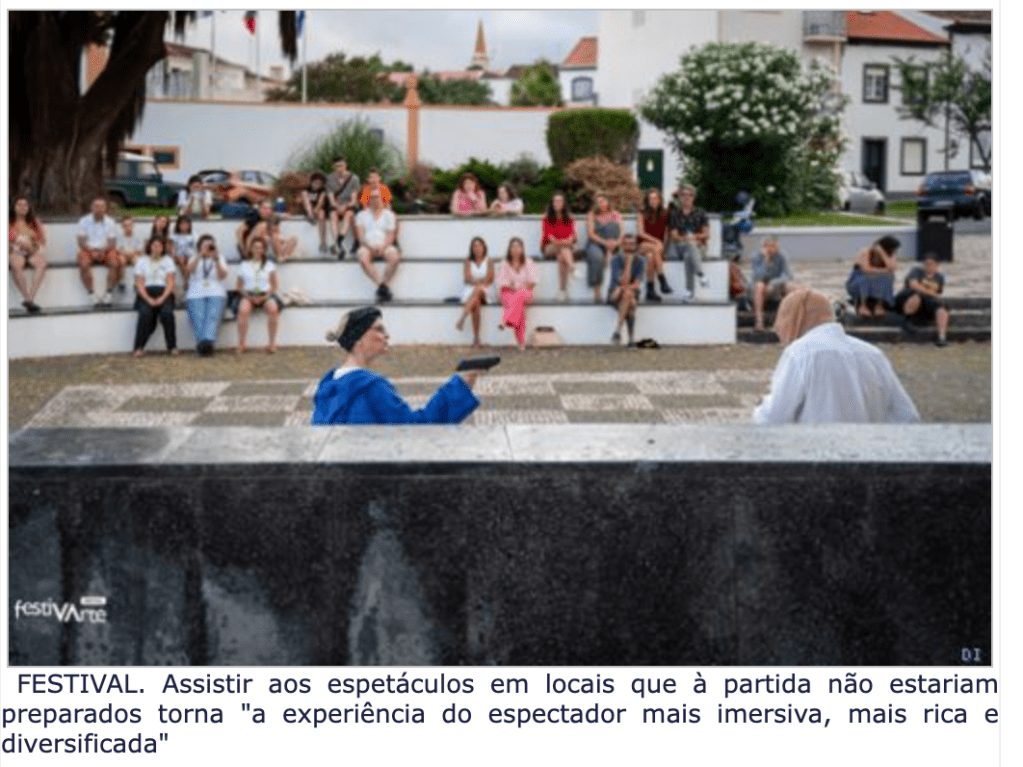
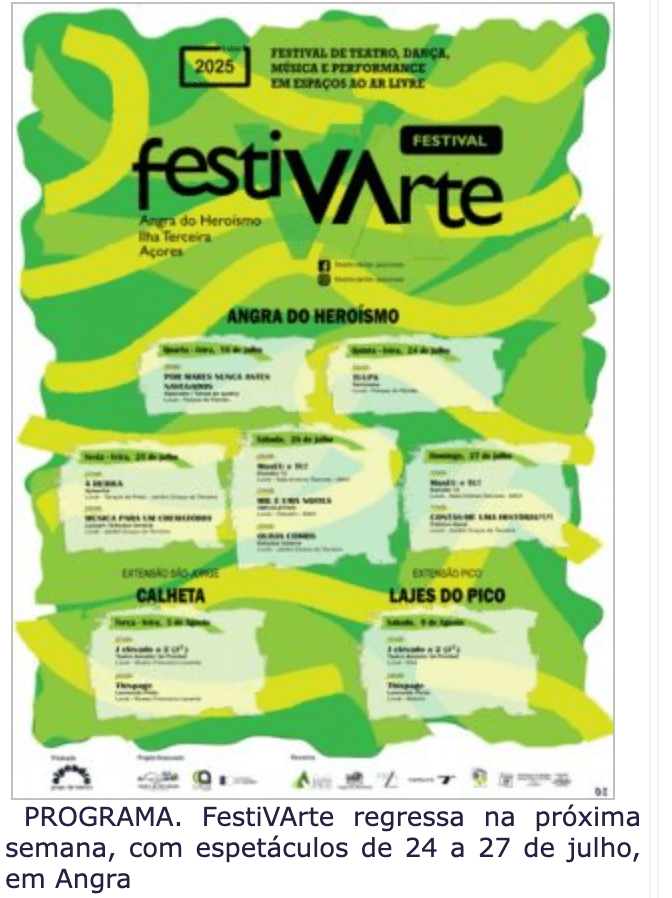
At festiVArte, there are no highlights or “headliners.” Our program tries to be as diverse as possible, both in content and form, as well as in the venue. This year, we begin our cultural itinerary at Parque da Liberdade, Relvão, with the presentation of two plays that have been adapted for outdoor performance. We then proceed to the Jardim Duque da Terceira, where we explore the Preto do Jardim tank, accompanied by a theater show, and then enjoy a multisensory experience of music, color, and images that will enchant certain areas of the Municipal Garden. There will also be a radio theater show based on an ethnographic survey of the life and literature of the women of Angra do Heroísmo, dating back to the 20th century. This work offers every woman the opportunity to share her ancestral knowledge and bear witness through an open activity that will take place at the headquarters of Alpendre – theater group. This knowledge will then be developed and presented in a show that will take place in the cloister of the Angra do Heroísmo Museum. There will also be performances, dance, and more intimate and family-oriented moments of storytelling geared toward families and children. On the islands of São Jorge and Pico, there will be theater and musical concerts in the large courtyard of the Francisco Lacerda Museum, at the Eira and Moinho das Lajes do Pico sites. Perhaps our highlight is our cultural offering as a whole.
How did this festival come about, and how has it evolved since its first edition?
The idea for this festival emerged in 2020, during the pandemic, and aimed to bring shows to the public, as they were, in a way, barred from concert halls. Bringing shows to outdoor spaces not only revived the performing arts, which had been dormant at the time, but also introduced a new dynamic of cultural interaction to the city of Angra do Heroísmo, particularly in the realm of the performing arts, which had been non-existent until then. The first editions were called “Angra do Heroísmo Performing Arts Short Film Festival,” but for legal reasons, we had to change the name to “festiVArte.” We kept the essence, but improved the cultural offering to better meet the sociocultural needs of the festival’s partners and sponsors.
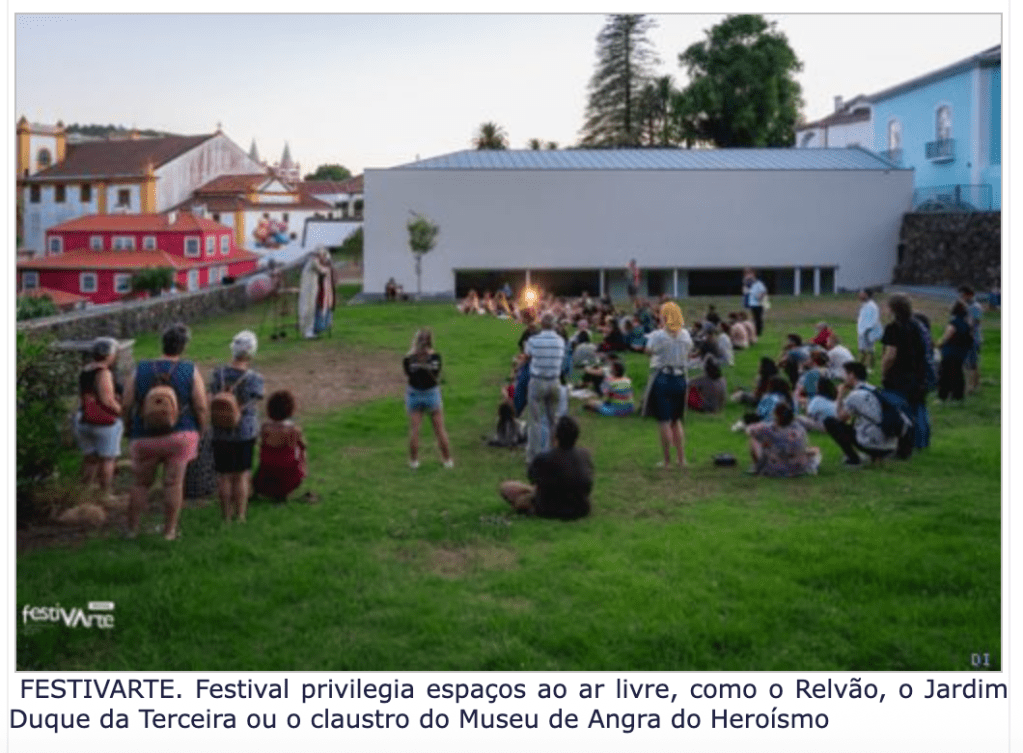
This festival favors outdoor spaces, such as Relvão, Jardim Duque da Terceira, or the cloister of the Angra do Heroísmo Museum. Do these outdoor performances enhance the audience’s experience? What feedback have you received?
Attending a show in a place that was not originally intended for this purpose, such as a garden, a park, a threshing floor, or a mill, makes the viewer’s experience more immersive, richer, and more diverse, where the architectural backdrop and nature play a fundamental role in enriching the moments we want to provide to the public. The feedback from the technical team, our partners, and the general public has been very positive. We have taken into account the suggestions for improvement gathered through surveys, which enable us to progress and innovate. The opinion of our audience is very important to us, and the lessons we learn with each edition contribute to the continuous improvement of our production.
In addition to Alpendre, the program includes other theater, dance, and music groups from the Azores and outside the archipelago. How important is this cultural exchange, not only for the audience but also for the island’s artists?
Art is the product of the artist and, in turn, conveys messages and subjective interpretations that are, on the one hand, a reflection of the author’s experiences and socio-cultural background and, on the other, the materialization of a subliminal message. Art has an impact; it is a vibrant interpretation of reality. The artist provides a service to society when, through their creation, they encourage the public to engage in various readings, interpretations, and above all, critical thinking. This cultural exchange, at the local, regional, and national levels, brings us greater artistic richness and a unique experience for both the public and the artists who provide it, as well as their peers. We learn a great deal from this exchange of knowledge and perspectives, broadening our horizons. We all win. We, the promoters, the guest artists, the public, and, more indirectly, society in general. On the horizon is international exchange, which will further enrich our range of artistic diversity. Let’s see if the opportunity and the means to do so arise.
After passing through Pico in 2024, the festival returns to Pico this year and arrives in São Jorge. Is it increasingly establishing itself as a festival of the Azores? Does it have a greater impact on smaller communities?
FestiVArte, the festival of the Azores, sounds good, but we need to keep our feet on the ground, because it is with a great spirit of sacrifice and love for the cause that this whole project is carried out. All the logistics, management, and operations of an inter-island festival rest with a motivated and dynamic team that wants to do more, take this project further, and reach more islands and communities. The dream is big, but the means do not always match our ambition. Support is often late and scarce, requiring more concentrated management and preparation, which is not always in line with the increasingly tight schedules of the artists, and also involves all the logistics associated with the shows’ itineraries. And yes, we feel that there is a greater impact on smaller communities, which motivates us even more to take this work beyond borders.
In Diário Insular-José Lourenço, director.
Translated to English as a community outreach program from the Portuguese Beyond Borders Institute (PBBI) and the Modern and Classical Languages and Literatures Department (MCLL) as part of Bruma Publications at California State University, Fresno, PBBI thanks the Luso-American Education Foundation for their support.
 Filamentos (artes e letras)