
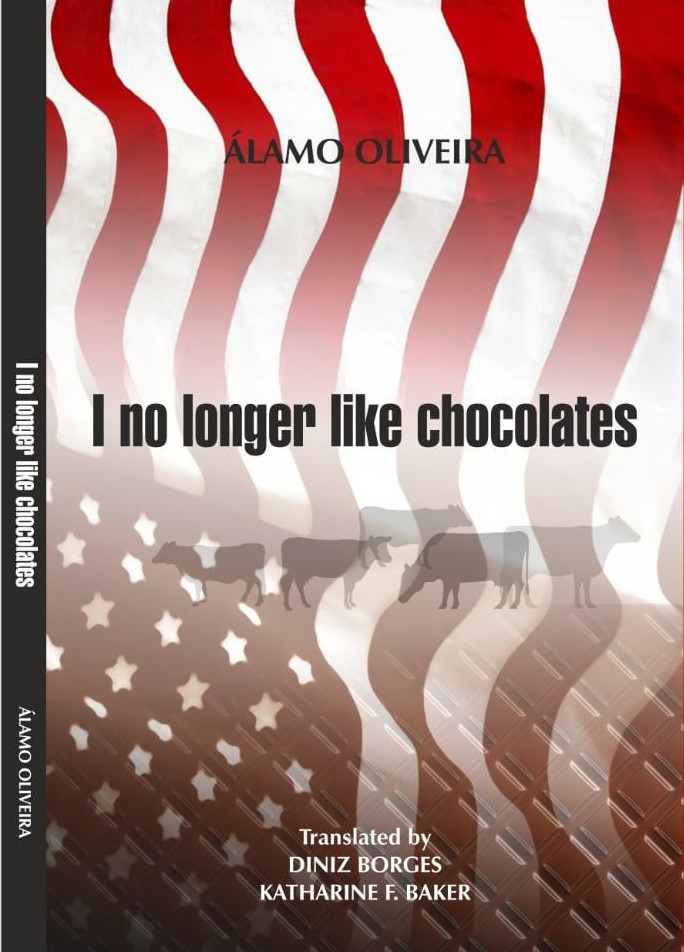
Some stories taste like longing. They dissolve slowly on the tongue, wrapped in sweetness but burdened with the weight of what was never said. Álamo Oliveira’s I No Longer Like Chocolates is one such story—a delicate, aching narrative that lingers in the memory like a farewell kiss at the harbor. Between the volcanic soil of the Azores and the dust-filled air of California’s Central Valley, Oliveira sketches the soul of a family torn between islands and dreams, silence and revelation, tradition and becoming.
American literature is, in many ways, an archive of arrivals. From the pushcarts of the Lower East Side to the citrus groves of California, from Italian tenements to Vietnamese cafés, the nation has been shaped and reshaped by the stories of immigrants. These narratives are more than cultural sidebars—they are foundational to the American experiment. Yet within this vast tapestry, Portuguese-American literature has often occupied a quieter corner, emerging slowly, like the fog off Terceira at dawn.
Works like Oliveira’s bring these lesser-known voices to the forefront. I No Longer Like Chocolates offers a vital contribution to the corpus of immigrant literature in the U.S. It speaks in a language of duality: the intimate language of the hearth and the halting syntax of assimilation. It explores the cost of belonging, the betrayals—both subtle and seismic—that take place when one crosses an ocean in search of something better.
This literature is essential not only for cultural preservation but also for national understanding. In an America grappling with its own promises, immigrant stories remind us of who we are and who we have left behind in our pursuit of striving.
At the center of Oliveira’s novel is Joe Sylvia, a patriarch whose life is sculpted by duty and silenced by migration. His journey—from the tight-knit village life of the Azores of the 1960s to the rough, isolating existence of dairy work in California—is one shared by many Azoreans of his generation. He labors not just in the dairy, but in the impossible task of keeping his family culturally whole.
Joe’s children, born on the island but raised in California, straddle two worlds. Their return to the island is not a homecoming, but an estrangement. They do not belong to the old place, nor entirely to the new. John, the youngest, discovers his homosexuality in this fraught space—a truth that isolates him further, even within his bloodline. The family’s journey thus becomes emblematic of the greater immigrant paradox: escape from poverty does not always mean freedom from silence.
The introductory chapter sets the emotional and cultural landscape of the novel. José Silva—later known in America as Joe Sylvia—is introduced as a product of a traditional Azorean society where emotional restraint, Catholic duty, and patriarchal expectations define his worldview. The reader witnesses a young man shaped by island values but stirred by the lure of the American promise. His decision to emigrate is a quiet act of desperation rather than a sign of ambition.
When we meet Joe Sylvia years later, now an older man in California, caring for cows and hiding from his emotional fatigue. The children are Americanized, distant, caught between cultures. The gap between Joe’s silent suffering and the children’s emotional needs is growing—his wife, also a quiet sufferer, shares in the tragedy of unspoken love. The family communicates through ritual and routine rather than affection.
The chapter dedicated to Maggie offers a feminine counterpoint to the male-dominated narrative so far. Maggie, Joe’s daughter, provides a unique perspective on the emotional complexities of growing up as an immigrant child. We see her struggle with identity—American freedom clashes with Azorean propriety. The chapter also introduces community dynamics: the Portuguese festas, religious events, and social circles that serve as both balm and burden.
Lucy and her husband, Alfredo, represent another generational trajectory: the couple who seem to embody successful integration but still carry internal wounds. Alfredo, while outwardly assimilated, wrestles with masculine identity and unresolved familial trauma. Lucy tries to hold emotional space for him while carving her own American identity. Their story exposes how even “well-adjusted” immigrants live fragmented lives.
The chapter with two titles Tony and Milu or Milu and Tony brims with emotional tension and deferred dreams. Tony and Milu’s relationship is layered with cultural expectations and miscommunication. Milu emerges as one of the novel’s most ambitious and ambivalent female voices—a woman caught between her submissive heritage and the assertiveness required by American life, along with the need to be part of the top social structure of the local community. Tony, like Joe, represents a fading model of male authority.
The emotional core of the novel pulses through the chapter dedicated to John and Danny. This love, pure and terrifying, becomes both revelation and rupture. John’s homosexuality is not simply a personal truth, but a cultural affront in a conservative community. Their relationship forces John to confront who he is and where he belongs, which to him was totally outside the local Portuguese-American community.
The final chapter brings Joe full circle—closer to death, more reflective but still deeply restrained. Rosemary, likely a caretaker figure or possibly a close friend in his final days, becomes a space of contemplation and grace. Through her, the story hints at redemption, or at least peaceful resignation. Joe’s regrets are never fully confessed, but his life is mourned in its quiet dignity. His memories, bitter and sweet, collapse into the titular image: chocolates once loved, now symbols of loss.
The title I No Longer Like Chocolates is a masterstroke. Chocolates, universal symbols of pleasure and reward, become in this novel an emblem of what is lost in translation between love and obligation. Joe’s disavowal of chocolates mirrors his disavowal of indulgence, of emotional expression, of personal desire. He labored to give his family “everything”—except the one thing they most needed: his affection.
Chocolates are also markers of the American dream. In abundance, they lose their meaning. What was once rare became banal. In that way, Álamo Oliveira critiques both materialism and emotional impoverishment in immigrant life. The dream is sweet, but it leaves cavities in the soul.
The relationship between Joe and Rosemary is one of the novel’s most profound gifts. In a world that is often divided by ethnicity, they connect through labor, loneliness, and language. Though they come from different cultural roots—Azorean and Mexican—their shared experience of exploitation, invisibility, and resilience binds them.
Central California, with its vast fields and dairy farms, becomes a crucible for migrant suffering. Joe and Rosemary are their survivors. Oliveira writes about their relationship with a tenderness that avoids cliché. There is no romance—only recognition.
The narrator’s perspective on America is double-edged. It is the land of opportunity, yes—but also of loss. The Sylvia children become “more American than Azorean,” even as they participate in festas, processions, and community dinners. The performance of culture replaces its internalization.
The novel exposes how assimilation often demands emotional detachment. The new identity comes at a cost: language is lost, silence is gained, and shame is hidden beneath celebration. It is a subtle critique of the American tendency to reduce ethnicity to costume and cuisine.
John’s homosexuality is not a subplot—it is a revolution. In a community steeped in machismo and religious conservatism, queerness is the final taboo. Álamo Oliveira handles this theme with restraint and courage. John’s feelings are rendered with delicacy, his inner conflict presented not as deviance but as dignity.
The community’s reaction-or rather, their refusal to react—is telling. Silence is the armor of shame. But in that silence, John begins to see his path. His queerness, far from being a rupture, becomes his most authentic inheritance: the courage to speak when others cannot.
This novel needed to be translated. Its story, though set in Azorean kitchens and Central Valley dairies, speaks to a universal human migration. The English edition, which I had the pleasure of translating with Katharine F. Baker, allows a new generation of Portuguese-Americans—and all Americans—to hear the echo of their own stories in Joe Sylvia’s silences.
Translation, here, for Katharine and me, was not just linguistic—it is restorative. It restores visibility to a community that has been too often left out of the canon. It brings dignity to the struggles of first-generation individuals. It allows the American literary imagination to stretch beyond Ellis Island, toward the windswept dock of Angra do Heroísmo and the almond fields of Tulare.
Álamo Oliveira understands the immigrant experience not as one event, but as a continuum. He knows that to migrate is to fracture—and to heal imperfectly. His work reminds younger generations of the sacrifices that purchased their present. And it challenges them to carry forward not just the language, but the love.
In the end, the chocolates melted just in the mouth, but, more importantly in memory. They leave a stain, not of sweetness, but of longing. Joe Sylvia’s life was not heroic in the public sense, but it was epic in its silences. His story is the story of many men and women who crossed oceans and buried their desires for the sake of their children. Now, in English, I No Longer Like Chocolates whispers its truths across generations and geographies. It invites us to taste the bitter with the sweet, to honor the silence with words, and to remember that love, like chocolate, is never simple, never pure, but always worth the unwrapping
Diniz Borges, co-translator
You can get the book in the Azores at Letras Lavadas in Ponta Delgada and Lar-Doce-Lar in Angra do Heroísmo, as well as ordering it by Mail from Bruma Publications (this last option starts in August of 2025)



 Filamentos (artes e letras)