
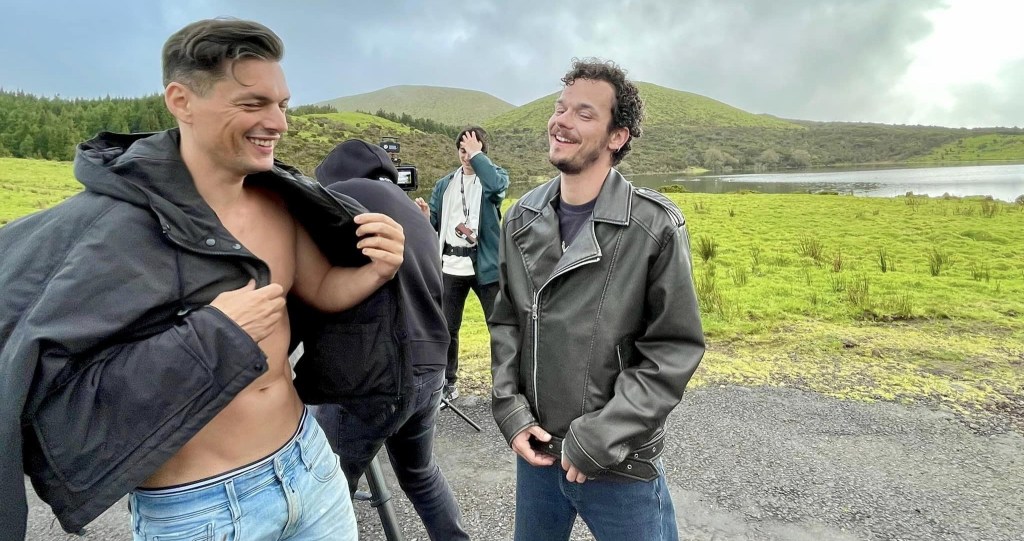
Nuno Janeiro is ‘Pastor Picaroto’ in Luís Filipe Borges’ first movie, “First Date”.
The romantic comedy filmed on the island of Pico, in the Azores, is the screenwriter and comedian’s first cinematic adventure. “When I wrote the character of Pastor, I immediately thought of my friend Nuno Janeiro,” admitted Luís Filipe Borges to the team and supporters on the island. “As well as being talented, Nuno has an exemplary character and a sense of humor that most people might not imagine. And he immediately agreed to be used as the sexual object of the narrative, in a kind of revenge against the cliché that this role is generally assigned to women.”
Picaroto or picoense are the names given to the people of the island of Pico, Portugal’s highest mountain. And its beautiful landscapes, captured by director of photography Diogo Rola, have already been mentioned in several international reviews of the film, including the scene where Nuno Janeiro enters, which features lagoons within the island’s interior.

“I’ve been to the Azores several times to promote television projects,” says the charismatic actor, ”but it was in Pico that I felt the most attractive energies. Being by the sea, the green fields, the black lava. All this makes the place special and makes you want to visit more often.”
“I started in the world of television when I was 27, playing a 15-year-old character in ‘Morangos com Açúcar’,” admits Nuno Janeiro. But it’s the character of the priest who falls in love with a local girl in ‘Bem Vindos a Beirais’ that most people know him for.
Now, Advogado do Diabo and MiratecArts, the producers of “First Date” hope that Pastor Picaroto’s character will also stick in the minds of those who watch the short film.
The national premiere of “First Date” is scheduled for June 26, at 9pm at the Multimeios Auditorium in Espinho, in official competition for the FEST National Grand Prize – New Directors New Films.
From MiratecArts Press Release.
Translated to English as a community outreach program from the Portuguese Beyond Borders Institute (PBBI) and the Modern and Classical Languages and Literatures Department (MCLL) as part of Bruma Publications at California State University, Fresno, PBBI thanks the Luso-American Education Foundation for their support.
 Filamentos (artes e letras)