
AZOREANS IN BERMUDA
On November 6, 1849, a sailing ship docked in Hamilton carrying 58 men, women, and children – the first Portuguese immigrants to Bermuda. The Royal Gazette said at the time that the arrival of the new workers would boost local wine production.
Previously, the first agricultural workers from the island of Madeira had been at the forefront of Portuguese emigration. But their pioneering journey would be repeated by thousands of Portuguese, mostly from the remote islands of the Azores.
The Azoreans left for Bermuda to fill a pressing local need for agricultural skills and to try to build a better life for their families. Their efforts paid off, and agriculture became a lucrative activity for the island in the second half of the 19th century.
Today, with lawyers, bankers, and businessmen, the new generation of Portuguese in Bermuda comprises a community estimated at around 25% of the total population.
According to local historian Rosemary Jones, life hasn’t always been easy for Portuguese immigrants in Bermuda. Some bureaucratic and social discrimination relegated them to the status of second-class citizens, even in the 1960s and 1970s. Strict government regulations tried to prevent whole families from immigrating and to restrict immigrants to manual labor. The Portuguese were even barred from many of the island’s social clubs.
But the community remained strong and united, supporting the new immigrants and defending their own rights. In the 1980s, the Portuguese Association of Bermuda denounced the situation of long-term residents, including many Portuguese who had already been born in Bermuda but had no legal right to remain on the island. Their efforts led the government to grant long-term residency to many people of all nationalities who had made a significant contribution to Bermudian society.
The Portuguese community, especially Azoreans, keeps their culture alive on this island, thus linking Bermuda to the vast Lusitanian diaspora spread around the world. In Hamilton, the Vasco da Gama Club offers social support to new immigrants. At the same time, the Portuguese Cultural Association preserves the most representative cultural traditions, notably through the Portuguese Official School of Bermuda.
Religious festivals of Azorean origin now feature prominently in Bermuda’s annual calendar. The Feast of the Holy Christ, held on the fifth Sunday after Easter, draws hundreds of people to Hamilton Cathedral for a solemn procession through the city’s streets. In June, Bermuda’s Portuguese celebrate the Feast of the Divine Holy Spirit in St. George’s Square, with a parade paying homage to the legendary charity of Queen St. Elizabeth, where traditional Sopas de Espírito Santo and Azorean-style Pasta Sovada are served.
Portuguese is now considered a second language in Bermuda, and in recent years, government departments, banking institutions, and some companies have begun translating their official forms into Portuguese.
In the meantime, a Portuguese Consulate has been established in Bermuda, headed by Honorary Consul Andrea Moniz DeSouza, a lawyer from Micael who first chaired Bermuda’s House of Assembly.
The Bermuda House of the Azores was founded on March 10, 2015. Initially called “Friends of the Bermuda House of the Azores”, it is registered as a non-profit charity to promote and preserve the cultural heritage of the Azores in Bermuda, thus enhancing the local contribution of Azoreans and their descendants.
The association’s purpose is to promote activities that celebrate Azorean culture and share its history with the host society, enabling them to learn about and understand the Azorean presence in Bermuda, which dates back to the mid-19th century.
Understanding the Azorean community as an integral part of the Bermudian people, Casa dos Açores, currently chaired by Lúcia Botelho, also aims to support local charities that benefit the general population, regardless of their family origins.
The funds raised for its charitable initiatives result from the organization of themed dinners celebrating Azorean culture, as well as the making and selling of traditional malassadas, especially during the summer months, at the “Harbour Nights/Street Fair”.
_____
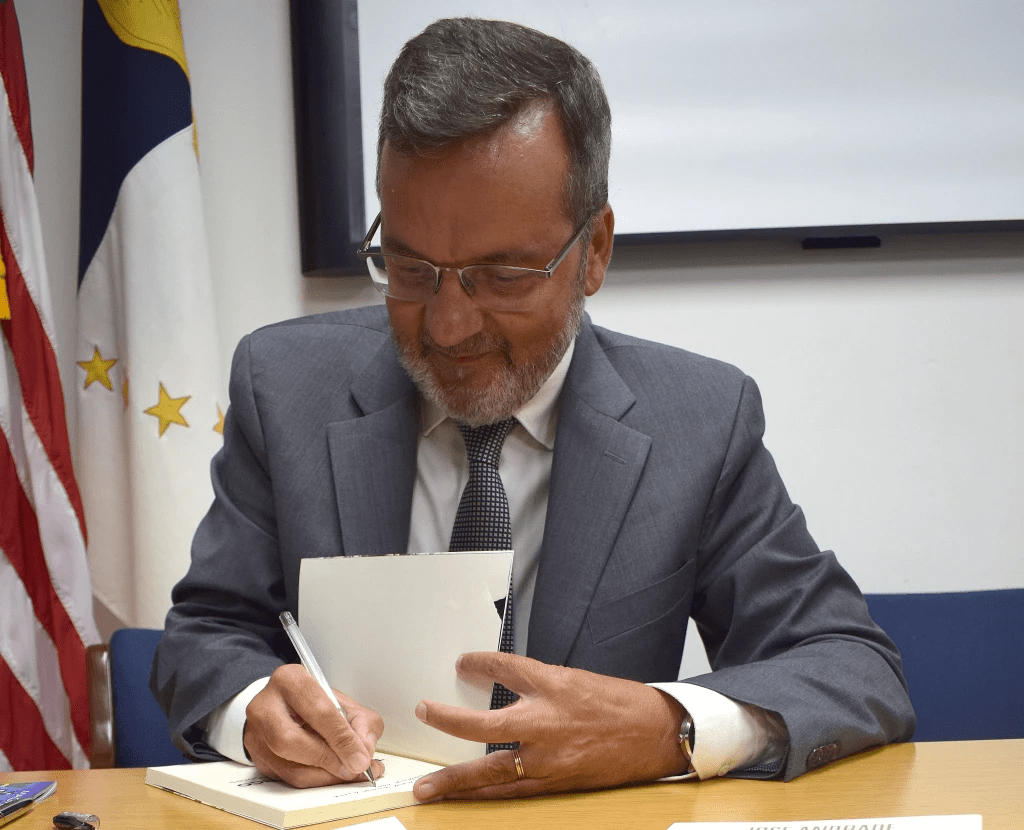
José Andrade is the Regional Director for Communities of the Government of the Autonomous Region of the Azores
Based on an article from his book Açores no Mundo (2017)
Translated by Diniz Borges
 Filamentos (artes e letras)