
How did the Filosof’Arte project get started?
The Filosof’ARTE project has its roots in the old “Café com Filosofia & Outros Saberes” (Coffee with Philosophy & Other Knowledge) series, promoted by the Philosophy and Portuguese Culture class at the Angra do Heroísmo Academic Campus from 2010 to 2013 and held from 2015 to 2016. The aim of these initial meetings was to encourage critical debate and reflection on contemporary issues, which spanned various areas of knowledge, including literature, Economics, Politics, Culture, and Art. The proposal was to bring together an informal audience around a topic of common interest, with casual meetings in various locations on the island, covering both municipalities. The activities were held monthly, lasting around 45 minutes, and were scheduled for the first Friday of each month at 8 pm. They featured a panel of guest speakers and were open to the public. After the course ended, and due to various circumstances, the meetings continued to take place, albeit in a more intimate circle, keeping the academic essence alive. To revive these meetings and make them public again, we invited art historian Assunção Melo, who had already promoted and participated in art tertulias, to join the group. We presented the project to the Angra do Heroísmo Museum, which immediately welcomed it, leading to the creation of this new section, Filosof’ARTE.

What kind of debate space do you want to provide?
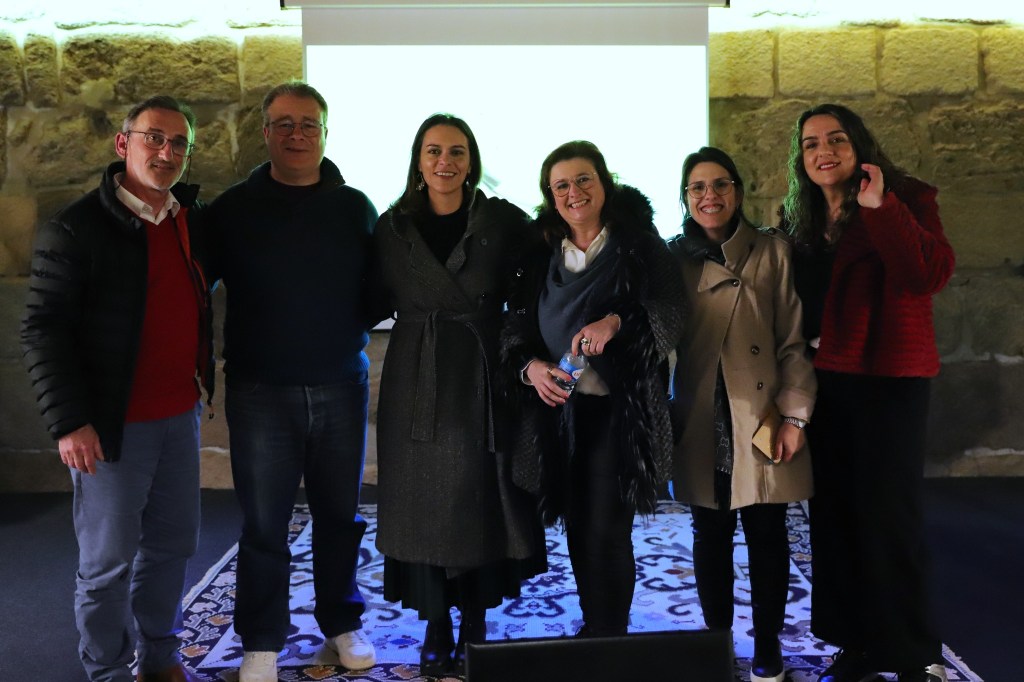
As the name suggests, all areas of knowledge can be included in Filosof’ARTE, or where philosophy is not the mother of all sciences, and art is the contemplation of the beautiful and pleasing to human beings, guided by aesthetics itself, which is part of philosophical knowledge, which in itself is vast and rich. And it is from these premises that we intend to welcome current issues, or not, of social and cultural impact, that arouse the public’s curiosity, or that sharpen their way of thinking and/or acting, creating a space for sharing general knowledge, without stereotypes or barriers to the communion of ideas. The first meeting took place on April 11, under the theme “Being an Artist: Sustainability, Free Time or Way of Life?”, in which the sculptor Maria Ana Simões, in the area of Art, and the master in Contemporary Philosophy – Society and Values, Paulo Homem, in the area of Philosophy, were invited to the panel, with moderation by Dr. Jorge A. Paulus Bruno. An initial provocation was placed on the projection screen, the image “Comedian”, better known as the “fixed banana with adhesive on the wall”, by the artist Maurizio Cattelan, which served as a trigger for a series of questions that art is asking itself in the face of contemporary challenges and which sparked a lively debate among all those present.
How do philosophy and the arts intersect?
The intersection between Philosophy and the Arts manifests itself in various ways, reflecting an enriching dialogue between these two disciplines. They touch on aesthetic issues because Philosophy analyzes fundamental aesthetic concepts in the Arts, such as beauty, taste, and perception. Philosophers like Plato, Kant, and Nietzsche have explored what makes a work of art meaningful, questioning its essence and impact. In the expression of ideas, Art, in its most varied forms, expresses complex philosophical concepts, offering a different way of communicating ideas, as in the case of conventional Fine Art, which can explore questions of identity. In the field of cultural criticism, Philosophy not only scrutinizes themes, but also provides tools to criticize and contextualize, for example, works of art within their social and historical realities, addressing feminist, post-colonial or Marxist theories that challenge established norms, because Art is sometimes a reflection on existence and some artistic works address issues such as the meaning of life, death and freedom, topics that are deeply explored in Philosophy and that provoke reflection on the human condition.
These principles enable works of art to be interpreted and given meaning through the lens of hermeneutics, allowing for different interpretations that take into account the viewer’s role and cultural context, which enriches the aesthetic experience. Finally, creativity itself is also an area that philosophy examines, questioning its nature and the act of creation, such as what it means to be an artist and the role creativity plays in this process. These connections show that, although initially distinct, philosophy and art complement and enrich each other, allowing for a deeper understanding of the human experience.
Is it important to take philosophical reflection beyond the early years of school?
Teaching how to think, how to argue and how to use logical reasoning is as essential, if not more so, as learning the signs of the alphabet and knowing how to combine them in written form, because syllogisms themselves are nothing more than an expression of individual and subjective thought, perceptible to everyone, and which should be instigated even as a way of organizing one’s own reasoning, and learning how to get around existentialist issues positively and constructively. That’s why Philosophy for Children has emerged as an essential teaching tool for a constantly changing technological society, as it introduces children and young people to critical thinking, reflection, and discussion about everyday life issues. In this way, we believe that philosophy, combined with art, can foster and enhance individuality, creating bridges between individuals, groups, across borders, or between countries.
What are the main issues you identify today in the country and in the world that need more thought?
Today, more than ever, everything is questionable and perishable, requiring in-depth analysis and a reformulation of ideas that don’t necessarily have to be derogatory, but rather constructive. It’s not up to us, as an opinion group, to create more problems; rather, it’s to analyze and point out possible solutions. National and international political instability, internal poverty, the success of education, external armed conflicts, equal rights for men and women, or LGBT+ communities, the scourge of addictions, the challenges of artificial intelligence, environmental sustainability, the consumer society, among others, are issues that we transpose beyond our country. Still, they all influence us, or we wouldn’t live in a global village. This, despite the advantages of sharing news and the speed of communication, also has disadvantages, such as the strong impact of external activities on our own reality. We live in times of change, marked by considerable but dangerous technological advances, difficult wars and economic struggles, and misgoverned governments. All of this deserves our attention.
And what about the region?
As an Atlantic archipelago, part of mainland Portugal and the European Union, we experience up close the social and cultural problems that affect these islands. From sustainability in the face of growing and overwhelming tourism, to the blue economy or the preservation of culture in its individualities, we question the preservation of our physical and immaterial heritage, our stories and memories and our Azoreanness, based on the actions of the authorities and the analysis of the constant confrontation between the past, the present and the future.
How can people get involved?
By joining our events, suggesting themes and panels, or by following our social Facebook page, Filosof’ARTE, where our meetings and actions are publicized. In 2025, they will take place in the auditorium of the São Francisco Building of the Angra do Heroísmo Museum, with the next meeting scheduled for July 11, under a theme to be announced. It cannot be stressed enough that this is not a conventional academic gathering, but more a meeting of friends and acquaintances who, for around 45 minutes, can learn more about the world and about themselves.
In Diário Insular, José Lourenço-director. Photos from the group’s facebook page

We thank the Luso-American Education Foundation for supporting this platform as part of PBBI at California State University, Fresno.
 Filamentos (artes e letras)