
Learning from Portugal’s Carnation Revolution by Raquel Varela, historian
The revolution’s African roots
The Portuguese Revolution began in Africa. Portugal, having acquired one of the first European colonial empires, clung to its empire long after other nations had relinquished theirs. Typically, the wars are described as guerrilla uprisings, but it is important to emphasize the part played by workers. Freedom struggles began with a strike, which escalated into an urban uprising in 1959, in Pidjiguiti, Guinea-Bissau, a Portuguese colony on the west coast of Africa.
On the other side of Africa, in Mozambique, members of a mutual association for the Makonde people insisted, during the midnight hours of June 11, 1960, that they wanted to speak with the Portuguese authorities to negotiate the return of Makondes to Mozambique from Tanganyika. They desired “uhulu, that is, the power to live in freedom without forced labor.” The war that drove the Portuguese out of Mozambique was launched from the Makonde homeland on the Mueda Plateau, and this revolutionary movement was known as the Frente de Libertação de Moçambique (Mozambique Liberation Front, FRELIMO).
The Angolan Civil War was triggered on January 4, 1961, as an uprising against forced cotton cultivation. In February 1961, the Portuguese Army reacted to a strike of cotton workers in Lower Cassanje by napalm bombing the population.
Portugal was the empire that used various forms of forced labor in the most systematic way and for the longest time. Widely denounced in the press and by international agencies, forced labor brought with it all the ailments of the society of which it was part: poverty, non-existence of social mobility, family break-ups, mere subsistence agriculture, extreme income inequality, and racist political police. This polarization contributed to transforming the majority of the peasant population into avid supporters of the liberation movements.
Forced labor in the Portuguese Empire would last until 1974. As workers were rooted to the land and labor was scarce, the only way to get people to work in the mines of Mozambique or on the cotton plantations in Angola was to make it compulsory. “Without gold there would be no South Africa and without Mozambique there would be no gold,” the historian Perry Anderson has aptly written. Without forced labor, I might add, there would be no Estado Novo (New State) in Portugal. British historian Basil Davidson notes that there was a total of 2,094,000 forced laborers in the Portuguese Empire.
Accumulation through forced labor could not exist without a dictatorship capable of generating a workforce and preventing production stoppages or struggles for wage increases. It was the “primitive accumulation of capital,” in the words of Karl Marx, in one of the best-known chapters of Capital. It was a typical process of the dispossession of the peasants, forcibly torn from their lands and driven to work, mainly in the mines. And the accumulation (in gold!) was directly transferred to the metropolis’ vaults and ended up financing the large conglomerates that were at the forefront of Portugal’s modernizing march of capital, accomplished under the Salazar dictatorship.
Although this modernization was delayed, in comparison to other capitalist countries, the proletariat had already developed sufficiently to contest modernization and engage in bitter social conflicts. In short, the dictatorship was necessary to mobilize the workforce and accumulate capital.
By early 1974, the PAIGC in Guinea was on the verge of victory, and FRELIMO — the front for the liberation of Mozambique — had opened a new offensive. There was no prospect of winning the wars in Africa. The number of Portuguese dead, an estimated 9,000, was greater than in any conflict since the Napoleonic wars, and the army was being blamed for these failures. Some officers were ashamed of wearing their uniforms in the streets of Lisbon. A crisis had been developing in the middle ranks of the army. In 13 years, nearly 200,000 men failed to report for enlistment, and 8,000 deserted.
The story of the Portuguese Revolution often starts, incorrectly, with the Movimento das Forças Armadas (MFA) — the Armed Forces Movement. One should start with anti-colonial revolution in 1961, however, it was the MFA who opened up the gates of revolution.
Change from below
The Portuguese Revolution was a social explosion that US President Gerald Ford considered capable of transforming the entire Mediterranean into a “red sea” and causing the downfall of all the regimes of southern Europe like dominoes. We can argue that it began a wave of resistance in southern Europe, which delayed the implementation of neoliberal plans attempted from 1973 to 1975 until the crisis period of 1981–84. Measures that survived include the nationalization of banks and large companies without compensation, the birth of the welfare state and social security, the agrarian reform of large estates in the southern part of the country, and the worker management of 300 companies.
These measures were not imposed by state decree or governmental action, as some have tried to frame them, but rather from below, through people assembling and organizing. The workers in the banks stopped the flight of capital before they were nationalized. It was the strikes in the major companies that forced salary increases and price freezes; hospitals and schools were occupied and democratically run; public transport was under the control of workers and users, who decided to extend this to peripheral areas and to reduce fares; thousands of empty houses and apartments were occupied by residents (usually through residents’ commissions and often with the help of soldiers), the land was occupied in the south and center by agricultural workers, which more than tripled productivity and employment.
In other words, it was not only the results but the entirely democratic way in which they were achieved in this “new country,” to use filmmaker Sérgio Tréfaut’s fitting term, which makes the Portuguese Revolution an extraordinary case study of “change from below.”
This revolution took place amid the 1973 international oil crisis, which caused a dramatic decline in Portugal’s GDP. Economic growth fell from nearly 11 percent in 1972 to -5.10 percent in 1975. The crisis precipitated a decline in investment, which in turn led to a drastic increase in redundancies. With the unemployment rate doubling from 2 to 4 percent, workers responded by occupying factories and companies, bringing it under worker control. The expansion of social rights in 1974-75 can be traced back to these occupations.
During the revolution, the unemployment rate doubled, from 2.1% to 4%. The reaction to redundancies — the occupation of factories and companies — would be one of the factors that explains the existence and development of workers’ control during the revolution, and is perhaps the most significant reason for the progressive expansion of social rights during the Revolution.
The defeat of grassroots democracy
The Carnation Revolution is one of the outstanding revolutions of the twentieth century: because the spread of the forms of power (commissions of workers, residents, soldiers, the equivalent of councils, elected from the base, in plenary and with representatives who can be recalled at any time) which threatened the regimes, and their assumptions of authority. The grassroots democracy that was in force, centered on places of work and housing, allowed something like three million people to decide, not by putting a vote through a ballot box every four years, but day by day, on how society was to be produced and managed.
Never have so many people had such a significant impact in Portugal as between 1974 and 1975. This is the legacy of the revolution.
It is one of the most important revolutions of the entire twentieth century: the extension of dual power, which included committees of workers, residents, and soldiers. It is, from the point of view of the parallel to the State, of a historical process that bears many similarities to the German revolution after the First World War, Italy through two years in 1919–1920 (known as the “biennio rosso”), with the 1956 Hungarian revolution and with the Chilean experience in the early 1970s. It is also, and this is another important characteristic, a revolution in the metropolis that occurs as a result of anti-colonial revolutions in the Portuguese colonies. It’s a social revolution that becomes a democratic revolution.
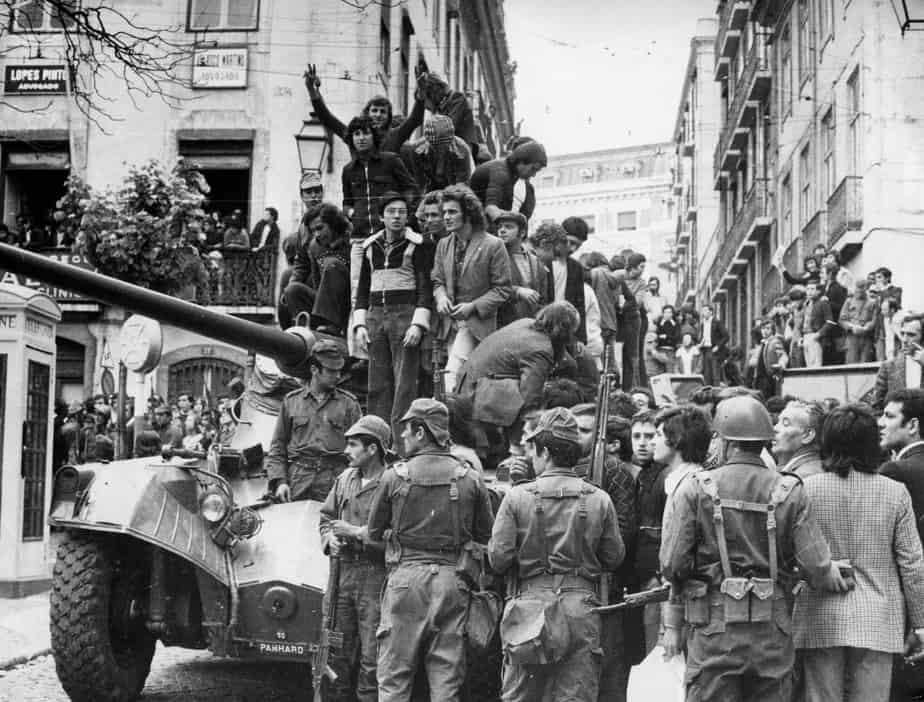
What began on 25 April – a classic coup d’état – unleashed a social revolution in terms of how people met and organized (threatening and resulting in changes to the relations of production). In a few days or weeks, it was practically assured that the political regime of dictatorship would be replaced by a more benevolent regime, one which would allow, inadvertently perhaps, the working class and the popular and student sectors to enter (without fear), onto the stage of history.
Soon, these actors would leap ahead of the army and lead the revolution from the front, leaving the MFA behind as they tried to recompose the State. The Carnation Revolution, which cannot be summed as the day of the coup, April 25, (as recently has been done, pressing only to celebrate the day of the coup and not the whole process), but as a historical process of almost two years, is the most democratic moment in the history of Portugal.
The defeat of the revolution put an end to fundamental democracy, particularly in the barracks, factories, companies, schools, and neighborhoods. There’s nothing unusual about this. However, it may be that Portugal is the first example of a defeated revolution’s success in being replaced by the establishment of a “representative” democratic regime. Representative democracy had to defeat grassroots democracy.
In 1974–75, while in special moments unions represented their memberships, they were also a buffer, one which became a channel for owners and their allies, committed to rebuilding the State, and opposing, with internal tensions, bodies of that challenged the power, namely, the committees of workers, residents and soldiers.
In 1974-75, they witnessed the joy of the majority of those who lived here. One of the characteristics of the photos of the Portuguese Revolution is that people are almost always smiling. It was not by chance that Chico Buarque, one of the most famous artists of Música Popular Brasileira (Brazilian Popular Music), sang: “I know that you are celebrating, man.”
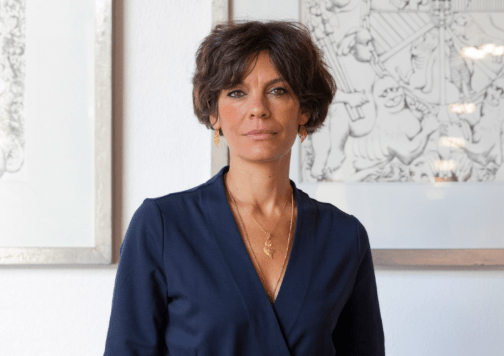
Raquel Cardeira Varela is a Professor at the New University of Lisbon and Senior Visiting Professor at the Fluminense Federal University. She is also president of the International Association of Strikes and Social Conflicts and co-editor of its journal. She is the author of A People’s History of the Portuguese Revolution (Pluto, 2019)
Raquel Varela’s “A People’s History of the Portuguese Revolution” is available from Pluto Press

This article was published in https://roarmag.org/essays/learning-from-portugals-carnation-revolution/
 Filamentos (artes e letras)