
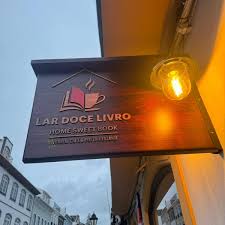
The Lar Doce Livro bookshop is celebrating its first year. What is your assessment of this project?
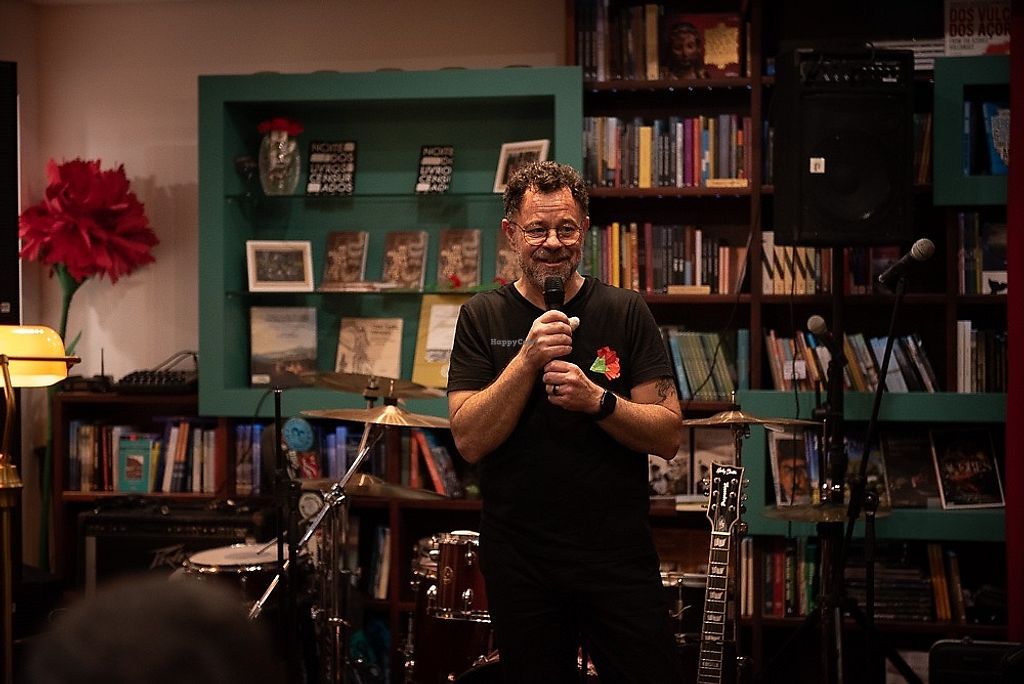
It’s impossible not to make a resounding assessment. We’ve exceeded what we set out to achieve and what we allowed ourselves to dream of on our most exciting nights. The special moments, days, and weeks we collected in a year even surprised us. The visits of Olga Tokarczuk – a Nobel Prize winner -, Mia Couto, Alberto Manguel, João de Melo, Raquel Varela. The days we celebrated Japan and the nights we celebrated Cape Verde. The concerts by Romeu Bairos, Sofia Dutra (two), FelixTheFirst (many), Carisa Marcelino, Regalo Reggae, Jonathan Afonso (several), Carlos Alberto Moniz, João da Ilha (quite a few), Cristóvam. The evenings with so many other extraordinary musicians, now friends (and a permanent presence in the bookshop), such as 3HP, Tommy G, DoubleTrouble, Filipe Soares, the Albuquerques, K9 Cat, many, many others. Plus, there are open mic/jam session evenings with other musicians (some newcomers, like Verónica Silva) who also make themselves at home. As well as classical music concerts, of which there are plenty – by Gustaaf Van Manen, Kharamburas and Trio Mar. And that’s apart from the unforgettable Poetry at Twilight sessions (by Madalena Ávila, Paulo Matos, Ana Lúcia Almeida, Paula Cotter Cabral, Valdeci Purim, and others). The book launches. The Tales of Disquiet. The great debates. The Cinema & Mental Health meetings. The regular gatherings (on economics, sustainability, personal development, origami, etc.) and the occasional ones. Vinyl nights and personal playlists. Chess championships. Quiz evenings (with Diogo Ourique’s help). Study visits. Carnival gatherings. The leaps to other arts, subjects, concerns, and passions. And the presentation of our first book as publishers, of course. And the launch of our official soundtrack, written by GuessWho, with the collaboration of the great Paulo Cunha and the young and talented Pureza. And so, so much more: almost always more than 50 (and often more than 60) cultural events a month, for everyone and every interest. Plus the food. The wines. Handicrafts. Souvenirs. Curiosities – so many things, so many initiatives and so many people that it’s unfair, ungrateful and unforgivable not to list them all here (I’m forgetting many events and, above all, names, I apologize to everyone). And of course, first and foremost, books. Lots of books. The most beautiful, enriching, and deprived objects that man has created. Naturally, there were to be five of us in the company: two half-absent owners, two full-time employees, and a part-timer for folding. That was ambitious enough. There are ten of us, seven full-time, and even then, we’re already hiring temps to cope with the high season. Fortunately, we’ve been able to cope with all the demands.
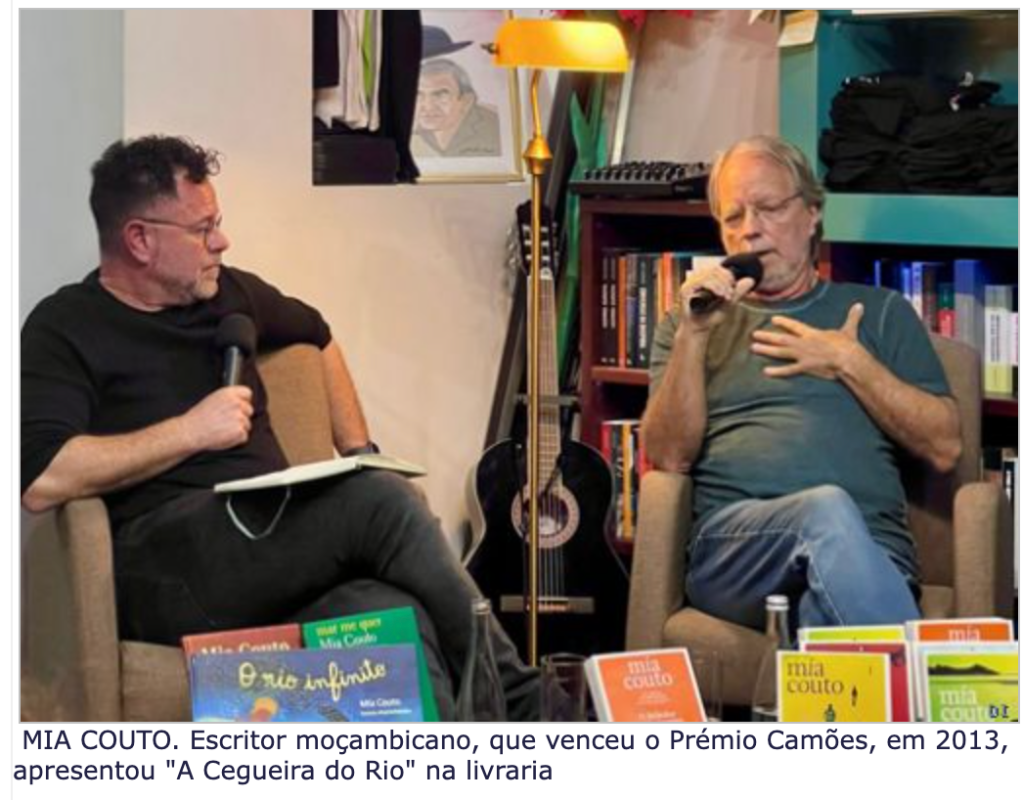
The bookshop’s agenda goes far beyond books every month. Has it become a new space for cultural dynamism in Angra do Heroísmo? How has the public responded?
We try to make a contribution, that’s all. The rest has to be qualified by the people, not us. But we also do it for the city. Our incredible, beautiful, historic Angra – the Very Noble, Loyal and Always Constant City of Angra- does Heroísmo. And the fact is that the city has returned this effort in redoubled affection, twice, five times, ten times what we give it. The most diverse types of public visit us daily, including many tourists, but always more locals, both on the pretext of events and under the guise of nothing. Young and older people, rich and poor people, people from the left and right, people from culture and the trades: people come from all walks of life, from all professions. After a while, they sit relaxed at each other’s tables, having a drink and chatting. Even those who wished us the worst, fortunately, very few, are starting to join in. They’re welcome too: the bookshop belongs to everyone and there’s little time for resentment. What’s happening there is a utopia. This is partly the result of our efforts to make it a home (that’s why it’s called Lar), a place you return to, warm, with warm light, where you meet your loved ones (and it’s open every day of the year, by the way). But it’s also the result of this city’s and this island’s sense of gratitude. We from Terceira have many faults, but ingratitude is not one of them. We are very grateful. As is the case here, we’re even thankful for what we have no reason to be grateful for.
A year after you opened the bookshop, can you confirm that interest in paper books hasn’t died down? Is the extension of Lar Doce Livro to retail outlets a sign of this demand?
There’s no way that interest in paper books has died down. Even in the most difficult years, the book remained a cult object, a commercially niche product, but alive. And in the meantime, reading rates are rising throughout the Western world, even in countries with the most dramatic decline in civilization, such as the United States. For the politicians of the Azores, digital books will be responsible for school, the salvation of young people and the viability of future generations. The rest of Europe has already turned around and is heading in the opposite direction. Digital textbooks have disappeared in Sweden and Denmark, they’re disappearing in Holland and France, and they’re about to disappear in Spain. Here – one imagines – they are still “the future”. But move on. Anyone who wants to do something in the Azores, especially if they have a dimension of service to public affairs and the common good, must get used to doing it for themselves. With these politicians and these parties, you can’t. This is also where the agreement with Emater and Guarita supermarkets comes from to create small “embedded” spaces, almost “stores-in-store”, in the group’s four stores in Terceira. It’s still early days, but the first signs are very positive. In the meantime, other brands and entrepreneurs have already approached us intending to host similar spaces.

Andreia Fernandes’s book A Terceira de Pessoa was launched on the bookshop’s anniversary, the first title from Dois Caminhos Editores. Are you now taking on a new challenge with Marta Cruz? How did this publishing house come about?
The publishing house was always one of the planned segments of the project. We didn’t imagine we’d be able to get it off the ground in the first year, but in the meantime, it became a vortex; we started devoting almost all our time to the project, and we couldn’t resist blazing that trail too. We will be a small publishing house, determined to fill specific needs and careful not to be too bold with projects that aren’t yet financially viable. In many ways, this is a penny-pinching business. We have to do the same math as a grocer, because there are ten wages to pay each month with a company built around – imagine – books and culture. Nine families are making a partial or even total living from the bookshop. Marta and I have never had that kind of responsibility; we take it very seriously. I often wake up thinking about it: “Are you sleepy? Let’s get out of bed; ten paychecks will be paid!” But, with care, with reason, I believe that Dois Caminhos Editores can play an important role in the city, the island, and the archipelago. It also has one of Portugal’s best designers, Rui Leitão, and an extraordinary copy editor, Marta. We’ll do a little, but we’ll do it well.
Are there any plans for new releases from Dois Caminhos?
We have five books more or less planned for the near future, all in different genres: monograph, poetry, chronicle, theater, and essays. But only the monograph is feasible and therefore planned: a portrait of the parish of Terra Chã on its 200th anniversary, which will be celebrated in early fall. It will bring together the same authors as the book on Pessoa, Andreia Fernandes and António Araújo.
In Diário Insular, José Lourenço-director.
Filamentos and all of our projects at PBBI-Fresno State congratulate Joel Neto, Marta Cruz, and their son Artur on the first anniversary of Lar-Doce-Livro.
Translated to English as a community outreach program from the Portuguese Beyond Borders Institute (PBBI) and the Modern and Classical Languages and Literatures Department (MCLL) as part of Bruma Publications at California State University, Fresno, PBBI thanks the Luso-American Education Foundation for their support.

 Filamentos (artes e letras)