The fifth edition of the Lava Festival takes place from April 17 to 19 on the island of Pico. What are the main highlights of the program?
The fifth edition of the LAVA Festival will undoubtedly be a milestone in the event’s history. One of the biggest highlights will be the presentation of the LAVA Ensemble, the opening concert on April 17 at the Madalena Auditorium. This special project was created to allow local musicians to make something, exploring new sounds and musical expressions. More than an orchestra, the LAVA Ensemble is a space for experimentation and collaboration of 18 talented musicians from the island of Pico. Together, they create a fusion of sounds and styles that reflect our land’s creativity and cultural richness, offering an innovative and authentic musical experience. It’s another of the LAVA Festival’s artistic residencies; the LAVA Ensemble fosters the exchange of experiences between musicians from different backgrounds, resulting in an innovative show. In addition, this year’s edition will bring a program that extends to new venues in Vila da Madalena, further expanding the festival’s reach and strengthening ties with the business fabric and the local community. Including new partners in the village will provide an even greater variety of cultural experiences, with performances and activities taking place in iconic locations on the island, creating a true understanding of Pico’s culture. Another highlight of this edition is the participation of 80 artists, all from our region, representing various islands in the archipelago. These artists, with their different genres and musical styles, bring a rich diversity of sounds that reflect the cultural plurality of the islands. The festival goes beyond concerts, and initiatives such as LAVA Talks and networking lunches will provide valuable moments for musicians, industry professionals, and the public to exchange ideas and experiences. With this rich and diverse program, the fifth edition of the LAVA Festival promises to celebrate music, local culture, and artistic partnerships, consolidating the event as a meeting point for creativity and innovation on Pico Island and in the archipelago.
The name of the festival has changed from Lava Jazz to Lava Festival. Has the concept changed?
Yes, the concept has indeed evolved. After completing my master’s thesis in Ethnomusicology, which dealt with the festival, I realized that the term jazz no longer comprehensively reflected the range of musical styles we wanted to present and promote. Together with the management of the LAVA Jazz Festival, and after carrying out a thorough evaluation at the end of the last edition, we concluded that the event needed to undergo a transformation. The feedback from the local community and my perspective as a picaroon and musician were important in that decision. Although the festival brought jazz to Pico Island, the distance between the musical practice presented and the island’s traditional culture became evident. The festival’s management recognized that it was necessary to reformulate its concept to promote greater inclusion and reach a wider Azorean audience. Our mission continues to promote music, but in a more inclusive way that values the musical identities of the island and the region.
There was no Lava Jazz in 2024 due to delays in processing support from the Regional Directorate for Culture. Have the financial constraints been overcome?
Unfortunately, the financial constraints have not yet been completely overcome. The support available is still insufficient to hold LAVA as we would like. However, the festival is only possible thanks to the sponsors who believe in this project and its impact on our community. Although there was no edition of the festival in 2024, we did manage to hold a Showcase at the end of 2024, in December, a party to present the new image of the LAVA Festival, which was a huge success and exceeded all our expectations. This was only possible because Madalena Town Hall supported and believed in the project and our sponsors, who continue to be fundamental to the festival’s continuity.
You recently took over the coordination and artistic direction of this festival. What led you to accept this challenge, and what has this experience been like?
When I accepted this challenge, what motivated me was the opportunity to contribute to the evolution of an event that, for me, has great potential for cultural transformation in the region. After my internship in 2023 and my research on the festival, I was convinced that LAVA could have an even greater impact if it embraced a more open and inclusive approach. As a native and resident of Pico Island and with the experience gained in my thesis, I saw an opportunity to give voice and visibility to local musicians and promote the island’s cultural wealth more widely. The experience has been intense but very rewarding. The team has been incredible, and the community’s support has also been fundamental to the festival’s success.
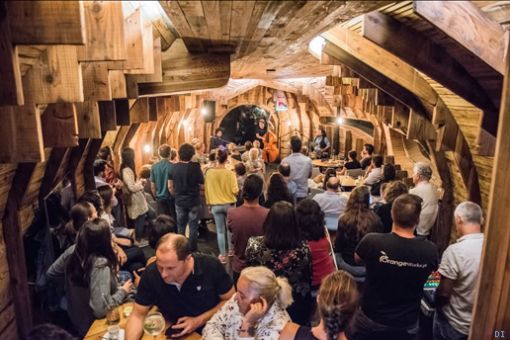
This year’s novelties include the Lava Talks and the networking lunches. What do you want to achieve with these initiatives?
The Lava Talks and networking lunches seek to create a more collaborative and interactive environment. We want the festival to be an event for musical performances and a meeting point for exchanging ideas and experiences. Lava Talks will be spaces for discussion on topics relevant to music and local culture, allowing participants to deepen their knowledge of the artistic and cultural dynamics of the region. In this edition, the topics covered will be the impact of double insularity on the organization of events and the importance of communication in the digital space. The networking lunches aim to facilitate contact between musicians, producers, journalists, and other professionals in the sector, creating an environment where relationships can be more informal but equally productive. I believe that these moments of interaction and sharing will strengthen the island’s cultural ecosystem and contribute to the growth of new projects.
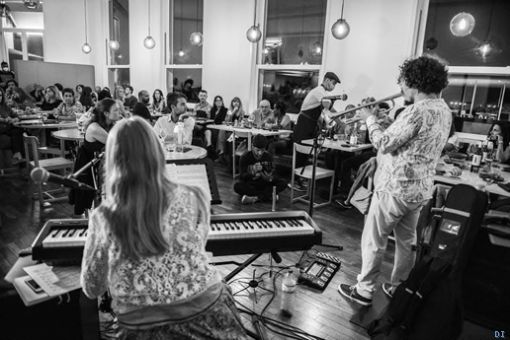
Lava will once again be programmed in restaurants and cafés on the island. Is this also a way of boosting Pico’s economy and tourism?
Absolutely. We intend to integrate the festival into everyday life on the island, allowing the program to reach different spaces and audiences. Holding concerts in restaurants and cafés is a way of bringing music to the places where people already are, creating a closer link between art and the local community. Moreover, by boosting the local economy and promoting tourism through music, we help enhance Pico as a cultural and tourist destination. I believe that by extending the program to these venues, we can also attract visitors and show everyone the best that Pico has to offer, both in terms of musical culture and gastronomy and wine, which continue to be important pillars of the event.
In Diário Insualr–José Lourenço, director–Armando Mendes, editor-in-chief.
Translated to English as a community outreach program from the Portuguese Beyond Borders Institute (PBBI) and the Modern and Classical Languages and Literatures Department (MCLL) as part of Bruma Publication at California State University, Fresno, PBBI thanks the Luso-American Education Foundation for their support.
 Filamentos (artes e letras)