
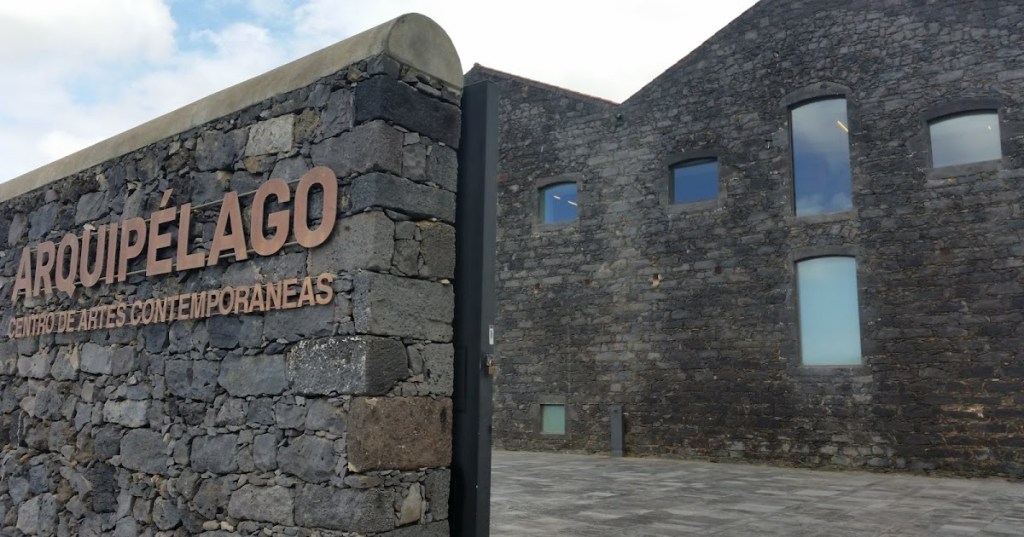
Arquipélago, Centro de Artes Contemporâneas, is celebrating a decade of existence! This milestone is causing great enthusiasm among cultural agents in the Azores, who recognize the significant evolution of the cultural sector in the region. Since ACAC opened its doors, culture promoters have become a cultural production sector essential to Azorean society, which was not so evident 10 years ago.
The celebration reflects not only the center’s success but also the transformation and strengthening of culture in the Azores, uniting the community around contemporary art. It’s a moment of satisfaction and reflection on the impact ACAC has had on the region’s cultural life!
At the opening of the celebrations, which took place last Saturday, in the presence of Sofia Ribeiro, Regional Secretary for Education, Culture and Sport, the Director of the Center, Ricardo Esperanço, said that ACAC is no longer an elite space, but has opened up to the community and even though there are still people who shy away from entering that building of rare architectural beauty, which won the Secil Architecture Prize 2020, was a finalist in BigMat ’17, the International Architecture Award 2017 and the Premis FAD 2016, the team behind it has made every effort to open its doors to the locals.

The celebrations are not limited to that landmark day in Azorean life since it was also on that day that airspace in the Azores was liberalized. According to Ricardo Esperanço, there is a whole program that will bear the stamp of the Archipelago’s 10th anniversary throughout the year.
The exhibition entitled “Transitory Spaces”, chosen to mark the start of the celebrations, arises from the dialogue between works from the Arquipélago collection and contemporary art from the Carlos Machado Museum, which also includes collaborative elements from the Public Library and Regional Archive of Ponta Delgada and Misericórdia da Maia, and seeks to reflect on the self, solicitude, the island, the road, home and the future. For the Director of ACAC, it provokes reflection and seeks to give center and periphery to the Archipelago and its mission in the Azorean context.
On the other hand, the exhibition reflects on the evolution of the spaces of that vast industrial complex, transformed into an immense cultural production complex: “dreamed stories; mismatches, journeys, everyday experiences, nature photographed, framed, about the past and memories, about the present and the present, and, in the open, the possibilities of the future”.
Upon entering the rooms of the “Transient Spaces” exhibition, one is immersed in a space that challenges the perception of time and permanence. The works in dialogue with each other reflect the intersection between the past and the present, between solidity and ephemerality. There is a continuous dialog between nature and the cultural and social transformations shaping the island experience.

After opening its doors 10 years ago, Arquipélago has been promoting transdisciplinary actions with increasing visibility in the community. It is now enthusiastically celebrating the first decade of a new life dedicated to culture. They are, according to the exhibition’s exhibition sheet, “blessed stories” because all those who make ACAC a new path show a great capacity to reinvent themselves, always with smiles on their lips and many dreams to fulfill.
After the cake and sparkling wine, a sign of celebration and life, a concert by Andrée Rosinha Trio, a jazz band, followed at the Blackbox, as a way for ACAC to provide new experiences, innovate, and gain new audiences.
Ribeira Grande should feel privileged to have a cultural center that goes far beyond simple cultural value. It has been a real treasure that benefits not only the municipality but the entire island of São Miguel. This center represents a window into the world of contemporary arts, offering a space where the creativity and innovation of local, national, and international artists can be explored and where the public has access to a varied and high-quality program.
António Pedro Costa in Correio dos Açores, Natalino Viveiros, director
Translated to English as a community outreach program from the Portuguese Beyond Borders Institute (PBBI) and the Modern and Classical Languages and Literatures Department (MCLL) as part of Bruma Publication at California State University, Fresno, PBBI thanks the Luso-American Education Foundation for their support.

 Filamentos (artes e letras)