
You are the new chairman of the Azorean Institute of Culture (IAC) board. What led you to embrace this project?
As a member, I have always been available to collaborate with the IAC whenever my contribution has been requested. In 2022, the outgoing president and current chairman of the board of the IAC General Assembly, Carlos Bessa, invited me to join his board, which I did with a sense of mission and responsibility, serving as a member. At the end of my term, this “embracing” of the IAC project as president turned out to be a natural continuation of the work being carried out by the previous board and which we intend to continue, diversifying. The challenge of, on the one hand, continuing the projects that had been carried out until then and, on the other hand, being able to give an innovative stamp to the work to be carried out from then on made me put together a team and embrace this cultural project for the 2025-2026 term.

What priorities have you set for your mandate?
My team’s main priorities for this mandate are, first of all, the challenge of reflecting on the IAC’s role in Azorean society and culture throughout its seven decades of work in favor of Culture in its most varied manifestations. This reflection should be made not only in terms of taking stock of the work carried out and remembering the path taken but also in terms of projecting the work to be done and the path(s) to be taken in the coming period. This reflection is also a tribute to the previous boards and their mandates, who have always been able to raise the name of the IAC and of Culture in and of the Azores from its foundation until the first quarter of the 21st century. The Here and Now in which we find ourselves requires prudence and flexibility. In our post-modern and contemporary Western world, where our cultural and creative agents interact, the IAC must accompany and understand cultural activities in our archipelago with a critical eye and mind, aware of tradition but attentive to modernity.
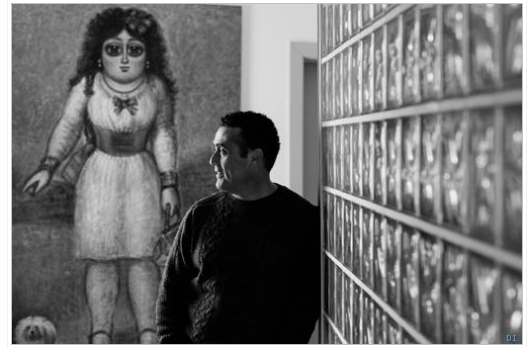
The Azorean Institute of Culture is celebrating its 70th anniversary this year. How will this date be marked?
The anniversary will be marked throughout the year with different activities that will evoke the role of the Azorean Institute of Culture during these 70 years of activity. We plan to hold a Study Week in the second half of the year, with Migration and its impact on the human configuration of our Western societies as the central theme, with renowned experts in these areas. The IAC is also launching a new website with an online bookshop, where anyone can buy any of the institute’s available editions via an automated payment platform. We intend to work on publicizing these features and developing a communication campaign to commemorate the 70th anniversary. In addition to the bookshop, the new IAC website will make available content resulting from the various projects that the institute has carried out over the years, as well as digital copies of articles and cultural content from the Insula and Atlântida editions, the Inventory of the Azores’ Immovable Heritage, History of the Azores, among others.
After 70 years, what role does the IAC play in Azorean society today?
This is one of the big questions facing institutions like the IAC. Its seven decades of activity have brought with them conferences, debates, artistic innovations, and provocative exhibitions, always working to promote the confrontation of ideas, cultural and creative enjoyment, and the promotion of culture, in its most varied forms, on all the islands of the Azores. We want the IAC to continue its mission of defending and enhancing the cultural specificity of the Azores, operating in a global, glocal, and digital world and in an ecosystem of professionalized and globalized cultural and creative agents, such as the one we are currently witnessing. In a European context, but also in parishes, working in the Americas, or in any municipality on the Portuguese mainland, our cultural agents interact with multiple territories – physical and digital – and are part of a complex network of collaborations and communications. We believe that the IAC’s role is to get to know its generations and defend and promote them while helping to bring to the Azorean territory the Culture – lato sensu – that confronts, questions, and elevates us. As such, it is important to work in an up-to-date and dynamic way, identifying and getting to know our island reality.
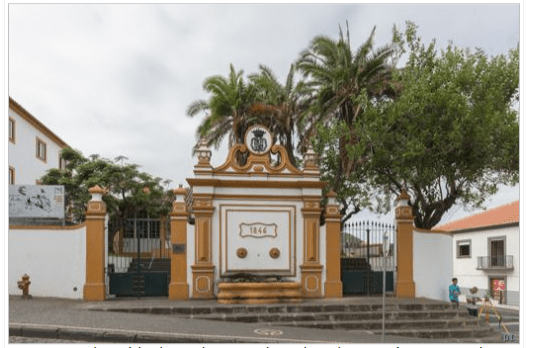
One of the objectives of the new board is to create a Regional Observatory for Cultural Activities. What does this observatory consist of?
The Regional Observatory for Cultural Activities (ORAC) is also one of our priorities. It is precisely derived from the IAC’s role in understanding the Azorean cultural reality and specificity. ORAC aims to be an independent structure, under the guidance of the IAC, with strategic academic partners, whose objective is to reflect the archipelago’s unique cultural identity, challenges, and opportunities in line with its geographical, historical, and social specificities over time. The Observatory’s mission is to monitor, preserve, promote, and boost the Azorean cultural ecosystem, valuing its tangible and intangible heritage, supporting cultural agents, and encouraging public policies and actions that strengthen the region’s cultural identity and connection with the world. The Observatory should produce and disseminate studies and indicators on the arts and culture in the Azores, in particular, with a natural ramification in the contamination and cultural exchange between Azorean culture in the archipelago and that of the Diasporas, both in the north (United States of America and Canada) and in South America (Brazil). This project cannot be carried out in just one term of office; we are aware of that. However, we are also mindful that the projection of a project into the future always involves the risk of Today, with faith in the continuity of Tomorrow.
In Diário Insular, José Loureço-director
Translated to English as a community outreach program from the Portuguese Beyond Borders Institute (PBBI) and the Modern and Classical Languages and Literatures Department (MCLL) as part of Bruma Publication at California State University, Fresno, PBBI thanks the Luso-American Education Foundation for their support.
Translation by Diniz Borges
 Filamentos (artes e letras)