
AZOREANS IN CALIFORNIA
The Portuguese community in California has been settled in the United States for generations, effectively putting down roots in those distant lands. Our emigration to the American West occurred in the mid-19th century through the gold rush, whaling, and tuna fishing. Later on, they dedicated themselves to farming and today maintain an important market share in that state, where the world’s largest producer of organic sweet potatoes, the picoense Commander Manuel Eduardo Vieira, stands out.
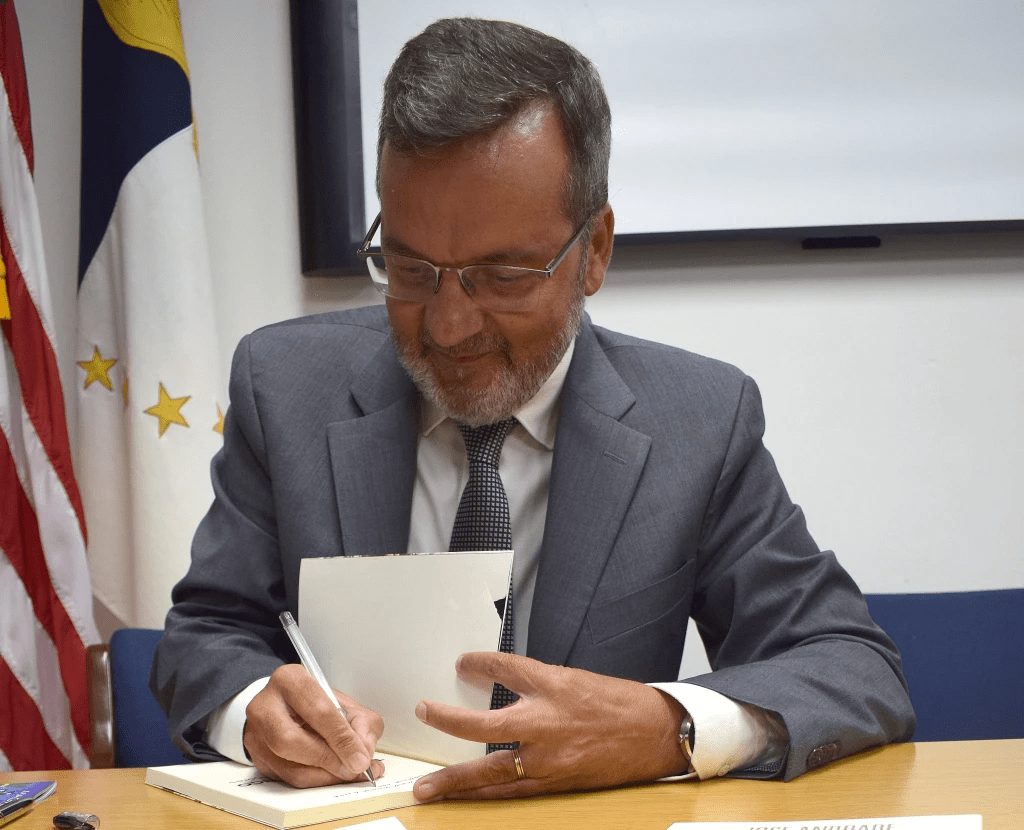
The Luso-Americans had the merit of achieving this without much help, just through the determination of their ancestors, which gave them a very strong identity of their own. The recent publication of the book “The Portuguese Politicians of California – A Centennial of Legislative Service” bears witness to this. In this regard, it is important to remember that California is the only Portuguese-American community that has elected six congressmen to the House of Representatives in Washington over the last few decades.
The Portuguese community is very dispersed in a state that is now the world’s fifth-largest economy and about five times the size of Portugal.
In organizational terms, the main uniting elements over all these years have been the fraternal societies through their traditional festivals in praise of the Holy Spirit, which is not unrelated to the fact that a large majority of our emigrants come from the Azores.
Likewise, this community has preserved its heritage over the years by creating organizations to promote Portuguese education and culture (music, folklore, museums, and libraries), which are well present in over a hundred structures spread from north to south of California.
California is home to some of the most prestigious universities in the United States, including UC Berkeley and Stanford. Portugal has ensured a consistent presence in all of them, not only through the teaching of the Portuguese language and culture but also through the presence of Portuguese and Portuguese-descendant academics in the most diverse areas of research.
More than ever, California remains one of the world’s main hubs for innovation and entrepreneurship, attracting talent, particularly in new technologies. The ecosystem of the San Francisco Bay Area and Silicon Valley has been the stage for this economic boom, which Portuguese descendants have been able to join and integrate effectively.
In this context, the Casa dos Açores de Hilmar was born, founded on December 20, 1977, and registered in Sacramento, California. This organization aims to disseminate Azorean culture, provide assistance to immigrants, create an immigrant support center, and offer cultural, social, and recreational benefits to the Azorean community.
The House of the Azores of Hilmar is a member of the World Council of Houses of the Azores and took over the presidency of its general assembly in 2014.
During the first 30 years of its existence, 30 Azoreans, especially those who emigrated from the islands of the central group of the archipelago, served as presidents of the only House of the Azores in the vast state of California: Henrique Escobar (1978), Maria Hortênsia Silveira (1979), John Dias (1980), Joe Silva (1981), Manuel Lima (1982), John Silva (1983), Manuel H. Pires (1984), Manuel Eduardo Vieira (1985), Manuel Dutra (1986), Bob Rocha (1987), Ildo Sousa (1988), Mateus Mouro (1989), Francisco Carvalho Toste (1990), José Morais (1991), Joe Monteiro (1992), Júlio Olegário Brasil (1993), António Cabral (1994), Manuel Almada (1995), Manuel Luís Silveira (1996), Alfredo Machado (1997), Joe Lima (1998), José Faustino (1999), Valdemar Alves (2000), Tibério Cardoso (2001), Carlos Mendes (2002), Cipriano Melo (2003), Joe Monteiro (2004), José Faustino (2005), Paulo Vitorino (2006) and João Azevedo (2007).
California is the state with the largest Portuguese presence, officially totaling more than 330,000 emigrants, mostly from the Azores Archipelago, especially from the five islands in the central group (Terceira, Graciosa, São Jorge, Pico, and Faial), but also from the two islands in the western group (Flores and Corvo).
_____
Regional Director for Communities of the Government of the Autonomous Region of the Azores
Based on a text from his book Açores no Mundo (2017)
Translated by Diniz Borges
We thank the Luso-American Education Foundation for supporting PBBI-Fresno State
 Filamentos (artes e letras)