
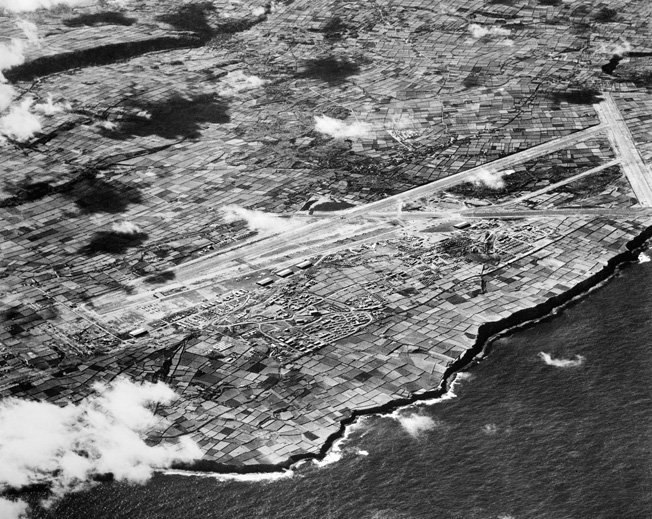
“There is an MIT report on complaints of German espionage in the Azores, and from there I was able to identify them,” says researcher and historian Marisa Filipe.
Correio dos Açores – How did you become a historian and espionage researcher?
Marisa Filipe (historian) – I’m in my third year of a PhD at ISCTE in Modern and Contemporary History. I’d been interested in espionage in Portugal for some time, as there hadn’t been much exploration of documents and primary sources. Other historians have already been working on this subject. Still, there hadn’t yet been an analysis of the documentation from the point of view of the espionage that had jeopardized Portuguese neutrality. British espionage was neutral because most documentation was destroyed after the war. What’s interesting is that when I started looking through the documents at the Ministry of Foreign Affairs, I realized that there was a huge amount of documentation scattered across various sources, various documents, and various separate files on the Azores alone – which reached both the Ministry of Foreign Affairs and the London Embassy (with Ambassador Armindo Monteiro). And more than that: documentation with the names of German spies operating in the Azores.
In this context, I began to collect this documentation. I was impressed not only by the Azores’ (already known) naval importance but also by their importance, both from the German and British sides. This is what, more or less, led me to become interested in espionage, especially in the Azores.
The Second World War was a prolific time for espionage. In the case of the Azores, what impact did the archipelago have on this chapter in the history of espionage in the Second World War?
When I published this article (at the time, it was only about espionage) in an American newspaper—the Journal of International Intelligence—one criticism was that I was arguing that the Azores were more important than was thought. Another American colleague said, “Yes, but she’s right.” In fact, if you look at the primary sources, the Azores are even more important than we thought.
In other words, I always knew that the Azores were a desirable territory. We hadn’t realized until now that it wasn’t just the British who immediately realized the importance of the Azores in terms of naval bases and supplying submarines and boats. The Americans also planned to occupy the Azores in 1941, a preemptive occupation in case Hitler occupied them.
It was also interesting to realize that Hitler had a strong strategic interest in the Azores. Not only in the naval, supply, submarine and telecommunications areas (in this case telegraphs), but also as a kind of protective shield in the event of an attempted invasion of the United States of America. If Hitler’s inspection hadn’t been halted around 1942-1943, the occupation of the Azores islands would almost have been a kind of forced occupation of the islands for a future occupation by the United States. And, in fact, Hitler was persuaded by a general, almost to extremes, not to occupy the Azores, something he even ended up writing in his diary where he said he “didn’t agree.”
Nowadays, we realize that he was right because if there had been a preventive occupation of the Azores, the Second World War would probably have gone in a completely different direction.
Did the issue of spying in the Azores somehow create a climate of diplomatic tension in the powers of the Second World War?
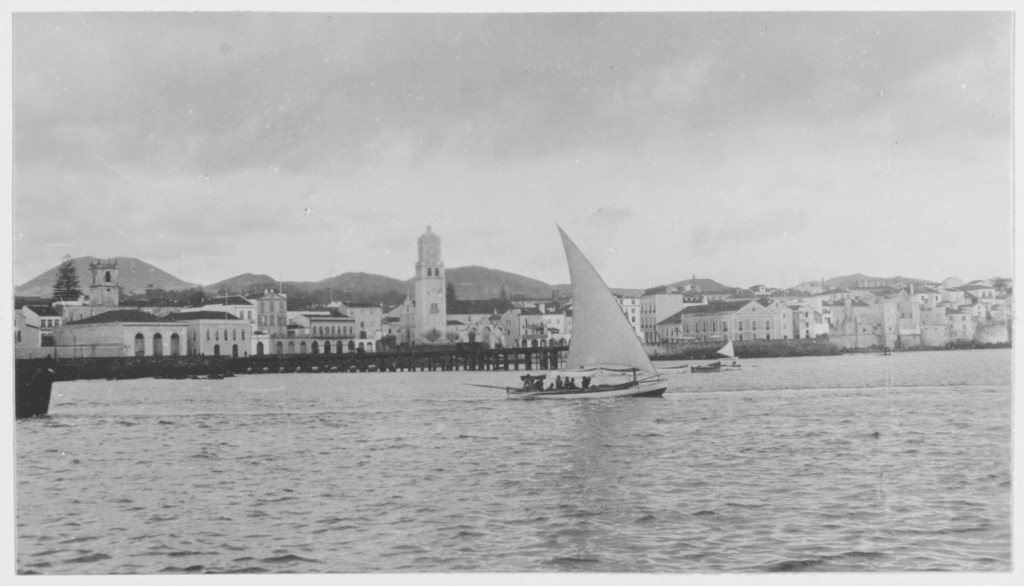
Right from 1940, several reports were sent to Armindo Monteiro, our ambassador in London. There were many complaints from the British about espionage in mainland Portugal, the colonies, and even the Azores. In 1941, a report was made to the Ministry of Foreign Affairs, which was sent to Armindo Monteiro and then to Salazar, who completely ignored it. Salazar wanted to maintain neutrality at all costs, so there was no preventive action against the espionage that was being carried out in the Azores, neither on the British side nor on the German side.
Even when the British asked for their own telegraphists in Ponta Delgada, Salazar said no. We were a neutral country with the capacity to defend and control our territory in any way. Therefore, we didn’t need the help of our allies—not even in the telegraph field.
However, the PVDE (State Surveillance and Defense Police) was attentive. Even when the PVDE didn’t intervene so as not to cause any kind of tension for one side or the other, Salazar had the information that the British gave him, and then there was a kind of subsequent investigation by the PVDE. The British espionage network, we know indirectly from the reports and complaints – we have an MIT report just on the Azores with complaints about German espionage in the Azores, and it’s from there that we were able to identify who the spies were, where they were. We have three spies named Ponta Delgada, Horta, and Terceira.
When the article was published, I even received emails from relatives who didn’t know their ancestors had this connection, which is quite interesting. For example, a spy house on Terceira Island belonged to the vice-consul of the Azores—a spy. There’s even a missing PVDE file; in other words, the file exists, but there’s no information inside.
After the Second World War, many of the PVDE files disappeared. Curiously, all the names of the spies disappeared, too. We only have the names and complaints from the British reports that come from the Foreign Office and MIT itself.
So, can we say there is still much to uncover in espionage on national and Azorean territory?
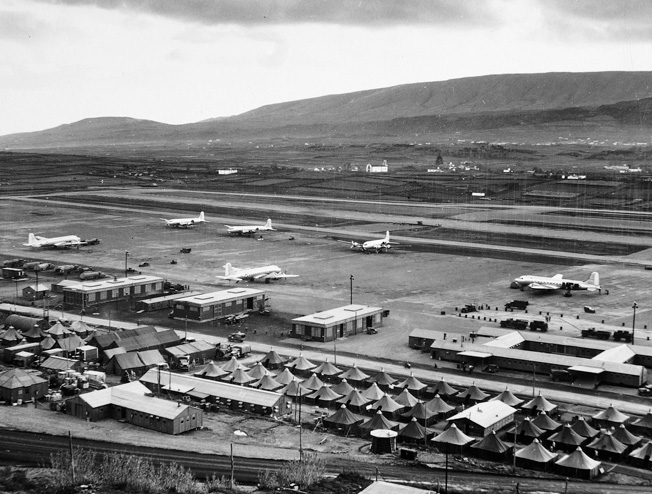
I think so. Many of them are still classified. The telegrams to Armindo Monteiro or the MIT archives on the Azores are open, but they are not yet available in digital format. I have no doubt that we’ll discover more complaints from the British, we’ll discover new names, and we’ll probably find out from the Americans whether they didn’t, after all, have something more than Operation Alacrity – an operation to prevent the Occupation of the Azores – or whether the Americans themselves didn’t have spies in the Azores.
We now know that German espionage was deep-rooted, had many informants, and was very effective. The reports are very well done in that they tell us about the garrisons and the number of troops, and the communications are sent very quickly – in essence, it’s very detailed information even about the geography of the Azores. This proves that the Azores were of great strategic importance, and if Hitler had occupied the Azores, we might be in a different position today; who knows?
José Henrique Andrade is a journalist for Correio dos Açores-Natalino Viveiros, director
We thank the Luso-American Education Foundation for supporting PBBI-Fresno State.

 Filamentos (artes e letras)