
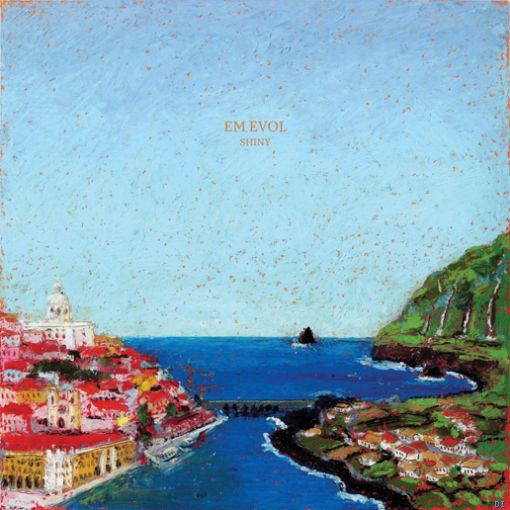
Azorean artist Shiny released his first album, “EM EVOL.”
The album is the culmination of an “intense and personal” creative process. It reflects the experiences and cultural fusion of the artist, who has roots in Lisbon and Flores.
The album’s lyrics, which take an intimate approach, invite listeners on “an emotional journey through stories of identity, heritage and personal growth.”
The sound of “EM EVOL” is strongly anchored in hip-hop, bringing out the richness of the artist’s origins and the influences of two distinct worlds – the nature of Flores and the cosmopolitan environment of Lisbon.
Shiny demonstrates “not only his lyrical ability but also the depth of his life experiences through this work.”
The album’s creation “was done authentically, without great means,” the recordings took place mostly at friends’ houses, with production and sound engineering by Sa1ke, Daikiri, and Cerqueira.
Shiny immersed himself in an “intense process of personal and artistic discovery” for two years, transforming his emotions into music.
The album mixes different musical styles, including trap, R&B, house, afro, reggaeton, fado, bossa nova, and drum and bass, representing the breadth of influences that Shiny has absorbed throughout his life.
Since childhood, Shiny has been exposed to a wide range of music. He grew up listening to hip-hop classics such as Sam The Kid and Eminem and absorbing the energy of artists such as Plutónio, Prolam, Drake, Morad, and Ca7riel.
However, Shiny’s influences are not limited to hip-hop. His father, who was passionate about music, encouraged him to listen to classical music, bossa nova, blues, jazz, rock, and electronic music from an early age.
This allowed him to create “a unique and innovative sound,” fusing different genres and styles.
To accompany the album’s release, Shiny has also designed a 3D film, “which accompanies the narrative of the work, mixing dream and reality to provide an immersive experience.”
In Diário Insular–José Lourenço-driector
Translated to English as a community outreach program from the Portuguese Beyond Borders Institute (PBBI) and the Modern and Classical Languages and Literatures Department (MCLL) as part of Bruma Publication at California State University, Fresno, PBBI thanks the Luso-American Education Foundation for their support.
 Filamentos (artes e letras)