
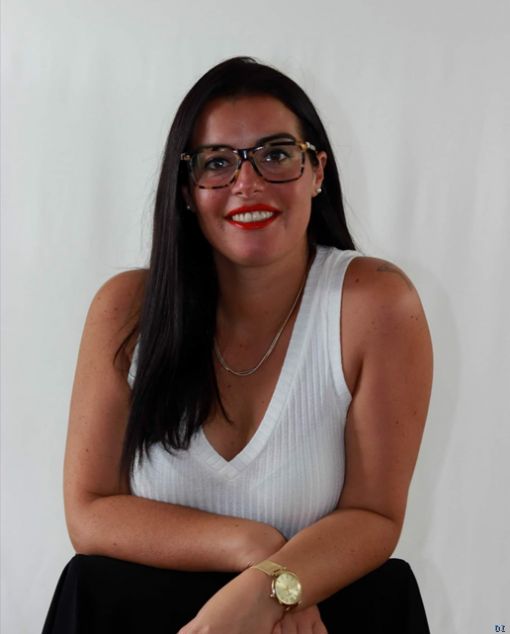
For the second year running, you have been nominated for the Women in Music Industry award by APORFEST – Associação Portuguesa Festivais de Música. What does this nomination mean to you?
It’s further recognition of the work I’ve been doing over the last 12 years. I started out producing jazz festival events, where I was then, and still am, one of the country’s few female jazz festival producers. At the time, I was definitely the youngest jazz festival producer in the country. Having been in an area marked mainly by men for a long time, whether musicians, producers, or technicians, it’s a great achievement for me to have made it and to have this recognition.
What led you to dedicate yourself to event production?
Event production was almost like an escape because, at the time, I was studying law and then business management, but I didn’t fit in with what the job market had to offer in these areas. And then I discovered, almost by chance, event production. When I returned to Terceira in 2011, I got to know the Academia da Juventude e Artes da Ilha Terceira and Rogério Sousa, who was its director. The academy was very dynamic and offered all the conditions for young people to develop their ideas and projects. It was almost like a creative hub or an incubator for cultural and creative industries, which later had the future that we all know, but at the time, it was so vibrant. And I identified that there was a gap in the jazz area. Two major festivals were the Ramo Grande Festival, produced by Luís Bettencourt, and AngraJazz. However, these festivals didn’t offer opportunities or a stage for emerging local and regional musicians to present their work. There was also a lack of musical composition, and we wanted to boost this movement. That’s what +Jazz has managed to do after a decade. There was a noticeable increase in jazz bands at the time. Some of them disappeared, and others emerged very timidly, but at the time, we were a stage for these bands and created a dynamic in bars and restaurants where live jazz music began to be played.
Has your journey over these 12 years in a small archipelago like the Azores been difficult?
This 12-year journey has been consistent, resilient, and aware of its difficulties. I can’t say it’s been a journey of ups and downs; I think it’s gradually built up its stages. Of course, nowadays, I don’t look at the sector in the naive way I did 12 years ago. I’m very aware of the difficulties, but I’m also very aware of what we must do to overcome them. Having never been selfish because it’s part of my personality, I soon realized that these obstacles could only be overcome by creating a network of partnerships and co-productions. That’s what I did from a very early stage. I built a wide network of local, regional, national, and international partnerships. In 2019, together with other colleagues, I created GetArt, allowing us to access different funds and other projects. As a producer, I diversified my project portfolio, and now I’m not just dedicated to producing events.
What led you to follow other career paths? Was it a need?
It was a necessity and a desire to embrace other types of projects. It came at a time when I became a mother, so I had to redefine my priorities and schedule. Festivals take place at night, and production days are always more intensive. And I also wanted to explore other areas of production. For the last three years, I’ve been working on a social inclusion project through artistic practices, the ATITUDE project. This month, we launched three more residencies with three social solidarity institutions. I’m also the coordinator of a heritage appreciation project that inventories all the coretos (outside areas -gazebos- where music performances are held) in the Azores. I also do consultancy work for other organizations in cultural management.
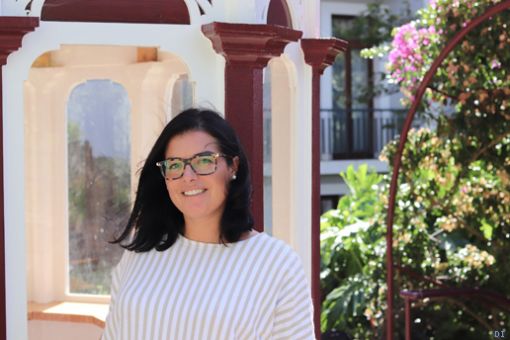
What challenges do you currently face, and how do you see your career evolving?
The challenges I find, especially at a regional level, are the inconsistency and decrease in support from the regional government and local councils. There is little boldness in moving away from the status quo. There’s no commitment to what’s different, which for us at GetArt is a major difficulty, because we don’t develop projects in a box, we like to present different things to the public, in concepts, in the artists we bring or in the approaches and methodologies we present. And there really isn’t that vision of the future here on the part of the political decision-makers because whether we like it or not, that’s where most of the money invested in culture is. 70% of investment in culture in Portugal comes from municipal budgets, the other 30% comes from government funds, and very little from European funds. As for the outlook, we don’t foresee a downturn at GetArt. We’ve been growing gradually and consistently. We expect the next few years to be good. We are establishing new partnerships that will open doors for us. We will continue working in the Azores, but we will also start producing outside the Azores. Very soon, we will announce a project with two editions in two cities on the continent, and we intend to invest heavily in projects in Creative Europe.
The Women in Music Industry award winner will be announced on March 22. What are your expectations?
Expectations are low. I have to be very honest. It’s already a great joy to be among 13 other female personalities. At a national level, to have 14 selected and for me to be among them is a huge honor. Our dimension is incomparable when we see that I’m nominated with Carolina Deslandes, Roberta Medina, director of Rock in Rio, Dora Palma from the MeoKalorama festival, and Andreia Criner, MeoKalorama’s commercial director. We’re talking about festivals with an audience of almost 100,000 people daily. We can’t compare. My expectations are low, but I’m already very happy to be among them.
Interview done by the newspaper Diário Insular in Angra do Heroísmo, José Lourenço-director.
Translated to English as a community outreach program from the Portuguese Beyond Borders Institute (PBBI) and the Modern and Classical Languages and Literatures Department (MCLL) as part of Bruma Publication at California State University, Fresno, PBBI thanks the Luso-American Education Foundation for their support.

 Filamentos (artes e letras)