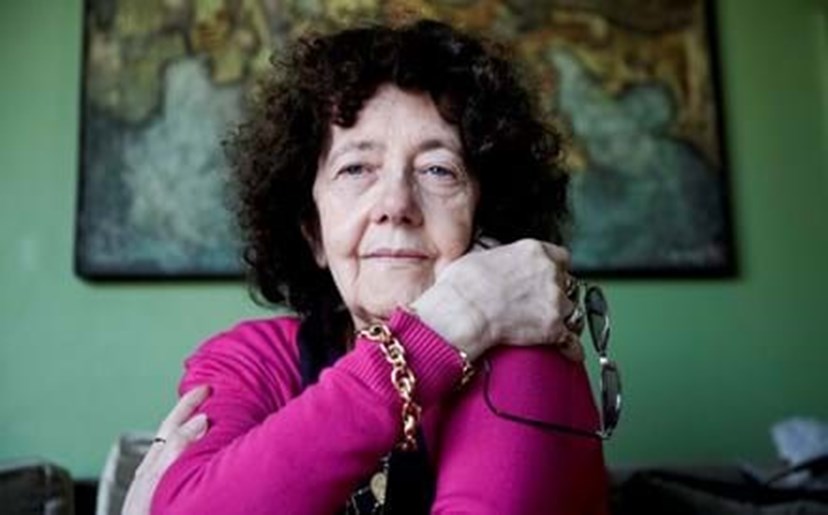
Maria Teresa Horta, one of the authors of the landmark book “New Portuguese Letters”, died this Tuesday in Lisbon. The BBC ranked the Portuguese writer among “the 100 most influential and inspiring women in the world”.
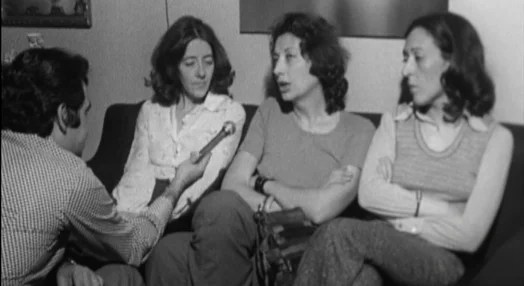
Writer, journalist, and poet Maria Teresa Horta became known in the history of Portuguese literature as one of the “three Marias.” As one of the three authors of the book “New Portuguese Letters,” she was prosecuted and tried in 1972 alongside Maria Isabel Barreno and Maria Velho da Costa.
This work, written from love letters addressed to a French officer by Mariana Alcoforado, was a libel against the ideology of the pre-25 April period, denouncing the Colonial War, the oppression women were subjected to, a persecutory judicial system, emigration, and fascist violence.
It began to be written in May 1971 and was published in April 1972, but the dictatorship banned it, and its authors were put on trial. In addition to the Feminist Movement of Portugal, she was part of the Poesia 61 group. She published several texts in newspapers such as Diário de Lisboa, A Capital, República, O Século, Diário de Notícias, and Jornal de Letras e Artes, among others.
“A loss of incalculable dimensions for Portuguese literature, poetry, journalism and feminism, to whom Maria Teresa Horta proudly dedicated a large part of her life,” reads the statement sent to the media by the publisher Dom Quixote.
In the same text, it laments “the disappearance of one of the most remarkable and admirable personalities” of contemporary Portugal, “a recognized defender of women’s rights and freedom, at a time when it was not always easy to assume this, the author of a work that will remain forever in the memory of several generations of readers.”
Last December, Maria Teresa Horta was included in a list drawn up by the British public broadcaster BBC of the 100 most influential and inspiring women worldwide, including artists, activists, lawyers, and scientists.
Maria Teresa de Mascarenhas Horta Barros was born in Lisbon on May 20, 1937. She attended the Faculty of Letters at the University of Lisbon, was a leader of the ABC Cine-Club, an active activist in women’s emancipation movements, a journalist for the newspaper A Capital, and a leader of the magazine Mulheres.
As a writer, she debuted in poetry in 1960 but built up a literary career that included novels and short stories. In 1971, she published the book of poetry “Minha senhora de mim”, which uses the poetic form of medieval songs of friends, but places the woman at the center of the narrative, as the target of sexual desire and as the subject who commands the relationship with the man, submitting him to her desires. In a message published on the Presidency of the Republic website, Marcelo Rebelo de Sousa evokes Maria Teresa Horta’s role in Portuguese literature, offering “heartfelt condolences” to her family and friends.

With books published in Brazil, France, and Italy, Maria Teresa Horta was the first woman to hold leadership positions in the film industry in Portugal and is considered one of the exponents of feminism in Portuguese-speaking countries.
She has received many awards throughout her literary career, including, in recent years, the 2017 Authors’ Prize in the best poetry book category for “Anunciações”, the Medal of Cultural Merit awarded to her by the Ministry of Culture in 2020, the Casino da Póvoa Literary Prize she won in 2021 for her work “Estranhezas,” and the award of the Grand Officer of the Order of Liberty by the President of the Republic in 2022.
Work “bucking its time.”
Reacting to the news about the writer, Lídia Jorge believes that Maria Teresa Horta should be remembered “because she was persistent” and that she lived her “life as if she were preparing for a long battle.”
The author of Maria Teresa Horta’s biography considered that the writer had a “childhood and adolescence very marked by some events that made her” the person she was, such as her mother’s abandonment. According to Patrícia Reis, the writer and feminist was always “a defender of her mother”.
“Teresa’s feminist side begins there, in the fact that she realized that her mother could also be free like men,” she explained. “She very quickly realized that the cause of her mother and of women is also this principle of freedom that her mother advocated.”
For this reason, the biographer believes that “everything that happened to her in her childhood became what she became as a poet, as a writer and also as a journalist.”
“We mustn’t forget that Maria Teresa is a journalist, a pioneering journalist in fact, one of the first women to enter newspaper newsrooms in the 1960s and one of the first to have a professional license.”
Meanwhile, the Minister for Culture expressed her “deep regret” at the death of Maria Teresa Horta, “one of the most important voices in contemporary Portuguese literature and a notable figure in the fight for women’s rights in Portugal.”
“Alongside Maria Isabel Barreno and Maria Velho da Costa, with whom she wrote the ‘New Portuguese Letters’ (1972), she challenged the dictatorial regime and became a landmark of Portuguese feminism,” wrote Dalila Rodrigues in a note, in which she recalled her ‘remarkable literary career, which spanned more than six decades.’
“Maria Teresa Horta produced a vast and fundamental work, which includes poetry, novels and journalism. Her writing, marked by a unique and courageous voice, which tackled themes such as freedom, the female body, eroticism and the condition of women in Portuguese society, will continue to inspire future generations of writers and readers, keeping alive the fight for equality and freedom of expression”.

From RTP-Portuguese Public Television
Translated to English as a community outreach program from the Portuguese Beyond Borders Institute (PBBI) and the Modern and Classical Languages and Literatures Department (MCLL) as part of Bruma Publication at California State University, Fresno, PBBI thanks the Luso-American Education Foundation for their support.
 Filamentos (artes e letras)