

The Azorean Autonomy – a necessary pedagogy for our diaspora.
The Congress of the Luso-America Education Foundation challenged us to present an educational paper on the Autonomy of the Azores, specially dedicated to the new generations of the Azorean diaspora.
It’s a pertinent challenge because some of our emigrants left the Azores without a proper awareness of the Autonomous Region, and many of their descendants are still not sufficiently informed about the political organization of our Autonomy.
It’s a timely challenge because we’re celebrating the 50th anniversary of April 25, 1974, which laid the foundations of Portuguese democracy and opened the doors to Azorean autonomy.
So, let’s ask 15 essential questions and seek 15 fundamental answers enshrined in the legal texts of the Constitution of the Portuguese Republic and the Political-Administrative Statute of the Autonomous Region of the Azores.
1. Why Autonomy?
The Azores archipelago’s political-administrative regime is based on its geographical, economic, social, and cultural characteristics and on the historic autonomist aspirations of its populations.
2. What is Autonomy for?
The Azores’ autonomy aims at citizen democratic participation, economic and social development, and the promotion and defense of regional interests.
3. What is the Autonomous Region?
The Azores archipelago is an Autonomous Region of the Portuguese Republic, endowed with legal personality under public law.
4. What is its territory?
The territory of the Autonomous Region comprises the archipelago of the Azores, which consists of the islands of Santa Maria, São Miguel, Terceira, Graciosa, São Jorge, Pico, Faial, Flores, and Corvo, as well as their islets and the territorial sea.
5. What powers does the Autonomous Region have?
To legislate at the regional level on matters not reserved to sovereign bodies – in other words, practically all of them, except Defense, Justice, Internal Administration, and Foreign Affairs – and to exercise its own executive power.
6. What is the Representative of the Republic?
For each of the autonomous regions (Azores and Madeira), there is a Representative of the Republic, who is appointed and dismissed by the President of the Republic.
7. What are the organs of self-government?
The Autonomous Region’s self-government bodies are the Legislative Assembly and the Regional Government.
8. What is the Legislative Assembly?
It is the representative body of the Region with legislative and supervisory powers over regional government action.
9. What is its composition?
The Legislative Assembly consists of deputies elected through universal, direct, and secret suffrage, in accordance with the principle of proportional representation, and by electoral constituencies.
10. How are they elected?
The island of São Miguel elects 20 deputies, the island of Terceira elects 10, the island of Faial elects 4, the island of Pico elects 4, the island of São Jorge elects 3, the island of Santa Maria elects 3, the island of Graciosa elects 3, the island of Flores elects 3, the island of Corvo elects 2 and the regional constituency of Compensação elects 5 deputies, making a total of 57 regional deputies.
11. What is the Regional Government?
The executive body conducts the Region’s policy and is the highest body of the autonomous regional administration.
12. What is its composition?
The Regional Government consists of the president and regional secretaries and may include a vice president and regional undersecretaries.
13. How is the government formed?
The Regional Government is politically accountable to the Legislative Assembly, and its president is appointed by the Representative of the Republic, taking into account the election results. The Representative of the Republic appoints and dismisses the other members of the Regional Government on the proposal of the respective president.
14. What is its organization?
In the XIV Regional Government, formed in 2024, the governing body is made up as follows: Presidency of the Government (São Miguel); Vice-Presidency of the Government (Terceira); Regional Secretariat for Finance, Planning and Public Administration (São Miguel); Regional Secretariat for Parliamentary Affairs and Communities (São Miguel); Regional Secretariat for Education, Culture, and Sport (Terceira); Regional Secretariat for Health and Social Security (Terceira); Regional Secretariat for Agriculture and Food (Faial); Regional Secretariat for the Sea and Fisheries (Faial); Regional Secretariat for Tourism, Mobility and Infrastructures (São Miguel); Regional Secretariat for Youth, Housing and Employment (São Miguel) and Regional Secretariat for the Environment and Climate Change (São Miguel).
15. What are the symbols of the Region?
The Legislative Assembly approved the Region’s flag, coat of arms, seal, and anthem.
The official anthem of the Autonomous Region of the Azores has lyrics by the poet Natália Correia, born 100 years ago on the island of São Miguel. Its first verses sum up the autonomous plan of the Azorean people:
Faith and firmness bore fruit
In the splendor of a new song:
The Azores are our certainty
To trace the glory of a people.
_____
José Andrade is the Regional Director for Communities of the Government of the Autonomous Region of the Azores
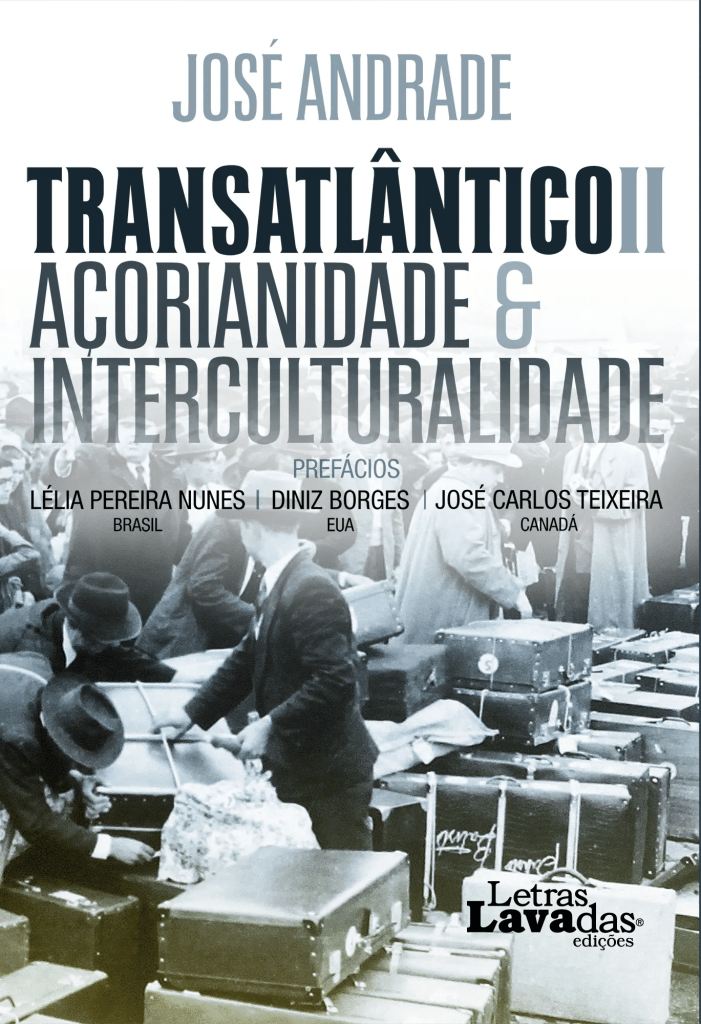
Based on a text from his book Transatlântico II – Açorianidade & Interculturalidade (2024)
 Filamentos (artes e letras)