
THE EXTREMES OF MACARONESIA

The Azores and Cape Verde, the extremes of the Atlantic region of Macaronesia, are two branches of a common trunk.
We share the same history, culture, language, time of day, sea, and even the same archipelagic condition, each with nine inhabited islands.
As if we were a single people of more than 700,000 islanders united in a single archipelago of 19 islands: Boa Vista, Brava, Corvo, Faial, Flores, Fogo, Graciosa, Maio, Pico, Sal, Santiago, Santa Luzia, Santa Maria, Santo Antão, São Jorge, São Miguel, São Nicolau, São Vicente and Terceira.
But we also share the centuries-old condition of being an emigrant people.
We have lived on these islands since the middle of the 15th century, always wanting to leave and return.
We carry and affirm our cultural identity, projecting and enhancing our islands on the other side of the Atlantic.
In both cases, at least three times more natives and descendants live in our diaspora than on our islands.
Azoreans and Cape Verdeans even share some emigration destinations, such as the east coast of the United States of America, from which SATA Internacional’s regular flight between Boston, Ponta Delgada, and Praia originates.
And we have the pleasure of having one of our oldest and most esteemed immigrant communities in the Azores, precisely from Cape Verde.
According to the most recent official report for 2022, 254 citizens with exclusive Cape Verdean nationality officially reside in the Azores.
They are spread over eight of the nine islands but are especially concentrated on four: Pico, Faial, Terceira, and São Miguel.
This is in addition to countless Cape Verdeans who already had or acquired Portuguese nationality.
In any case, they are all fully integrated into Azorean society, which is now theirs, too, to the recognized advantage of both parties. Our complicity has a past, a present, and a future.
The extremes touch each other in the complicit alignment of the four archipelagos of Macaronesia. Still, they also touch inwards and are touched by the islands in the middle, nine more like us: Fuerteventura, Gran Canaria, Hierro, La Gomera, La Palma, Lanzarote, Madeira, Porto Santo and Tenerife. We are all united by geography… and poetry.
We are, after all, an archipelago of 28 islands with a poetic soul. We are all sailors on the same waves of a common ocean. All the same, but all different.
Each has its own identity, culture, poetry, and anthem.
That’s why it’s worth getting to know and comparing the four authors of the four poems and the anthems of the four archipelagos.
In Cape Verde, Amílcar Spencer Lopes.
He was born in 1948 in Ribeira Brava on the island of São Nicolau. He is a lawyer and diplomat. He was Mayor of Ribeira Brava, Ambassador Extraordinaire and Plenipotentiary of the Republic of Cape Verde to the United States of America and Canada, Minister of foreign affairs and Communities, President of the National Assembly of Cape Verde, and President of the Union of African Parliaments.
In the Canaries, Benito Cabrera.
He was born in Venezuela in 1963 but moved to Lanzarote at an early age. He has spent most of his life in Tenerife. He graduated in Psychology from the University of La Laguna. A musician by profession, he is a composer and timpanist. He was a Conservatorio Superior de Música de Canarias teacher and wrote emblematic Canarian songs such as Nube de Hielo or Una sobre el mismo mar.
In Madeira, Ornelas Teixeira.
He was born in Funchal and died there in 2000. He was an administrative officer in Mozambique, overseeing the Lourenço Marques news archive. When he returned to Madeira, he dedicated himself to journalism, working on the newspapers O Retornado and Eco do Funchal. He organized the Madeira Literary Days and published the book of poems Liricofonia by Espaço XXI in 1999.
In the Azores, Natália Correia.
She was born in Ponta Delgada 100 years ago, in 1923, and died in Lisbon 30 years ago, in 1993. She has published poetry, novels, plays, and essays. She won the Grand Prize for Poetry from the Portuguese Writers’ Association. She created the Lisbon literary bar Botequim, co-founded the National Front for the Defense of Culture, and was politically active as a Member of Parliament.
These are the four poets who sing Macaronesia’s identity in the official anthems of its four archipelagos, from the Azores to Cape Verde, including Madeira and the Canaries.
_____
José Andrade is the Regional Director for Communities of the Government of the Autonomous Region of the Azores
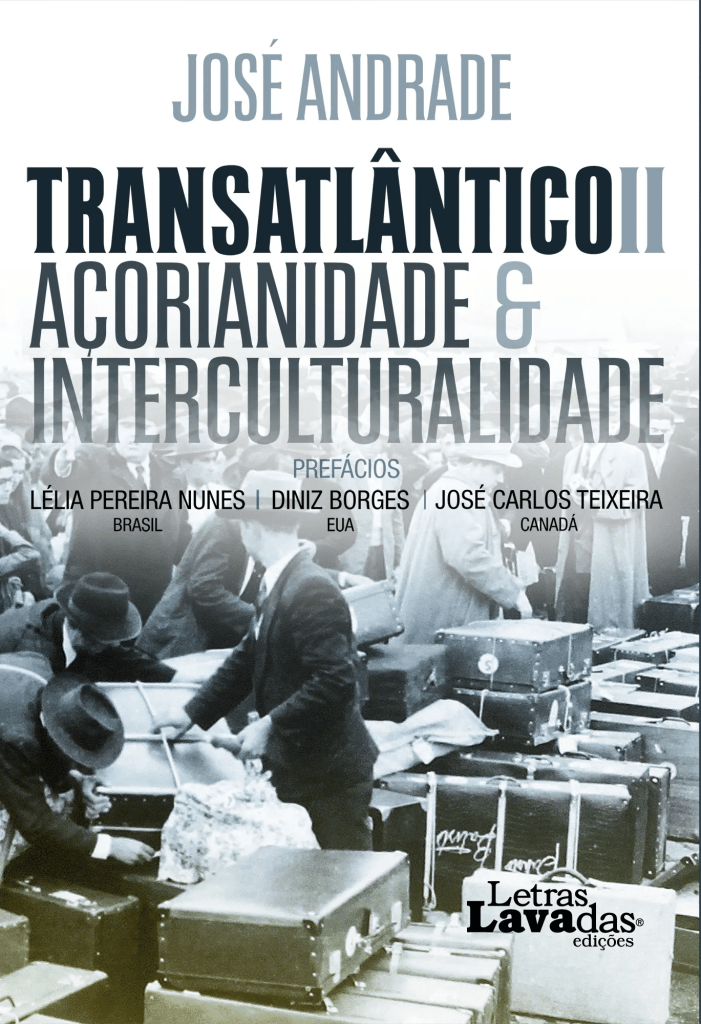
This chronicle is based on a text from his book Transatlântico II – Açorianidade & Interculturalidade (2024)
Translated to English by Diniz Borges
 Filamentos (artes e letras)