
Founded by brothers Tiago Rosas and Francisco Rosas, Palco de Ilusões directs, produces, and edits audiovisual projects and works as a light and sound technician. With the year 2024 marked by significant growth in their production, this year – in addition to the release of the film on the life and work of Alice Moderno – they are expected to produce a documentary based on the history of the electrification of the Azores (in partnership with EDA) and the post-production of the new fiction by Zeca Medeiros.
Correio dos Açores – “Alice – Modern Woman” is your new film celebrating the life and work of Alice Moderno. For you, as the director of this work, what importance does this figure have in the history of the region and the country?
Tiago Rosas (Palco de Ilusões) – Palco de Ilusões was hired to do sound and lighting at a Ponta Delgada Town Hall event that paid homage to Alice Moderno. As I passed by the event to support our technical team, I heard several researchers describing this extraordinary figure: teacher, writer, journalist, the first woman to attend Ponta Delgada High School, and a tireless defender of animal and women’s rights. I also discovered that she shared her life with Maria Evelina, a relationship that I recognize as pioneering in many social aspects in the context of the time.
I was deeply amazed by his story. In an increasingly superficial world, we need examples like Alice Moderno – true icons who inspire us. Alice is undoubtedly a heroine worthy of recognition.
The journey to the film took around two years, involving obtaining funding, intensive library research, and interviews. Margarida Benevides had already made a show about Modern Alice, and we decided to join forces.
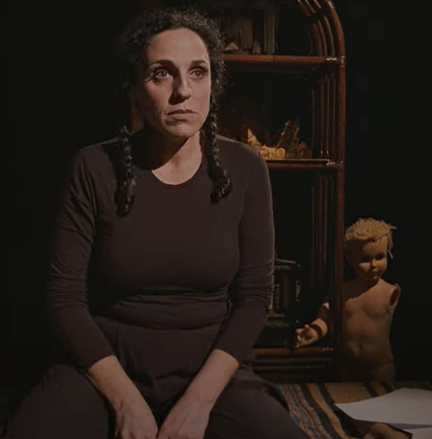
We created the script, adapted Margarida’s text, and filmed Professor Teófilo Braga’s guided tour of the most emblematic places in Alice Moderno’s life. Margarida completely gave herself to the character, resulting in a credible picture for me. As I admire Catarina Raposo’s work, I asked her to compose the soundtrack, an essential part of any movie. Now we’re very close to the premiere!
What is your assessment of 2024? How did it go in terms of production?
2024 was a remarkable year for Palco de Ilusões, with significant production growth, which led us to hire another team member.
In 2025, we will premiere several projects, such as the film “Alice – Modern Woman”, the documentaries “Jean Sébastien Beurreu – Une Symphonie en Vert and Raizarte – Uma Janela para o Mundo,” both directed by Francisco Rosas, and “O Mistério do Arquipélago Flutuante,” a musical fiction by Zeca Medeiros.
In addition to broadcasting online, we worked on several other projects, including music videos, the series “A Poesia é para Comer” (Poetry is for Eating), Viola da Terra video lessons with Rafael Carvalho, and the VSTi (Virtual Studio Technology) recording of Viola da Terra from Terceira island with Evandro Meneses. It’s been a year of hard work and rewarding results.
What projects do you have in mind for this year? What are your main goals?
In 2025, in addition to finishing the post-production of Zeca Medeiros’ film, which we hope to premiere in April, we are completing the pre-production of a short film with puppets based on the legend of Sete Cidades. We are also developing a feature-length fiction film that explores the cultural richness surrounding our two-hearted viola and the documentary “Ilhas de Luz” (Islands of Light) based on the history of the electrification of the Azores in partnership with EDA.
We look forward to the outcome of the changes to government funding for culture, and the changes to the RJAAC will certainly determine the future of cultural production in the region. Nevertheless, we intend to continue to grow, embracing more projects, but always remain a reference in quality Azorean audiovisual production.
What is your view of the cultural scene in São Miguel?
There have always been many quality art creators in São Miguel and the Azores. I even think that insularity boosts creativity and the desire to express ourselves.
Culture in São Miguel faces similar challenges to the rest of the archipelago and the country. These challenges result from a lack of strategic vision on the part of those in power. When seen as an investment and not a cost, culture has immense potential as an economic development engine.
Investing in culture and local cultural agents strengthens our identity and stimulates the regional economy. The money invested stays in the region, whether in the form of remuneration for cultural agents, purchases of materials, or consumption in restaurants, small businesses, etc. It creates a virtuous economic cycle, and if properly funded, it becomes a very important productive industry.
In addition, culture is a powerful tourist attraction. In a time when any destination is only a few hours away, standing out for our cultural identity attracts a differentiated, interested, and respectful public.
The promotion of differentiated and quality cultural productions also helps to make the region known on a global level.
Something you’d like to add?
I remember an interview with the Mayor of Vienna during the pandemic. When asked how much he spent on opera at that difficult time, he replied: “Spending? Nothing! That’s investment. Every euro invested is multiplied by ten. I wish I had more resources to invest in culture!” We need this mentality to understand that culture is not a cost but an essential lever for economic and social progress.
I hope that the Portuguese Capital of Culture in 2026 and the celebration of the 600th anniversary of the discovery of the Azores in 2027 will be a pretext for this paradigm shift in the financing of culture in the Azores.
José Henrique Andrade is a journalist for the Correio dos Açorres newspaper-Natalino Viveiros, director.
We thank the Luso-American Education Foundation for their support.
 Filamentos (artes e letras)