

Vitorino Nemésio Mendes Pinheiro da Silva (1901–1978) is a towering figure in Portuguese literature, celebrated for his profound exploration of Azorean identity and enduring contributions to modern Portuguese prose and poetry. Born in Praia da Vitória on Terceira Island in the Azores, Nemésio’s work captures the Azorean archipelago’s unique cultural and geographical characteristics while resonating with universal themes of belonging, identity, and human connection. His coining of the term Açorianidade (Azoreanness) remains a cornerstone of Azorean cultural discourse.
Nemésio’s upbringing on Terceira Island profoundly shaped his literary imagination. The isolation, natural beauty, and volcanic landscapes of the Azores imbued him with a deep connection to his homeland, which he later articulated through his writing. His intellectual journey led him to mainland Portugal, where he pursued studies in literature and history at the University of Coimbra. Later, as a professor, he taught at the University of Lisbon, becoming an influential academic and cultural figure.
Nemésio’s cosmopolitan life included travel across Europe and America, experiences that broadened his perspective while deepening his appreciation for his Azorean heritage. His dual identity as an Azorean and a Portuguese intellectual allowed him to bridge the local and the global, offering unique insights into the human condition.

Literary Creativity: A Prolific and Multifaceted Writer
Nemésio’s literary career is marked by its diversity, encompassing poetry, novels, essays, and journalism. His work is deeply rooted in the Azorean experience, yet it transcends regionalism through its universal themes and innovative literary techniques.
Poetry: A Lyrical Voice
Nemésio’s poetry reflects his philosophical depth and emotional resonance. Collections such as O Bicho Harmonioso (The Harmonious Creature) and Eu, Comovido a Oeste (I, Moved to the West) showcase his lyrical prowess. His poems often meditate on the natural beauty of the Azores, the passage of time, and the existential questions of human existence. The volcanic landscape of his native Terceira frequently serves as a metaphor for the inner turmoil and resilience of the human spirit.
Mau Tempo no Canal: A Masterpiece of Modern Portuguese Literature
Nemésio’s most celebrated work, Mau Tempo no Canal (Stormy Isles: An Azorean Tale), published in 1944, is a landmark in Portuguese modernist literature. This novel weaves a richly detailed tapestry of Azorean life in the early 20th century, blending historical realism with psychological depth. Set primarily on the islands of Faial, Pico, and São Jorge, the story explores themes of love, class struggle, and the impact of insularity on human relationships. Its meticulous descriptions of the Azorean landscape and culture provide a vivid sense of place, making it a literary monument to the archipelago.
Açorianidade: The Spirit of the Azores
Nemésio’s concept of Açorianidade encapsulates the cultural, geographical, and emotional characteristics that define the Azorean people. He argued that the unique isolation of the islands, combined with their maritime connections, created a distinct identity. This concept has become a cornerstone of Azorean cultural studies, influencing writers, scholars, and policymakers. Through Açorianidade, Nemésio gave voice to the collective consciousness of the Azorean people, celebrating their resilience, adaptability, and deep connection to the sea.

Legacy and Influence
Vitorino Nemésio’s contributions extend beyond his literary achievements. As a cultural commentator and public intellectual, he played a vital role in shaping Portuguese and Azorean identity during a profound social and political change. His work inspires writers and thinkers, serving as a touchstone for discussions about the interplay between regional and national identity in a globalized world.
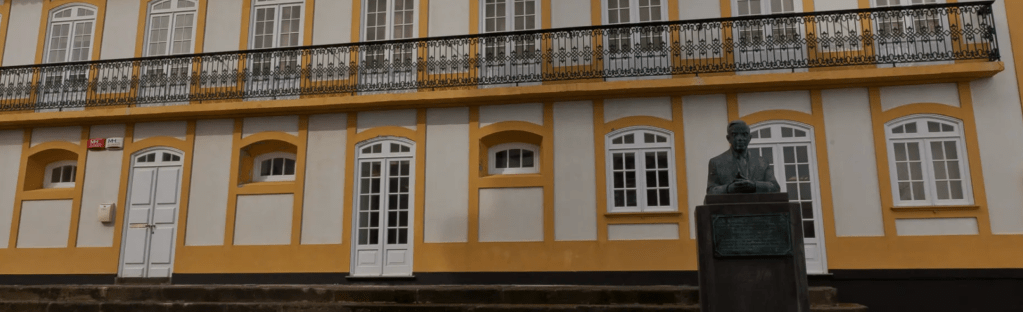
In the Azores, Nemésio is revered as a symbol of cultural pride. Institutions, literary prizes, and public spaces bear his name, ensuring that his legacy remains alive in the hearts of the Azorean people. Globally, his writings offer a unique perspective on the complexities of island life and the universal search for belonging.
Vitorino Nemésio’s life and work embody the essence of Azorean identity. Through his innovative literary creations and the articulation of Açorianidade, he captured the Azores’ soul and contributed to a broader understanding of cultural identity in the modern world. His legacy is a testament to the power of literature to illuminate the human experience and connect individuals to their roots and each other, regardless of geographic boundaries.
 Filamentos (artes e letras)