
MIGRANT ASSOCIATIONS
It makes perfect sense for the Azores to have an association of Azorean emigrants.
Because we are, and always have been, a land of emigrants.
We’ve been here for almost 600 years, and for more than 400 years, we’ve left – for Brazil, America, Canada – without ever leaving these islands. We carry them in our hearts and cherish them with nostalgia.
There won’t be a single Azorean family that doesn’t have relatives on the other side of the Atlantic.
There are less than 250,000 permanent inhabitants on the nine Azores islands. Still, there will be more than two million Azoreans and, above all, Azorean descendants in the different communities on the American continent.
That’s why an Association of Azorean Emigrants (AEA) should exist.

An association of Azoreans in general and especially emigrants and returnees.
It should contribute to preserving the memory of Azorean emigration and the contemporary connection between those who stayed and those who left.
Ultimately, it should be an organized expression of civil society in a mutually beneficial partnership with regional and local public authorities.
For this reason, the Association of Azorean Emigrants was born on October 28, 2010.
It was born in the city of Ribeira Grande as if it were the daughter of the Azorean Emigration Museum and the mother of Emigrant Square.
She was born at a good time and in a good cradle. And she grew up proving her worth.
It was worth the founding effort and the progressive affirmation of successive boards led by Mário Moura, João Luís Pacheco, Luís Silva, Rui Faria and, now, Andrea Moniz-DeSouza.
Mário Moura – the first president, from 2010 to 2012 – gave it its historical framework.
João Luís Pacheco, from 2012 to 2015, brought the connection to the United States.
Luís Silva, from 2015 to 2018, added the relationship with Canada and later, as president of the general assembly, even lent his own art to the emblematic globe in Praça do Emigrante.
From 2018 to 2024, Rui Faria has given this association a new impetus, with respect for the past and a sense of the future.
Andrea Moniz-DeSouza, the new president, brings together our proportionally significant Bermudian community and lends it to the culture typical of the Azorean diaspora’s associative movement.
To name the successive presidents is to salute, in their persons, all the other leaders and members in general who have made possible the different stages of this collective journey that has just begun.
However, the Azores are not just a port of departure but also a port of refuge.
That’s why we also have an Association of Immigrants to the Azores (AIPA).

In 2021, AIPA symbolically reached the age of majority that, in truth, it has always demonstrated.
If 18 is the age at which civil responsibility begins in Portugal, AIPA was born with the associative maturity that time and accumulated merit have confirmed.
Its founding mission was pressing in 2003 and remains relevant in 2024.
In recent years, AIPA has made all the difference.
It has established itself as an indispensable partner for the coming years.
It marks a turning point in the collective and ongoing process of integrating and dignifying immigrants in the Azores.
Celebrating a historic journey of successive achievements is worth remembering the circumstances and highlighting the protagonists who have brought us this far.
Honoring the past is the best way to deserve the future.
There are landmark moments that determine the history of the first and only Azorean association dedicated to immigrants of different nationalities:
In 2003, on March 19, the deed of incorporation of the then named “Association of PALOP Immigrants in the Azores,” was formalized in the Notary’s Office of Nordeste, and, on July 15, the installation of its first “Local Support Centre for the Integration of Migrants,” in Ponta Delgada;
In 2007, on July 17, its official recognition as a Public Utility Institution;
In 2008, on May 28, the installation of its second “Local Support Center for the Integration of Migrants” in Angra do Heroísmo;
In 2018, on May 16, the achieved the status of a Private Institution of Social Solidarity;
In 2021, on June 28, the installation of its third “Local Support Center for the Integration of Migrants” in Madalena do Pico.
It is important to praise and thank the successive and countless nominal contributions, with greater or lesser public visibility, that have made AIPA possible and advantageous.
We pay tribute to them all by mentioning three names:
Paulo Mendes, from Cape Verde, the first and longest-serving president;
Cristina Borges, from Angola, the second president;
Leoter Viegas, from São Tomé and Príncipe, co-founder and current president.
They are three adopted children of the Azores to whom our land owes much.
We would also like to thank them for the contribution of all those who have chosen the Azores to develop their life project here and thus improve Azorean society.
A society that wants to be aggregating, congregating, multicultural, and intercultural.
We are building a society without differences and borders, which relies on everyone’s contribution for the benefit of all.
_____
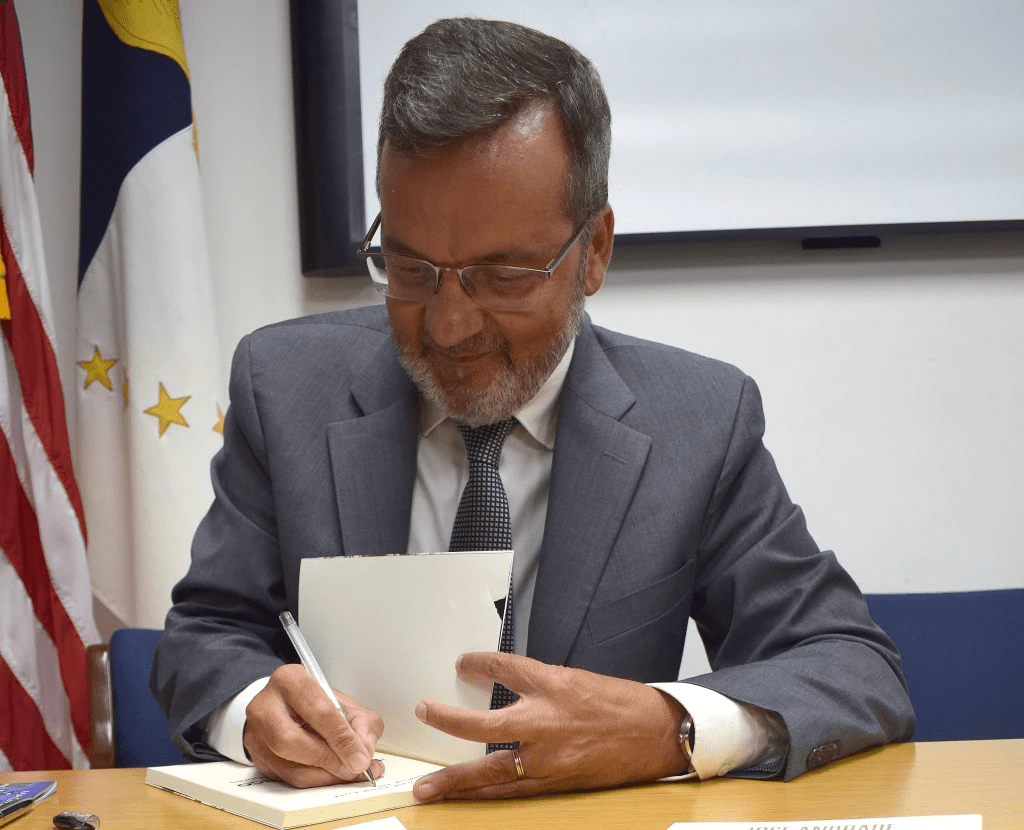
José Andrade is the Regional Director for Communities of the Government of the Autonomous Region of the Azores
This article comes from his book Transatlântico – As Migrações nos Açores (2023)
Translated by Diniz Borges

 Filamentos (artes e letras)