
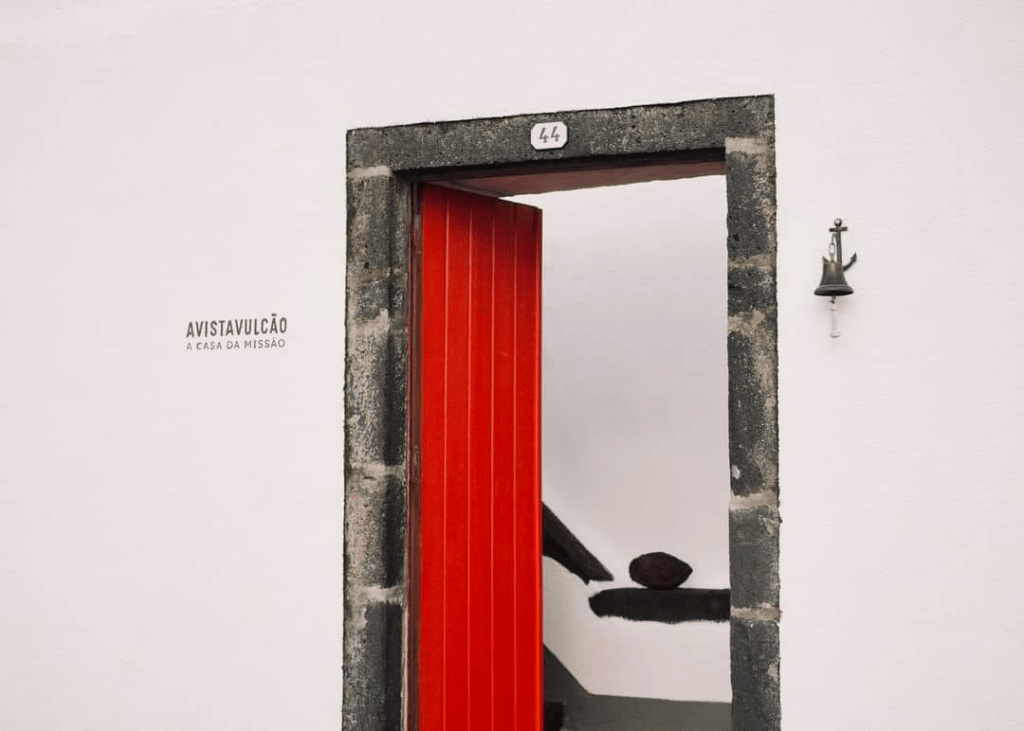
The so-called “Mission House” was the site of a scientific mission to study and record the eruption of the Capelinhos Volcano between 1957 and 1958. Since 2017, this house has belonged to the couple Gonçalo Tocha (film director) and Sophie Barbara (cultural producer). They have made it their home, a place for artistic residencies and a studio for film development and work. “Avista Vulcão” is the project discussed in this conversation, which, since 2021, has led numerous national and international artists to create multidisciplinary works in a historic house overlooking the youngest part of Faial.
Correio dos Açores – How did the “Avista Vulcão” project come about?
Gonçalo Tocha (director) – The “Avista Vulcão” project began in 2021, although we settled in this house in 2017. The house is close to the Capelinhos Volcano, just one and a half kilometers away. Through conversations with a former owner and neighbors, we learned that this house was the residence of the scientific mission from the University of Lisbon, which studied the volcano and its eruption around 1957/1958. Professor Orlando Ribeiro and Professor Raquel Soeiro de Brito were here, and it was also a house that housed various research materials. When we moved in, there was nothing to indicate this past and no record of this history. So we went to the archives and found confirmation that the scientific mission had been in a house near the Capelinhos Volcano.
We are lucky that Professor Raquel Soeiro de Brito, who participated in the mission, is still alive. We got in touch with her – she was 94 at the time and is now 99 – and after talking, we invited her to visit the house. She accepted, and that’s when the “Avista Volcano” project formally began, with the teacher present. She returned to the house where she lived during the eruption, where she filmed, studied, and worked. We met with the local population, where she told her story and commented on the film she had made between 1957-58. The house where we live has thus also become a place of welcome, cultural programming, and residence for people from all over the world to work here, being a point of connection between the Casa da Missão and the world, close to the Capelinhos Volcano.
What residencies have taken place since its inauguration?
Sophie Barbara (cultural producer) – Since 2021, we have started to develop a cultural program to welcome artists from outside the island and the country, promoting interaction with the community through workshops, talks, and work presentations.
We have already welcomed several artists from the visual arts and cinema. In addition to Gonçalo’s projects, we’ve had an American director with a film project and a Brazilian director and producer. We also had Galician director Lois Patiño, who filmed a project that will be premiered in February at a festival in Rotterdam.
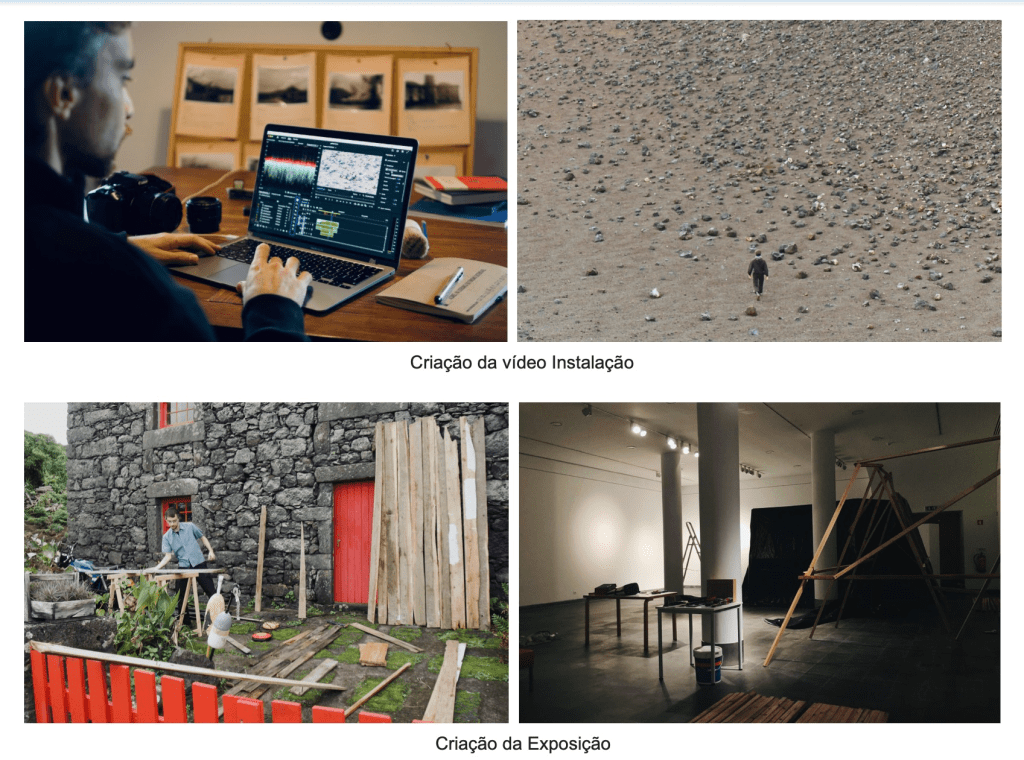
In addition to cinema, we welcomed writer Judite Canha Fernandes, who did a creative writing residency and wrote “Cartas deoVulcão,” available on our website. We also had the artist António Silva, who developed a lithography project, working with basalt stone, with an exhibition at the Horta Museum. Recently, we welcomed a young Portuguese artist trained in London, who developed a cyanotype project and held workshops with a group of locals.
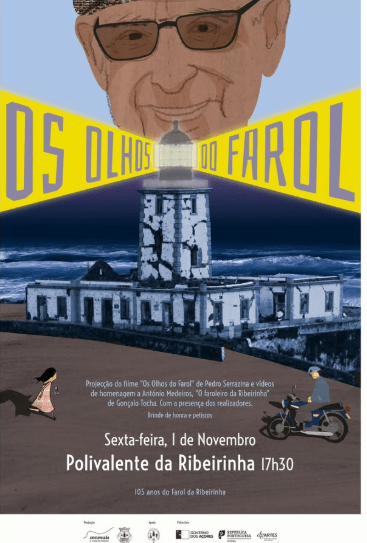
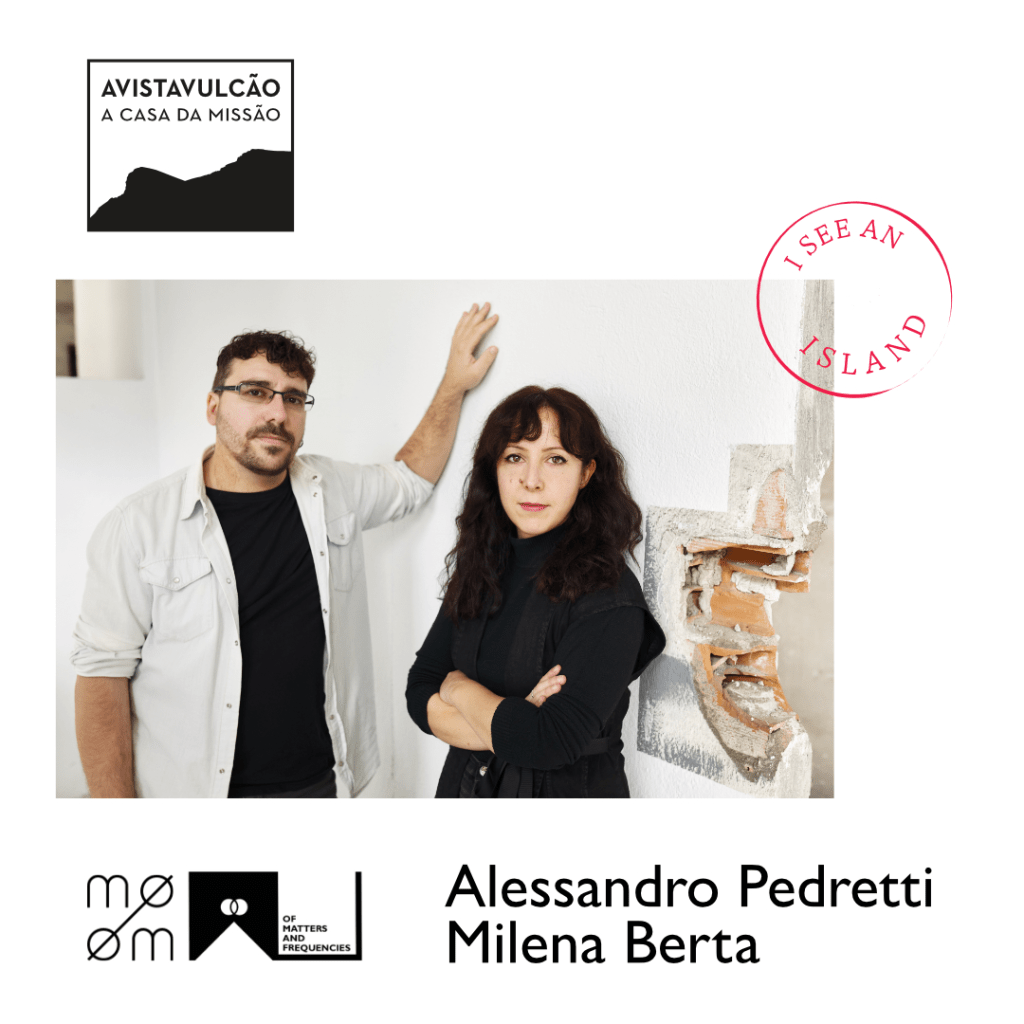
We also welcomed a cultural collective from Antwerp, Belgium, who have been working with us since 2022 and will return in 2025 for a project on environmental construction and the dynamization of socio-educational spaces on the island. Animation director Pedro Serrazina was also with us, promoting the celebration of the volcano and the Ribeirinha lighthouse and making the film “Os Olhos do Farol” (The Eyes of the Lighthouse). A duo of Italian artists, made up of a sculptor and her musician partner, did an experimental music project inspired by the materials collected on the islands of the Triangle, creating a sound piece with stones, sand, and the sounds of nature. We also had a Swiss theater company, Companhia Utopia, from Geneva, which developed a play about Moby Dick, with inspiration gathered from the island’s whaling community.
This year, we are preparing for the arrival of a French collective from Marseille, which will develop a creative project with exchanges with the community, focusing on the island’s endemic flowers and trees. We will also have an Italian jazz musician who will work on a musical project with the community and a Belgian artist who will create a mural with the participation of the local public, both in Pico and Faial. We also have the artist Isaac Pinheiro, from Porto, who will create a piece from basalt stone.
On the other hand, at Casa da Missão, we have our work in film production. We’ve been working on documentary projects in Faial, Pico, and São Jorge, and we’re finalizing these projects. This is also the basis of our work; in other words, we divide the two strands.
The residencies we host are for at least a month or more so that those who come can get to know the people, travel, and visit this territory of the Triangle – which is unique and interconnected.
How have the people of Faial received these projects and their artists?
Gonçalo Tocha/Sophie Barbara – The reception has been very emotional and strong. There has been a shift from the cultural center of the city of Horta to other areas of the island – in this case to Capelo – creating great encounters and a journey through the memories of this place, which is particularly special because it is the youngest land on the island, formed by the eruption of the volcano. The project symbolizes the return of Casa da Missão, now transformed into a contemporary art house with international and national programming that encourages cultural exchange. This exchange is essential, creating a symbiosis between the local public and foreign artists.
All the events have been well attended, with more than 100 people attending the performances. One of the strengths of our program is the popular gatherings, where performances are followed by socializing and conversations between all the participants in special places, whether in the Mission House or the areas surrounding the volcano. These meetings promote the revival of memories through contemporary art.
We don’t have a weekly schedule, as that’s not our aim. The activities are always unique, making each event special and its effects unique for those who participate.
Since last year, we’ve started welcoming one local artist a year, with projects like that of André Oliveira, who held his first solo exhibition in December 2024 while still a Fine Arts student in Lisbon.
This year, we will continue to welcome emerging artists with the appropriate cultural support, who will boost our programming and broaden our reach.
What is the importance of recording the Azores and the Triangle Islands?
Gonçalo Tocha – It’s very important to work in this territory. It’s constantly changing, and while cinema evolves rapidly, there’s a unique essence to the islands that can be diluted over time. The islands have many layers of history, and our work aims to capture these layers with time and proximity to the people. The aim is to create cinematographic objects that will endure in the archipelago’s history, contributing to the collective memory. We work with dedication so that these stories and experiences can continue to be part of the islands’ history.

José Henrique Andrade, a journalist for Correio dos Açores, conducted this interview. Filamentos congratulates this journalist for all his work on the arts in the Azores islands.
Translated to English as a community outreach program from the Portuguese Beyond Borders Institute (PBBI) and the Modern and Classical Languages and Literatures Department (MCLL) as part of Bruma Publication and ADMA (Azores-Diaspora Media Alliance) at California State University, Fresno, PBBI thanks the Luso-American Education Foundation for sponsoring FILAMENTOS.

 Filamentos (artes e letras)