
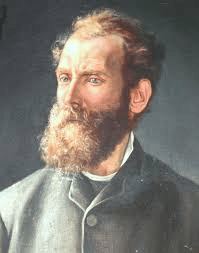
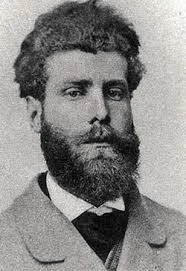
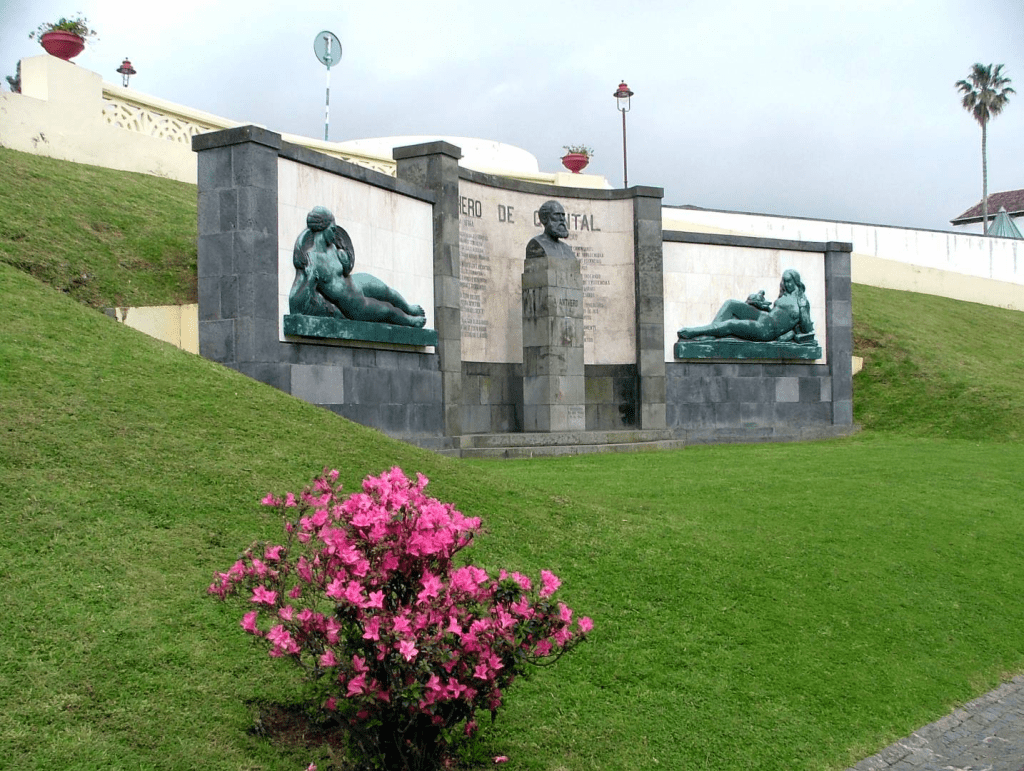
Antero de Quental, one of the foremost figures of Portuguese literature, remains a towering presence in Portugal’s cultural and intellectual history. Born in 1842 in Ponta Delgada, on the Azorean island of São Miguel, Quental was a poet, essayist, and philosopher whose works delved into profound existential, social, and metaphysical questions. As a central figure of the Generation of ‘70, a group of young intellectuals who sought to modernize Portuguese thought and culture, Quental left a legacy of literary and philosophical works that continue to resonate today. His writings, marked by a deep engagement with Romanticism, Modernism, and intellectual inquiry, offer insights into the human condition and the sociopolitical challenges of his era.
Romanticism and Existential Inquiry
Quental’s early works were deeply influenced by Romanticism, which emphasized emotion, individualism, and the sublime. His poetry often explored themes of love, nature, and the human spirit’s struggles against the constraints of society and mortality. In his collection Odes Modernas (1865), Quental introduced a more socially engaged form of Romanticism, blending lyrical beauty with a critique of societal injustices. His verses reflect a profound personal introspection and a broader philosophical questioning of humanity’s place in the cosmos.
One of Quental’s distinguishing characteristics was his ability to intertwine existential inquiry with poetic expression. Poems such as “A Morte” (“Death”) reveal his preoccupation with mortality and the search for meaning in an often indifferent universe. These themes align with the broader Romantic fascination with the sublime, where beauty and terror coexist. However, Quental’s work transcended Romantic conventions, moving toward a more modern sensibility that grappled with existence’s uncertainties.
The Social Critique and Utopian Vision
As a thinker and activist, Quental’s writings reflect his deep concern with his time’s social and political issues. He was a proponent of socialism and a fierce critic of the inequalities perpetuated by the industrial and capitalist systems. His essays and public speeches articulated a vision for a more equitable and humane society grounded in reason and ethical principles. In works such as “Causas da Decadência dos Povos Peninsulares” (“Causes of the Decline of the Peninsular Peoples”), Quental examined the historical and cultural factors contributing to Portugal’s decline as a global power, advocating for intellectual and moral renewal as a path to national rejuvenation.
Quental’s utopian vision extended to his poetry, where he often imagined a future marked by solidarity, justice, and harmony. Poems like “Odes ao Futuro” (“Odes to the Future”) encapsulate his belief in the transformative power of human potential. While these works acknowledge the challenges of realizing such ideals, they also express a persistent hope that humanity can overcome its divisions and create a better world.
Philosophical Depth and Modernist Influences
Quental’s philosophical inquiries were informed by his engagement with contemporary intellectual currents, including German Idealism, Positivism, and Darwinism. His poetry and essays reveal a deep curiosity about the nature of truth, the role of religion, and the dynamics of progress. This intellectual breadth positioned Quental as a bridge between Romanticism and Modernism as he grappled with the shifting paradigms of his time.
In his later works, Quental’s tone grew more introspective and somber, reflecting his struggles with depression and disillusionment. Despite this, his writings continued to probe the mysteries of existence and the possibilities of transcendence. The interplay of light and shadow in his poetry mirrors his inner conflicts, offering readers a poignant glimpse into the complexities of his thoughts and emotions.
Legacy and Influence
Antero de Quental’s contributions to Portuguese literature and philosophy extend far beyond his era. His works have inspired generations of writers, thinkers, and activists in Portugal and internationally. As a poet, he demonstrated the capacity of verse to address profound existential and societal questions. As a philosopher, he challenged his contemporaries to rethink the foundations of their beliefs and institutions. As a public intellectual, he modeled a commitment to truth, justice, and the pursuit of a more humane world.
Today, Quental’s writings remain a vital part of the Portuguese literary canon, studied for their artistic and intellectual richness. His ability to navigate the intersections of poetry, philosophy, and social critique makes his work uniquely resonant in an age still grappling with questions of inequality, identity, and purpose. Antero de Quental’s legacy is not just a testament to his brilliance but a call to continue the dialogue he began—a conversation about what it means to live authentically, to act justly, and to dream of a better future.
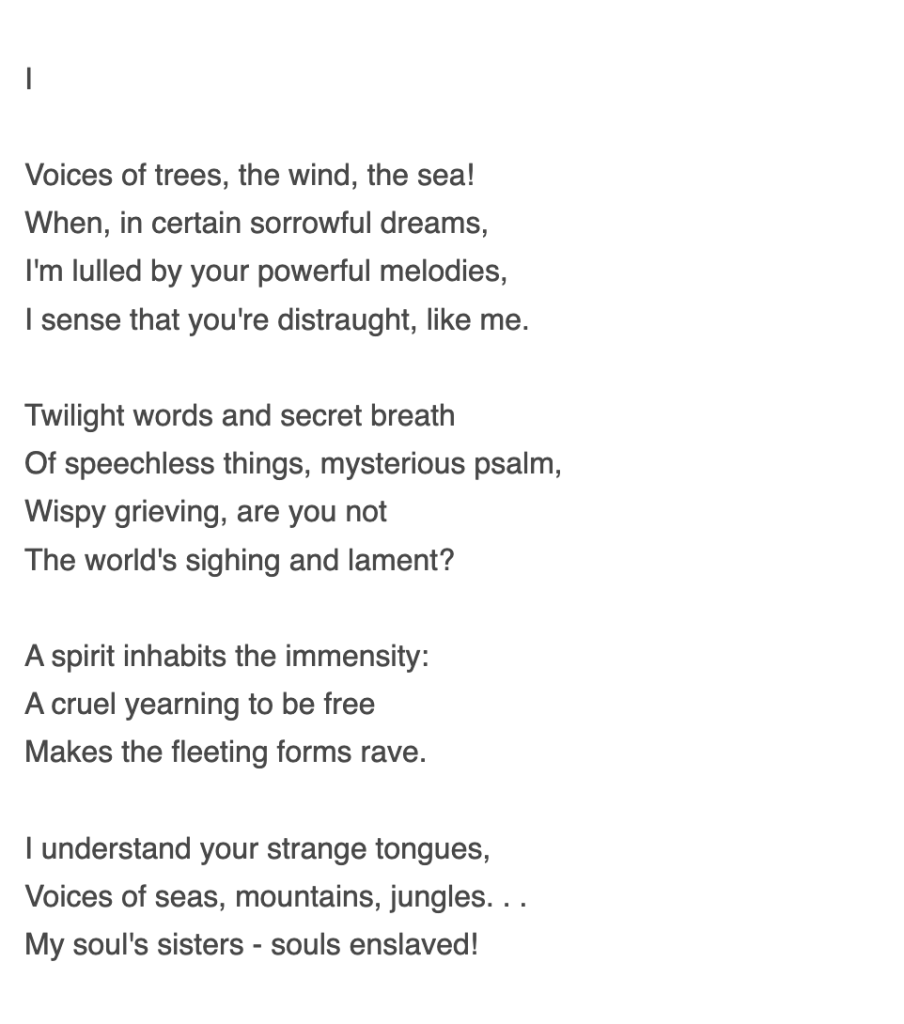
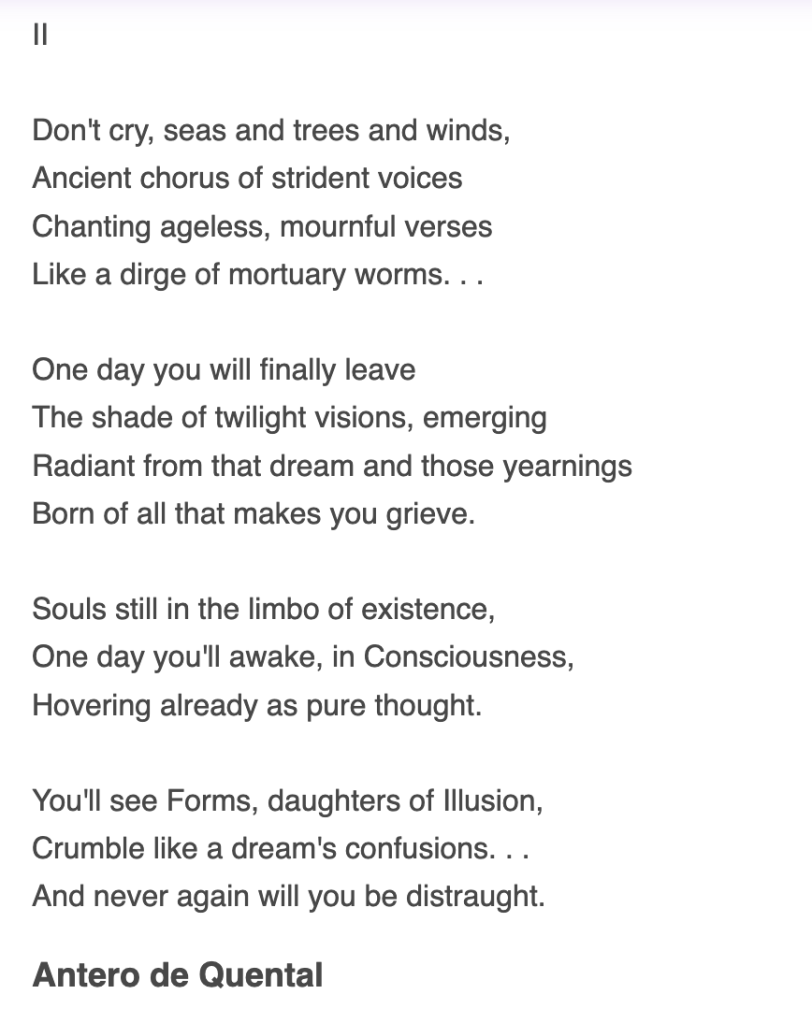
 Filamentos (artes e letras)