

Promoted by the Azores Delegation of the Historical Society of the Independence of Portugal (SHIP) in partnership with the Ponta Delgada City Council, a Solemn Historical-Cultural Session was held on December 1st, the commemorative event of the National Restoration of 1640. The event was attended by the mayor and the SHIP regional delegate, and the main speaker was Prof. Fernando Catroga, Emeritus Professor at the University of Coimbra. In this interview, Eduardo Ferraz da Rosa, SHIP’s representative in the Azores, stressed the importance of commemorating this date as an opportunity to rethink national history and said: “I’m talking about a humanist and upright ‘integralism’, the only one that could perhaps oust and overcome this other, degenerate and prone to xenophobic and populist rhetoric…”
A product of the Azores Delegation of the Historical Society of the Independence of Portugal (SHIP) and the Ponta Delgada City Council (CMPD), a Solemn Historical-Cultural Session was held on December 1st (commemorating the National Restoration of 1640), – in addition to you (as SHIP Representative) and the Mayor of that municipality, who gave the opening and closing speeches – Prof. Fernando Catroga (Emeritus Professor at the University of Coimbra) was the guest speaker.
What topics were covered?
Eduardo Ferraz da Rosa (University Professor) – The ceremonies, held to celebrate another anniversary of the 1st of December, the anniversary of the National Restoration of 1640, took place in São Miguel, along similar lines and following an inter-insular rotation model adopted by SHIP in the ARA:
Thus, these National Commemorations were held in a happy and successful partnership with the Ponta Delgada City Council, which was once again joined by regional civic, sociocultural, academic, civil, municipal, military, and associative personalities and entities.

Invitations to these SHIP initiatives have been extended to a wide range of speakers from different backgrounds, research fields, approach profiles, and disciplinary knowledge…
Yes. Over the years we have been able to count on the presence and differentiated historical, academic and cultural readings of competent and appreciated lecturers, among whom I recall José Leal Armas (my predecessor in this honorable national representation of SHIP), Manuel Faria, Sérgio Ávila, João Maria Mendes, Nuno Rogeiro, Avelino Meneses, José Armando Mendes, Susana Goulart Costa, Francisco Caetano Tomás, and more recently Eduardo Cintra Torres, João Figueirôa-Rego, Luís Reis Torgal, Jorge Pereira da Silva, Pedro Catarino, Arnaldo Madureira, and now Fernando Catroga.
These partnerships and collaborations have also taken place with the Chambers of Angra do Heroísmo and Praia da Vitória, and we have always been able to count on the institutional support of successive Ministers/Representatives of the Republic (Laborinho Lúcio, Alberto Sampaio da Nóvoa, José António Mesquita and Pedro Catarino), Military Commands, Political and Civil Authorities, Military, Religious, and OCS, who have never failed to give SHIP and its Delegate in the Azores a friendly and prestigious welcome, along with invaluable cooperation from State bodies in the Region and other local bodies.
For all these reasons, on this occasion, I am also pleased to remember them because, both in S. Miguel and Terceira, we have been able to promote, attend, listen, learn, and dialogue with enriching analyses and complementary critical proposals on the 17th century Restoration and its significance in the history of Portugal, the Azores, and the world, while intentionally projecting the in-depth and permanent rediscovery of its meaning in the present and for the future of national independence and identity.
In fact, interpreted and narrated in multiple forms, the idea and ideal of Restoration are theoretical and practical categories that have always mobilized our country practically or symbolically ritually, perhaps even since the first impulses of the desired, wanted and made construction of the Portuguese Nation itself or of Portugal as a Homeland, as the successive speakers invited to our previous commemorations have done conceptually, competently and sensitively, and above all, in an exemplarily suggestive, reflective and historical-societal way, Fernando Catroga has now also given us.
The Commemoration of the National Restoration has an obvious historical-symbolic, patriotic, and even festive significance, to which the Azores have never been oblivious…
Because, of course, here too, in the history of the Azores and in the lives of the Azoreans, the Restoration of 1640 is indelibly marked – such is the dense symbolic and evocative weight of this date and the high real significance that it doubly configures and/or dismantles in the memory, in the imaginary and in our changing critical intelligence of the Portuguese Homeland (and its imagined community-similar face on our islands, here already replicated as the Azorean Homeland… ), with glories and heroisms, failures introjected and erased in vile sadness, destinies and mysteries, anguish and hopes of Portugal and the Portuguese, nostalgically mourned or sung in old fados, hymns, and dawns…

Nowadays, however, you have proposed new horizons for reflection…
Of course! Looking closely and carefully at today’s world, in the Age of Globalization, of the Information Society; of the imperial one-dimensionality of Power (now multipolar) and the new projections of Force and dissemination of Risks; Vulnerabilities, Terrorism, and Insecurity; alteration of regional, interregional and continental spaces of influence, along with the tribal, fundamentalist and totalitarian rekindling of Violence, Oppression, Fanaticism and (always! ) of Suffering in the interstices of the destinies and pains of Peoples, Cultures, and Civilizations – how could we not and should we not ask ourselves, by a renewed majority of reason and duty, what meaning and sense the 17th century Restoration may have for us, in this Atlantic viewpoint, to think about the insular and planetary challenges of so many and so urgent contemporary restorations?
– I think, taking up the philosophical challenge of a notable (though often controversial) questioner of some of the so-called Western humanisms. And don’t think that I’m doing or proposing pure philosophical theorizing… No! What I’m doing is following closely, or rather, highlighting some conceptual comparisons between certain strains of political ontology (heir to and founder, often in a skewed form, of utopianism with many stains of national and regional romanticism, or of the telluric spirit of certain homeland soils, and stateless ones too…).
In fact, in a remarkable text, this is exactly what Prof. Fernando Catroga had discussed. Fernando Catroga had thematized by pointing out the “dichotomy between, on the one hand, the community-family nature of the idea of homeland and the civic and legal nature of the concept of ‘patria communis’”, correlating the differential geneses of nationalisms, patriotisms and provincial regionalisms, for example in the concepts and experiences of the German Heimat, the Castilian patria chica or the English homeland, religiously incensed in various localisms, political-administrative decentralizations, federalisms, autonomisms, tribalisms, separatisms, etc. , – underlyingly present and still detectable in the very pertinent and elucidating analysis that our Lecturer has developed in his vast body of work (for example, in The Footsteps of Man as a Remnant of Time. Memória e fim do fim da História, 2011, or in A Geografia dos Afectos Pátrios, 2012), and also now in his remarkable memorial lecture entitled “O Sentido Histórico e Futurante da Comemoração do ‘1.º de Dezembro’ no Calendário Cívico Português”.

The thematic and historical-critical connection between his speech (with obvious socio-political intentions and scope) and the content of Prof. Fernando Catroga’s conference was very noticeable…
On the one hand, because Professor Fernando Catroga, with his initial or basic training in Philosophy, had long applied it in an exceptional and specific way to his hermeneutics of History, Historiography, Historical-Social Ontology, Theory of Political-Administrative, Constitutional and Statutory Models and Systems, etc. – all of which flowed into his treatment of Memory and Identity, in this confluence seen as a “geography of homeland affections” – and then critically developed the issues studied, collected and taught within the framework of the History of Thought and Politics in Portugal (namely Republicanism and Herculano), – themes, themes, as I pointed out, that were also very much alive in the Azoreans Antero and Teófilo, and also in Nemésio, Luís Ribeiro, Bruno Carreiro and Carreiro da Costa, among others (in a theoretical-critical and historical-pragmatic framework of Regional Autonomy, which I didn’t address at that ceremony, although I did mention the name and the meritorious work of my late friend and colleague Carlos Cordeiro).
His speech, however, also targeted certain ideological and historical-philosophical forms that have been reappropriated by some political party formations. Care to comment?
In the short space of this interview, I can’t return to the analysis made there. However, I must only point out fields and domains where other and new restorations are needed, a systematic restoration, a profound renewal, true regeneration in the life of institutions, of citizens and civic and ethical agents, in families and classes or social formations, – along with, without a doubt, a new nobility in Politics, a new dynasty of responsible Politicians, for a new kingdom or city, nation, republic, and renewed region (let’s call them metaphorically, new courts? ) representative, credentialed, accredited and, finally, “clean of vices, simulations and injustices,” as Father António Vieira, ambassador of the Language and Restoration of 1640, said in the language of his visionary dreams and his temporal and transcendent Hopes for Portugal, integrally redemptive without needing to become integralists:
– However, I must stress that I am talking about a humanist and upright “integralism”, the only truly personalist, civic, and political one that could perhaps oust and overcome this other, degenerate and abusively given to digging up cavernous, resentful, vengeful and subterranean memories, prone to xenophobic and populist rhetoric, inclined to supposedly nationalist and vigilante militancy. In the end, they are only taking tactical and strategic advantage of the real miseries of the masses and the objective failures of the systems, values, revolts, and swampy incoherencies vegetating in the socio-political and moral “choldra” in which the country repeatedly falls and revolves, postponed and with no emancipating resolution or just revolution on the horizon for our People!
- Revised text provided to “Correio dos Açores” by Prof. Dr. Eduardo Ferraz da Rosa, SHIP Delegate in the Azores, from his interview with the newspaper “Diário Insular”.
Translated to English as a community outreach program from the Portuguese Beyond Borders Institute (PBBI) and the Modern and Classical Languages and Literatures Department (MCLL) as part of Bruma Publication and ADMA (Azores-Diaspora Media Alliance) at California State University, Fresno, PBBI thanks the Luso-American Education Foundation for sponsoring FILAMENTOS.
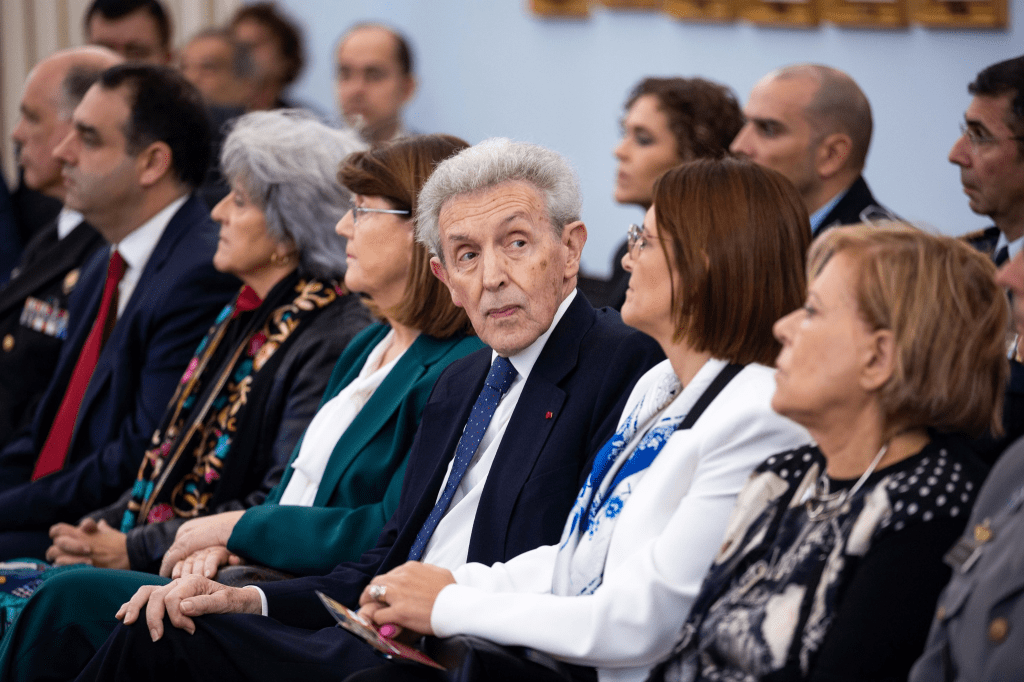
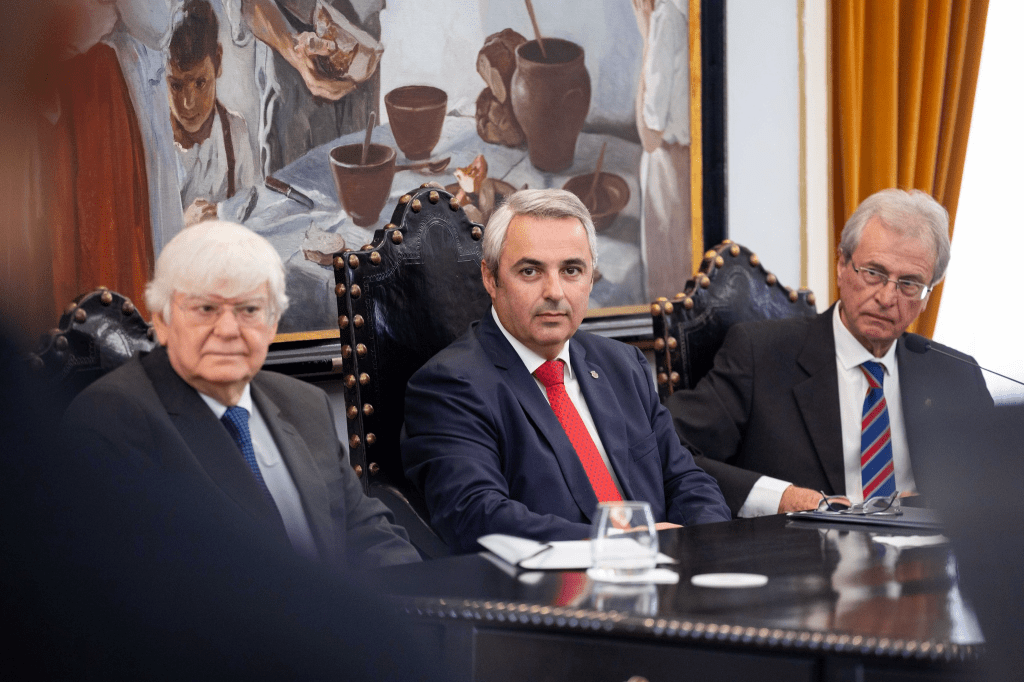
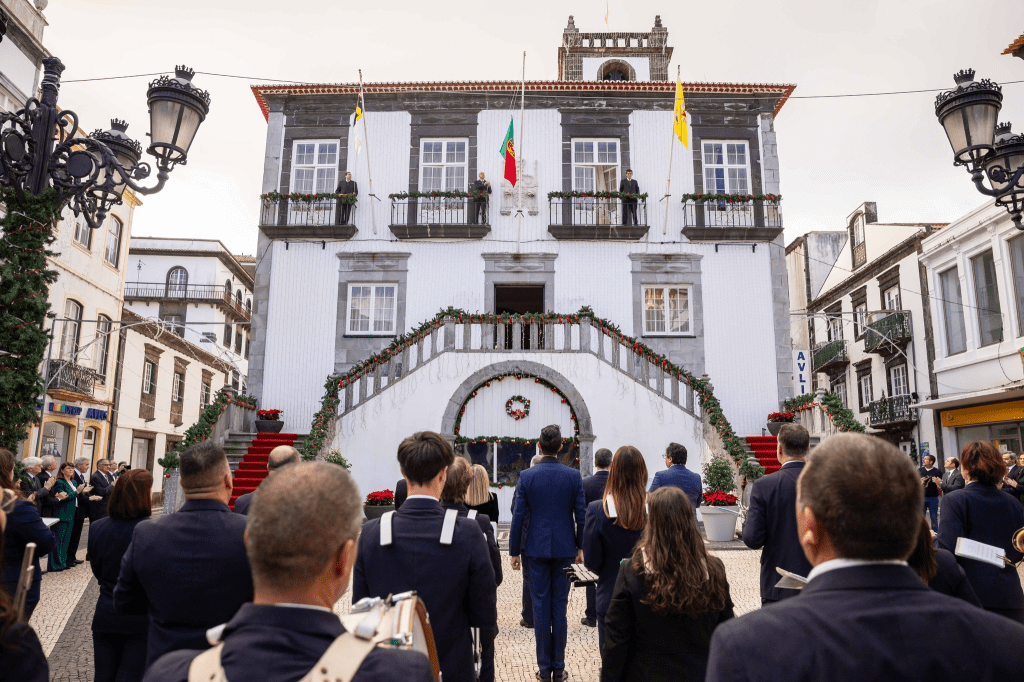
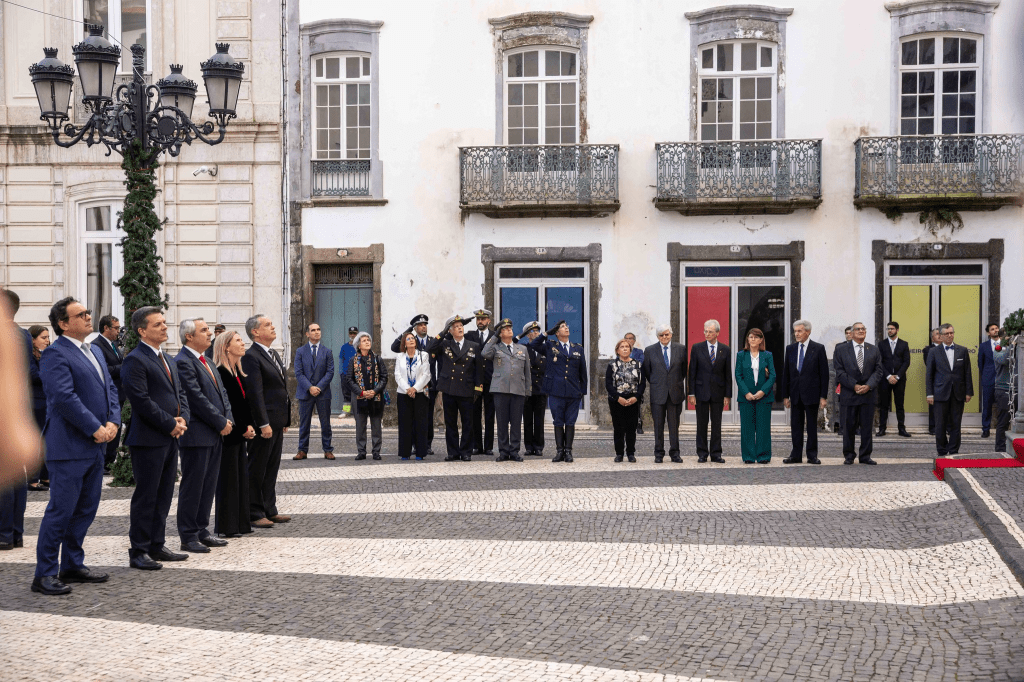
A few other pictures of the event, in Ponta Delgada, with pictures from the municipality…

 Filamentos (artes e letras)