
(photo from Alfred Cunha’s Facebook page)
Presidents of the Republic of Portugal and Cabo Verde, Excellencies, friends, and admirers of Mário Soares,
It is truly an honor and a privilege to deliver my first public speech in Portugal as President of the European Council to mark 100 years since the birth of Mário Soares.
But it is also a moral imperative for me to be with you today, albeit from a distance.
Because Portugal’s history in the 20th century would not have been the same without Mário Soares.
Because our freedom would not have been complete without the courage of Mário Soares.
Our democratic history over the last 50 years would not be the example it is without the key part that he played.

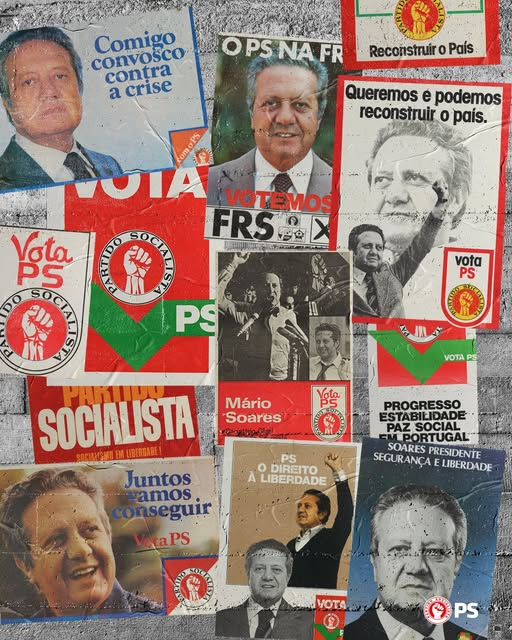
(Photo from the PS Facebook Page)
Because of the collective existence of my parents’ generation, my own generation, that of my children, and now my granddaughter’s generation would not be the same without the involvement of Mário Soares.
Europe’s inclusive, tolerant, and cosmopolitan direction would not have been the same without Mário Soares’s active role.
Mário Soares is not only a great figure of Portugal; he is also one of the great citizens of the Europe of Freedom, Democracy, and Peace.
Mário Soares always viewed Portugal as a convinced defender of European values. He viewed Portugal with European eyes. Always faithful to the humanist values that rebuilt Europe after the war. Which have helped bring people closer together and integration and enlargement. A common destiny in defending humanism, freedom, peace, social justice, prosperity, and democracy.
Since he viewed Portugal with those ideals, Mário Soares always fought for a free and fairer country, one with less inequality and that was increasingly open to the world. Only by fulfilling these values could Portugal change the course of its history as a dictatorship, put an end to colonialism, and find its way to a fortunate history in Europe.
As early as June 1964, ten years before the Carnation Revolution, Mário Soares wrote the following in the newspaper República, in an article entitled Estados Unidos da Europa (United States of Europe): ‘In a world where only large economic entities served by considerable human settlements have any weight, Europe, which is divided into small hostile homelands, will either find a convenient way of uniting or will become less relevant concerning major global problems.’ Thus ends this passage, written in 1964.
Interestingly enough, 60 years later, this same idea could also apply to modern times, which, in the face of similar assessments, does not diminish our permanent belief in a European future of greater autonomy, union, and prosperity.

(photo from Alfred Cunha’s Facebook page)
For Mário Soares, the construction of democratic Portugal was inseparable from the fight against colonialism and our European integration. This is one of the cornerstones of his vision for Portugal.
This is why, from the Agreement he negotiated and signed on behalf of the Portuguese Government with the PAIGC on August 30, 1974, to recognize the independence of Guinea-Bissau and the right to self-determination and independence of Cape Verde and to the formal request for Portugal’s accession to the then EEC in 1977, Mário Soares ensured Portugal’s return to peace and its full and active integration into the community of free and democratic nations.
It was in this European direction for Portugal—free, democratic, Western, but open to the world—that Soares forged a persistent path involving sustainable economic development, the normalization of political life, constitutional stability, and the primacy of the social state.
Strengthen Portugal’s profile as a promoter of moderation, of building bridges, faithful to multilateralism, solid support in our alliances, such as NATO, credible in our external missions, and promoter of our national interest.
Europeanism led him to found a major party, the Socialist Party, that fit into the great European families because he also realized that Europe would guarantee the consolidation of a democratic Portugal and its prosperity.
From the great ‘Europe with us’ rally to his famous statement ‘mon ami Mitterrand’, Soares managed to create, recreate and mobilise European solidarity across our Union.
To this end, he first took advantage of the network of exiles and his own exile to set a course and consolidate aid, which was decisive in preventing the totalitarian deviations of the Revolution, ensuring Portugal’s economic and financial survival in the post-revolutionary period, and later guaranteeing the country’s integration into what was then the European Economic Community.
Democratic socialism and social democracy, the foundations of the European project, brought parties, societies, and political leaders closer together. They amplified Portugal’s struggle, first against the dictatorship and then embracing a democratic Portugal’s European ambitions, with the independence of former colonies officially recognized, the first of which was Cabo Verde.
Despite having presided over three very short-lived governments, Mário Soares’s determination meant that he was involved in the beginning, during, and at the end of Portugal’s accession process.
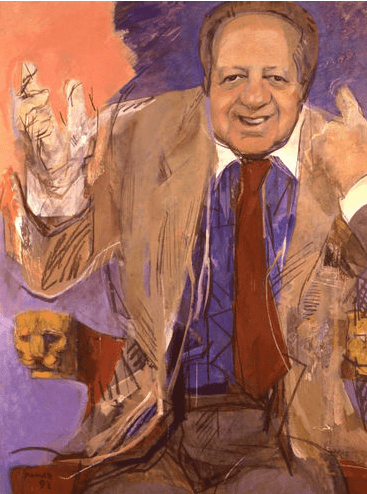
This was the case as early as 1977, when, together with Medeiros Ferreira, he formalized Portugal’s application for membership. This path had huge consequences for the consolidation of a civilian political regime, a market economy, and political pluralism.
And once again, in 1985, when, together with Jaime Gama, Rui Machete, and Ernani Lopes, he signed the accession treaty in the cloisters of the Jerónimos Monastery.
This ensured our full membership in the European project, which provided a continuous and historically unparalleled benefit, with the opening of borders, economic and social development, the reduction of poverty and inequalities, an enormous leap in our education system, and a new cultural worldview.
We know that many problems remain, but Portugal today is radically different from the Portugal we had in 1985.
This was the Portugal that Soares dreamed of, totally open to the world. From then on, Europe was firmly with us.
But it was also this Europeanism that helped build Europe’s unity after the fall of the Berlin Wall, German reunification, the wars in the Balkans, the integration of Eastern European countries, and multiple crises of trust and cohesion amongst its members.
To Mário Soares and his political generation, we owe the victory of strategic vision over the resistance of smaller interests, the triumph of will over the fear of those who were afraid of the challenge of integration, the preservation of the common interest over insurmountable disagreement, a culture of diplomacy over violent conflict, ethics over vulgarity.
This is the way the European Union has acted and will continue to act: with courage and audacity, providing an example and statesmanship, compromise and tolerance, welcoming and opening, difference and convergence. Soares played a leading role in promoting this approach in Portugal and Europe, uniting our destinies.
Therefore, it was unsurprising that after serving as foreign minister, prime minister, and president of the Republic, he was also elected as an MEP. This struggle was of timeless value to him, and he saw it immortalized in the European Parliament when one of its hemicycles was named after him.

Also, when the College of Europe in Bruges named him as patron for the 2020-2021 academic year, he was constant proof of the timelessness of his cause, his legacy across generations, and his cross-cutting historical and cultural importance.
Because any discussion about Europe also involves talking about culture. And Mário Soares was a deeply cultured politician who loved European culture. Its writers, its artists, its cafés and restaurants, its cinema. Ultimately, it is here where freedom prevails, boldness takes over, and courage is expressed.
The history of Europe, enlightened, humanist, at times tragic, always hopeful and prosperous, known for its disputes and existential crises, should fear neither the present nor the future.
Quite the opposite. It needs more culture in its nerve system to promote tolerance, more self-love in its soul to allow confidence to shine through, and more ambition in its verve so that the fatalism of the will succumbs definitively to the optimism of reason.
Today, in these times of tension and fear, we need Mário Soares’s inspiration more than ever so that, in Portugal and in the EU, we can strengthen what unites us and confront what tries to divide us: imperial impulses, protectionist temptations, nationalist and xenophobic aims, misinformation, and disruptive intentions.
And yet, we remain a proudly open country, a proudly solid Europe.
Therefore, we are all Mário Soares’s legacy: those who followed him and those who opposed him, those who stood up to him and those who supported him, those who spent time with him and those who never met him, those who were formed politically with him and those who became full citizens after he left.
We celebrate his timeless greatness today on his centenary in Portugal and all over Europe. This intergenerational dimension should guide us in the future.
Today and always, long live Mário Soares!
 Filamentos (artes e letras)