
A weekly segment by the Portuguese Beyond Borders Institute, Fresno State.
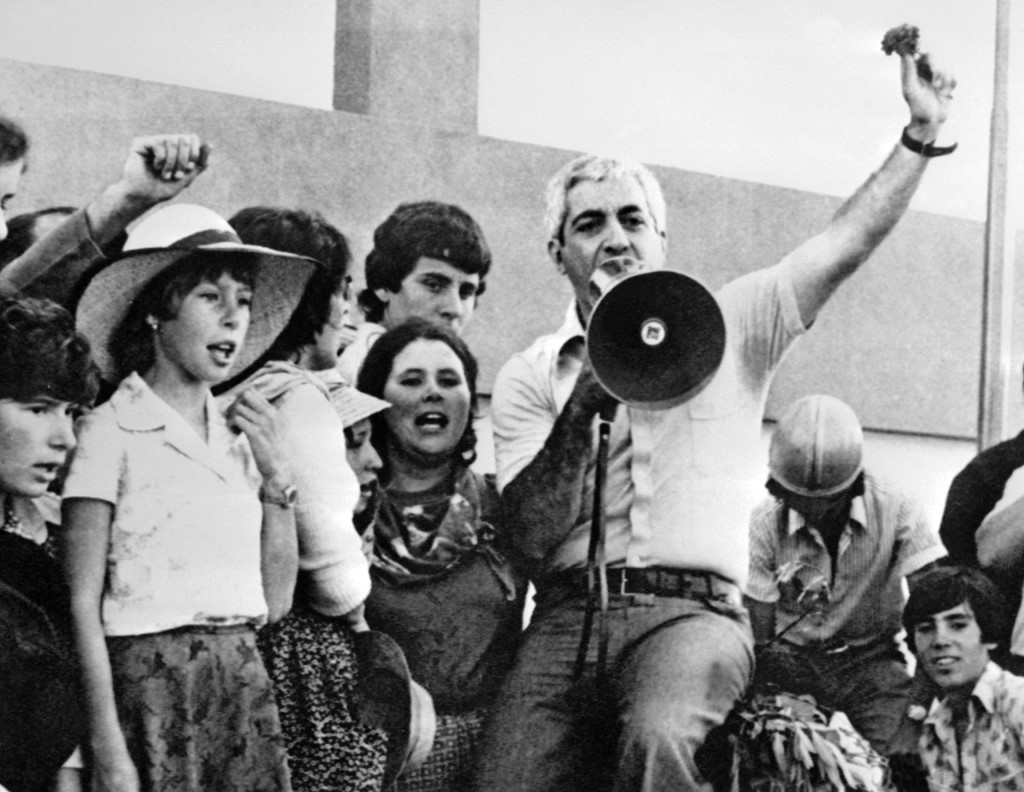
One of the leading figures of the Carnation Revolution was Otelo Saraiva de Carvalho, who passed in 2021. Today, we feature a testimonial from one of his comrades published in an edition of O Referencial from the Associação 25 de abril.
DO YOU REMEMBER?
You were easy to get along with back then because you were affable, communicative, and cheerful. It was hard not to like you.
WE MET IN 1956, at the old Army School, you in your first year of artillery and me already a gentleman student. Do you remember? You were easy to get along with back then because you were affable, communicative, and cheerful. It was hard not to like you. These characteristics of yours have stayed with you over the years. We each went our separate ways, but we met again after March 11, 1975. You, at Copcon, and me, who in the meantime had pursued a civilian career in IT but was ready to give it up and make my modest contribution to the revolutionary process following April 25. Remember? This meeting resulted in my reintegration into active service and the organization of your Press Office, a gap in Copcon’s structure. Reinforced with a journalist from LUSA and a militia officer at the time, this office issued press releases, contacted the media, and prepared your interviews. Remember?

At the time, Copcon, led by you, was at the service of the working classes and very attentive to resolving labor conflicts and the problems of the most disadvantaged. You welcomed everyone, from the Workers’ and Residents’ Committees to other individuals. You were always ready to help solve or refer any problems that came your way. Remember that? Sometimes, you take over from the government whenever it cannot solve specific cases. Copcon was a beacon to which everyone turned. Regarding the government at the time, you never accepted any honors or invitations to join it, which happened when you returned from Cuba. I remember Jorge Sampaio meeting with you at Copcon. He had also been invited, but when you told him you refused, he did too. Do you remember that? A while later, in November, when faced with the Páras’ conflict with their CEMFA, you met with them and promised to support them, asking Costa Gomes to take them out of the Air Force and put them under Copcon. This proposal was made at an important meeting in Belém on November 21. Still, the President of the Republic didn’t agree, claiming that it would have to be discussed at a meeting of the Council of the Revolution. It was a great frustration. Remember? In the meantime, the Páras peacefully occupied the air bases to pressure a solution to this dispute. The coordination and orders for the occupation were, in fact, given inside Copcon’s premises, but as far as I knew, you didn’t give the order. You were only aware of the fait accompli. Do you remember that?

When Copcon was abolished on November 26, your collaborators were ordered to report to their respective General Staffs, and some of them (curiously, the technocrats, of whom there were also some) followed that same day with their marching orders. The most committed, however, were forced to return to Copcon on November 27 because their marching orders were not yet ready. The trap was set, and we all fell into it like ducklings. As we had to go there on the morning of the 27th, we arranged a farewell lunch, as is normal in military units. This lunch was reported to the President of the Republic and the Army General Staff, all by military rules and nothing clandestine. Remember? At that meeting, you took the opportunity to hear our opinion on your future, as you had been invited to a golden shelf. Our opinion, which is unanimous if I remember correctly, is that you shouldn’t accept honors and should return to your post as a major. Remember?

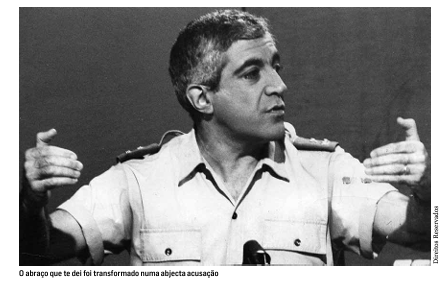
But the victors of November 25 (not all of them, let’s be honest) had already decided that your most active and conscientious collaborators should be removed from you. To this end, and in collaboration with some officers from the Alto Duque Fort, including the commander, they set up an “invention” on the pretext that we were pressuring you to fight with the support of some units. The hug I gave you at the end of the meeting transformed into an abject accusation that I was waving my jacket at you and calling you my general when we always called each other. Remember? We met again when you ran for president in 1976. You invited me to join your personal cabinet, and I accepted immediately. It was an honor and a privilege! A big hug, and see you always!
BY FRANCISCO BARÃO DA CUNHA In O Referencial

Translated to English as a community outreach program from the Portuguese Beyond Borders Institute (PBBI) and the Modern and Classical Languages and Literatures Department (MCLL) as part of Bruma Publication and ADMA (Azores-Diaspora Media Alliance) at California State University, Fresno, PBBI thanks the Luso-American Education Foundation for sponsoring FILAMENTOS.
 Filamentos (artes e letras)