

You’ve just published O Essencial sobre Natália Correia (National Press, 2024). What are the main traits that define this woman?
Natália was an extremely complicated woman, not only because of the variety of her work – spread across poetry, fiction, theater, essays, chronicles, translations, editing, anthologies, scriptwriting, political criticism, journalism, radio broadcasting, and so much more… – but because of her personal characteristics and the themes she dealt with – defending women’s rights, including voluntary termination of pregnancy, fighting against fascism and censorship, both from the right and the left and for individual freedom and freedom of expression – all of this courageously and directly, without admitting any restraints that would curtail her freedom of creation, thought and expression. Above all, she was a libertarian in the historical sense of the word: a fighter for individual and collective freedom in opposition to the state’s authoritarianism that interferes or is tempted to interfere in the organization of society and in people’s private lives. And she always did so: against the fascist state, against the attempt, during PREC, to integrate Portugal into the Soviet sphere, and, in democracy, against the hypocrisy of the party directories. Natália is undoubtedly a case study that goes far beyond literature.
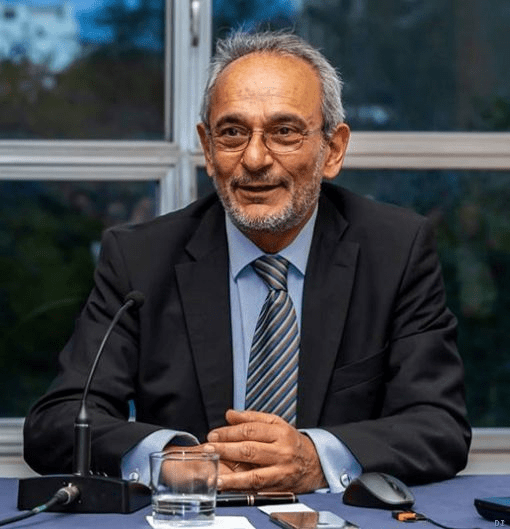
Was Natália Correia a poet, or was she a woman who intervened in society, politics, and culture?
Strange as it may seem, although she was one of Portugal’s most important poetic personalities in the second half of the 20th century, poetry was not the bulk of her literary output. In fact, in the introduction to the volume in which she collected her Complete Poetry (O Sol nas Noites e o Luar nos Dias, 1993), she defines herself as a poet, as someone whose verses are not her own but those of a supernatural entity that speaks through her mouth, the poet being reduced to a kind of microphone… Vitorino Nemésio had already said something similar, stating that the poet is a “medium” between the immaterial and physical worlds… Natália was, above all, a woman of social intervention who used the tools and means at her disposal, and poetry was one of them: powerful, yes, but not the only one. And in this, more than a microphone, she was a true loudspeaker, using as support the exuberant character she created and had to nurture throughout her life.
Censorship persecuted Natália Correia during the Estado Novo but did not forget her after the April Revolution. In fact, she ended her days in sadness and disillusionment. Why?
The same woman who stood up to Salazar and Caetano, suffering the inevitable consequences – seven books censored, banned and prevented from circulating, trials and convictions in plenary courts, ostracism by both the intelligentsia committed to the status quo and those who, from the depths of their sofas, proclaimed themselves progressive, support for the presidential candidacies of Norton de Matos and Humberto Delgado, and for Henrique Galvão’s Operation Dulcinea (seizure of the Santa Maria liner) which, in the short epic poem Cântico do País Emerso, from 1961, he dedicated to him, he called “Captain of the Impossible,” against the colonial war, against enshrined stupidity, and so on. -He confronted the main figures of the PREC with the same courage because he felt that they were handing Portugal over, as would happen with the former colonies in Africa, to Soviet communism, to the point that “Século Hoje,” the supplement he directed in the newspaper “O Século,” of which only nine issues would appear, was banned and closed down by the Council of the Revolution on the orders of General Costa Gomes, then President of the Republic. She was censored, already amid democracy, by a government of the Democratic Alliance led by the PSD, a party for which she was even a member of parliament, which made it impossible for her to stage the play Erros Meus, Má Fortuna, Amor Ardente, which had been commissioned as part of the Camões celebrations in 1980, because, I suppose, her vision of Camões didn’t correspond to the official Camões. .. And yes, she died saddened because she concluded that the great goals she had fought for all her life had not only not been achieved by the democracy she believed in and was supposed to achieve but had, above all, been adulterated. According to Natália, with its accession to the EEC and later to the Schengen Agreement, Portugal had become an irrelevant country in the international context. If it had escaped Soviet domination, it would have been caught up in European technocracies, which forced countries to give up “the myths of their cultural infrastructures, which are being razed to the ground by collectivist and technological barbarism.” Portugal was thus being invaded by ‘the worst of Europe that formed North American civilization,’ which she had already denounced in her 1951 book Descobri que era Europeia -(This book has been translated into English and will be published soon by Tagus Press).

You are currently directing a new edition of the Complete Works of Vitorino Nemésio (Imprensa Nacional/Companhia das Ilhas), which we understand intends to include unpublished works. What are the biggest challenges you have faced?
David Mourão-Ferreira wrote somewhere that Nemésio was a literary dictator, such as the quantity, variety, and innovation of the work he left us in books of poetry, fiction, essays, and chronicles, but also in many newspapers and magazines, and in collective books or books by other authors, many of them little known or even obscure, so we are never sure that we have found all the texts he published scattered around. It’s a real headache… As for the unpublished, many poems are available in the collection kept at the National Library that has yet to be published and will appear in the volume of posthumous and unpublished poems I am preparing. But, I believe there are still others, as well as his diary, in closed and sealed boxes that will be kept in reserve until the 50th anniversary of Nemésio’s death, which won’t be until 2028. Then we’ll see what it’s really about and what to do. However, I don’t think there will be any poems in there that will add to Nemésio’s glory because I’m convinced that his great poetry was published by him during his lifetime, except Caderno de Caligraphia, which, however, was already in an advanced stage of preparation when he died, and which I would edit and publish in 2003 as Caderno de Caligraphia e Outros poemas a Marga.
Is Amores da Cadela Pura a work signed by the Marquesa de Jácome Correia by way of confessions, or is it a work by Vitorino Nemésio or not, in your opinion?
We must distinguish the first volume, published in 1976, from the second, published in 2004, posthumously. Suppose you compare the style of the two. In that case, you’ll see that they are very different, which can be explained by the fact that Nemésio worked on the original of the first volume, as you can see from a letter he wrote to her, in which he says that he has been working on her book; in my opinion, the content of the first volume is in fact written by D. Margarida de Jácome Correia, but thoroughly revised and elaborated by Nemésio. As for the second volume, it is entirely hers; I can guarantee this because I was the one who insisted that she write it so that we could have her vision of the love relationship that, in Nemésio’s view, we find in Caderno de Caligraphia, and because I followed the writing. However, without interfering in the process, I used to go to her house every night and read what she had written until the day she phoned me to say she had finished the book; but, as I was going to Paris the next day, I told her I would stop by when I got back; only she had died in the meantime. As far as I can remember, the published text corresponds to the one I had been working on. But in it, and unlike the first, Nemésio is a character, not a reviewer or, if you like, co-author…
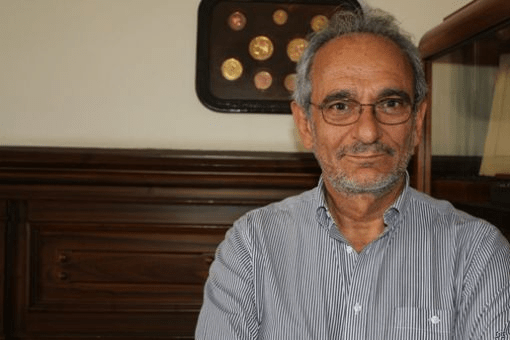
We never read more of your fiction after Histórias d’Assombração (Caminho, 1988). Why is that? When are we going to read it?
Why? Because there’s already more bad literature out there. Because there is already more than enough bad literature out there, and a man like me who, as a philologist, has intensively studied the writing process of authors such as Eça de Queiroz, Fernando Pessoa, or Vitorino Nemésio, has to think twice before embarking on writing, in this case, fiction. However, I have a project in the works, which I’ll see if it’s worth publishing in due course.
“Our origins are the safest thing we have.”
You live between Lisbon and Biscoitos (Terceira Island). Nostalgia for her origins? Option for a quiet retirement? Looking for a place to grow up in peace?
A bit of everything… Our origins are the safest thing we have in our lives, and returning to them is like returning to the home of our ancestors, but with the critical eye of someone who has known half the world. Today, I am that same boy from Serreta, who was the first and, for a long time, the only person from the parish to go to university and build a professional career of national and often international scope, who returns with the dust of the paths he walked on his shoes. And here, in Biscoitos, I can do almost everything I would do in Lisbon because, in addition to the peace and quiet and the constant presence of the sea, I have access to the information I need to work, no longer out of professional obligation, but because I feel like it and I enjoy it. Since I retired, I’ve produced and published around two dozen works, including books and scientific articles, and given lectures on subjects I’ve mastered. Still, I also tend to the garden, build useful furniture for the house, do minor repairs, and I’ve even taken up painting… I don’t know if that’s retirement or not… But, shamelessly and with all due respect, I feel I’m in good company with Sá de Miranda, who retired from the court to spend his days at Quinta da Tapada, or Alexandre Herculano, at Vale de Lobos…
in Diário Insular–José Lourenço, director.
Translated by Diniz Borges

We thank the Luso-American Education Foundation for supporting PBBI, including this cultural platform.

 Filamentos (artes e letras)